
Desserts
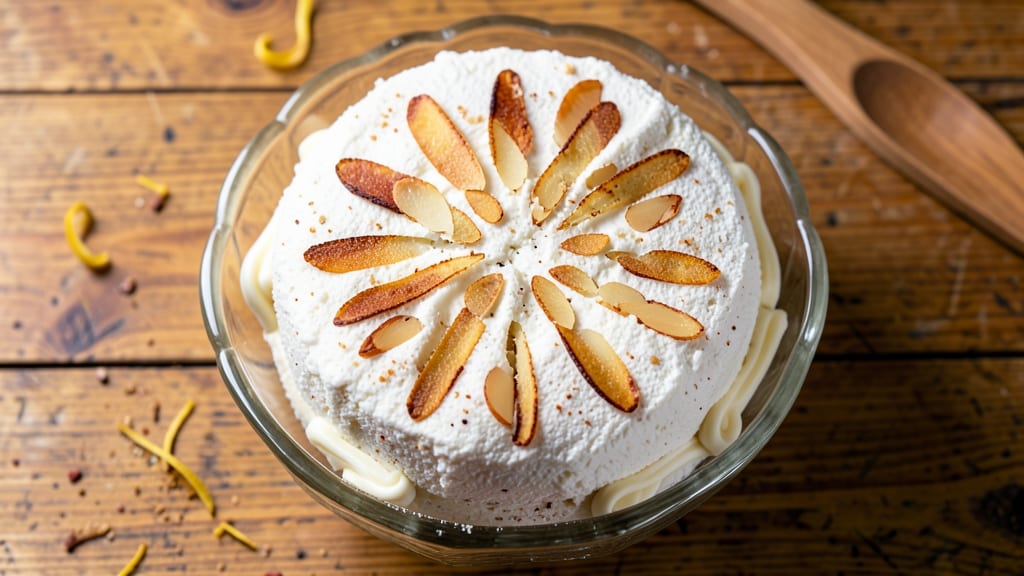
This almond flour angel food cake delivers the perfect balance of lightness and richness without a single gram of gluten. The secret lies in properly folding dry ingredients into airy egg whites, creating a cloud-like texture that's both delicate and sturdy enough to hold its shape.
I've perfected this technique over years of testing, ensuring every slice is as impressive as it is indulgent.
What sets this recipe apart is its vegetarian-friendly foundation while maintaining the signature fluffiness of traditional angel food cake. The almond flour adds natural sweetness and a subtle nutty depth, while the precise baking method at 350°F ensures even rise and golden perfection.
No special equipment is needed—just patience and careful folding to maintain those signature air pockets.
The result is a cake so light it practically dissolves on your tongue, yet sturdy enough to slice cleanly. Dusting with powdered sugar enhances the presentation, making it perfect for special occasions or elegant gatherings.
Each bite delivers that perfect combination of airy texture and subtle almond flavor without any aftertaste.
This recipe works beautifully for celebrations, brunch menus, or whenever you crave a dessert that's both impressive and naturally gluten-free. The method is straightforward but requires attention to detail—especially when folding the batter—to achieve that restaurant-quality lightness at home.
Ingredients for almond flour angel food cake
Twelve airy egg whites, almond flour's nutty embrace, and a whisper of citrus create this ethereal gluten-free masterpiece.
| Ingredient | Amount | Notes |
|---|---|---|
| Large Egg Whites 🥚 | 12 whole | Room temperature for best volume |
| Granulated Sugar 🍚 | 1 ½ cups | Superfine preferred for silky texture |
| Almond Flour 🌰 | 2 cups | Finely ground, unsweetened |
| Unsalted Butter 🧈 | ½ cup | Melted, cooled slightly |
| Vanilla Extract 🌿 | 1 tbsp | Pure Madagascar bourbon preferred |
| Cream of Tartar 🧂 | ¼ tsp | Stabilizes egg whites |
| Salt 🧂 | ¼ tsp | Fine sea salt preferred |
| Powdered Sugar 🍚 | ½ cup | For dusting and folding |
| Almond Extract 🌰 | ½ tsp | For enhanced almond flavor |
| Lemon Zest 🍋 | 1 tbsp | Brightens the flavor profile |
| Lemon Juice 🍋 | 1 tbsp | Freshly squeezed |
| Whole Large Eggs 🥚 | 2 whole | For structure and richness |
The egg whites are your secret weapon here—room temperature is non-negotiable for maximum volume. Bob's Red Mill almond flour is my go-to for its fine grind, but any quality brand works. For the sugar, superfine is ideal (pulse regular granulated in a food processor if needed). The butter should be melted but not hot—just cool enough to touch. Pro tip: use a stand mixer with a whisk attachment for those signature peaks. The vanilla extract should be pure Madagascar bourbon—it's worth the splurge for that authentic depth.
No almond extract? Skip it entirely—the almond flour provides enough flavor. Short on egg whites? Use aquafaba (chickpea brine) at a 1:1 ratio, but add an extra 0.25 tsp cream of tartar for stability. Store-bought almond flour? Sift it first to prevent lumps. The lemon zest and juice can be swapped for orange zest and juice if you prefer a citrusy twist. For extra richness, add 1 tbsp toasted almond butter to the batter before folding—trust me, it's a game-changer.
This cake is best baked and served immediately, but leftovers? Wrap tightly in plastic wrap and store at room temperature for 2 days. For longer storage, slice and freeze portions—3 months works beautifully. The texture suffers if refrigerated, so always bring slices to room temperature before serving. Dust with powdered sugar right before serving to maintain that restaurant-quality presentation. And remember: never grease the tube pan—just dust with flour for easy release.
Why You'll Love This Recipe
- Here’s what sold me: this cake stays fresh for ages if you store it right. I’ve had slices three days out, and they’re still moist. Plus, the portions are perfect for single servings—no awkward half-a-cake situations. (Yes, even on a Tuesday night.)
- No Mixer Needed: I swear by this recipe because it only asks for a whisk and your arm strength. Those egg whites? They fold in like a dream—no stand mixer required, and honestly, the texture comes out lighter than anything I’ve bought at the store.
- Vanilla Buttercream Magic: That touch of vanilla in the batter and the buttercream? It’s the kind of flavor that makes people pause mid-bite. The almond flour adds a subtle nuttiness, but the real star is how the vanilla ties everything together—warm, sweet, and just a little bit indulgent.
- Diet-Friendly Crowd-Pleaser: Between us, this is my go-to for gatherings when half the group is gluten-free, half is watching sugar, and everyone else just wants cake. The almond flour keeps it low-carb, but the sugar and butter make it taste like a treat—no one ever skips seconds.
Step-by-step instructions for almond flour angel food cake
Here's how to create a cloud-like cake that's naturally gluten-free and packed with almond flavor.
Prepare the Egg Whites for Maximum Volume
Separate the 12 whole large egg whites from the 2 whole large eggs, making sure no yolk traces remain in the whites. Place the egg whites in a spotlessly clean, grease-free mixing bowl—any fat residue will prevent proper whipping. Add the 0.25 tsp cream of tartar and 0.25 tsp salt to stabilize and strengthen the meringue.
Using a stand mixer fitted with the whisk attachment, beat the egg whites on low speed for 1 minute to break up any large bubbles. Gradually add the 1.5 cups granulated sugar (superfine preferred) in a slow, steady stream while increasing speed to high. Beat for 5-7 minutes until the meringue forms stiff, glossy peaks that hold their shape when the whisk is lifted. The bowl should feel cool to the touch—this indicates proper aeration.
Fold in the Almond Flour Mixture Gently
In a separate bowl, whisk together the 2 cups almond flour, 0.5 cup powdered sugar, 1 tbsp vanilla extract, 0.5 tsp almond extract, 1 tbsp lemon zest, and 1 tbsp lemon juice until completely combined. This dry mixture should resemble fine crumbs with no visible flour clumps. The lemon and almond extracts add brightness that perfectly complements the nutty base.
Using a spatula, gently fold one-third of the almond flour mixture into the meringue in soft, sweeping motions from the bottom up. This preserves the air incorporated during whipping. Repeat with another third, then the final portion, being careful not to deflate the meringue. The batter should be thick but still pourable—if it's too stiff, you've overmixed.
Incorporate the Whole Eggs and Melted Butter
In a small bowl, whisk the 2 whole large eggs and 0.5 cup melted butter (cooled slightly) until just combined. The butter should be warm enough to blend smoothly but not hot, which could cook the eggs. Add this mixture to the batter and fold gently using the same bottom-to-top technique, maintaining as much air as possible.
Stop folding as soon as the mixture is uniform—any additional mixing will collapse the delicate structure. The batter should resemble thick, glossy frosting with no visible streaks of egg or butter. This is the moment where patience pays off—the less you disturb the batter, the lighter your cake will be.
Bake in a Preheated Angel Food Pan
Preheat your oven to 350°F and place the angel food pan upside down on the middle rack for 5 minutes to preheat. Quickly pour the batter into the pan, smoothing the top with a spatula. Tap the pan gently on the counter to release any air bubbles that may have formed during pouring.
Bake for 30-35 minutes until the top is golden brown and the cake springs back when lightly touched in the center. The cake should pull away cleanly from the sides of the pan. For best results, open the oven door just enough to insert a toothpick—it should come out clean with no wet batter clinging.
Cool and Invert for Perfect Structure
Immediately after removing from the oven, run a thin knife around the edges of the cake to loosen it from the pan. Invert the cake onto a wire rack and let it cool completely in this position for at least 2 hours. This gradual cooling prevents collapse and allows the cake to set properly in its signature dome shape.
Once fully cooled, carefully remove the cake from the pan by sliding it off the rack. The cake should hold its structure without support. Serve slices at room temperature for the best texture—each bite should be light, airy, and bursting with almond flavor. The lemon zest adds a subtle brightness that cuts through the richness, making this cake truly special.
Pro Tips For Making Almond Flour Angel Food Cake
- Whip Egg Whites Cold: Pop your egg whites straight from the fridge—room temperature is overrated here. Cold whites whip faster and hold stiff peaks longer, which is non-negotiable for that cloud-like texture in angel food cake. (Yes, even if you’re impatient like me.)
- Sift Almond Flour Twice: Almond flour clumps like a drama queen, and skipping the sift means dense cake. Do it before mixing with sugar, then sift again after combining—this keeps your batter light and airy. I learned this the hard way after a brick-like first attempt.
- Bake Until Cool: Pull the cake when the center’s just set—it’ll keep rising as it cools. If you bake until fully done, it’ll dry out faster than almond flour left in a hot car. Let it sit 10 minutes before unmolding, or risk a sad, flat collapse.
- Butter the Pan Wrong: Skip the butter on the sides—just grease the bottom with a tiny bit of melted butter (½ tsp max) and dust with flour. Butter on the walls makes the cake stick like glue, and almond flour angel food needs to release cleanly. (Trust me, I’ve fought this battle.)
Troubleshooting perfect results
Dense or Gummy Texture
Overmixing the batter or underwhipping the egg whites are the most common culprits for a dense cake. Make sure your egg whites reach stiff, glossy peaks before folding—about 5-7 minutes on high speed. If the batter looks too thick after folding, you may have added too much almond flour.
Stick to the 2 cups measurement and sift it first to prevent clumping. Also, ensure your almond flour is finely ground—coarse flour won’t blend smoothly and can weigh down the texture. 💪
Cake Collapses During Baking
This usually happens when the cake isn’t cooled properly or the oven isn’t hot enough. Always preheat your oven to 350°F and place the angel food pan upside down on the rack for 5 minutes before baking.
After removing from the oven, run a knife around the edges to loosen it, then invert onto a wire rack for at least 2 hours of cooling. Never rush this step—patience is key to maintaining that signature dome shape.
If your oven runs hot, reduce the temperature to 325°F and check for doneness at 35 minutes.
Batter Too Thin or Runny
A runny batter often means the egg whites weren’t whipped enough or the sugar wasn’t incorporated properly. Double-check that your egg whites form stiff peaks before folding in the dry ingredients. If the batter still seems too thin, you may have used too much lemon juice or melted butter.
Measure carefully—1 tbsp lemon juice and 0.5 cup melted butter are the correct amounts. For extra stability, add an extra 0.125 tsp cream of tartar to the egg whites.
If the batter is too thin to hold its shape, fold in 1-2 tbsp more almond flour until it reaches a thick, pourable consistency. ✨
Dry or Crumbly Cake
This typically happens when the cake is overbaked or the almond flour wasn’t properly hydrated. Keep a close eye on the baking time—30-35 minutes is the sweet spot for a 350°F oven. If your cake pulls away from the pan too early, it’s likely dry.
To prevent this, brush the pan with melted butter (not oil) before dusting with flour. For extra moisture, add 1 tbsp toasted almond butter to the batter when folding in the dry ingredients. Avoid overmixing the almond flour mixture, as this can create a gritty texture.
Store-bought almond flour? Sift it thoroughly to ensure even distribution.
Uneven Rise or Sinking Center
An uneven rise often indicates the oven temperature wasn’t consistent or the batter wasn’t poured evenly. Always preheat your oven thoroughly and place the angel food pan on the middle rack for even heat distribution.
Before pouring the batter, tap the pan gently on the counter to release any air bubbles. If the center sinks, it may have been underbaked—insert a toothpick to check for doneness.
For a more even rise, whisk the egg whites to soft peaks before adding the sugar, then gradually increase speed to stiff peaks. This gradual incorporation helps distribute air more evenly throughout the batter.
Sticky or Gummy Top
A sticky top usually means the cake was underbaked or the sugar wasn’t fully incorporated into the egg whites. Ensure your egg whites are fully whipped to stiff peaks before folding in the sugar.
If the top still feels sticky after baking, return it to the oven for 2-3 minutes at 325°F to set the surface. For a smoother finish, dust the top with powdered sugar right after baking while the cake is still warm.
If the cake feels gummy, it may have absorbed too much moisture—reduce the lemon juice to 1 tsp next time and check your almond flour for freshness. Fresh almond flour absorbs moisture better than older batches. 🌟
Nutrition facts
Frequently asked questions
Can I make this angel food cake without eggs?
This recipe relies on egg whites for its signature lightness, but you can adapt it to be vegan by using aquafaba (chickpea brine) as a substitute. Replace the 12 egg whites with 1.5 cups aquafaba and add an extra 0.25 tsp cream of tartar for stability. For the 2 whole eggs, use 2 flax eggs (2 tbsp ground flaxseed + 6 tbsp water, mixed and rested for 5 minutes). The texture will be slightly denser but still delicious!
Why does my almond flour cake turn out dense?
Dense texture usually means the egg whites weren't whipped enough or the batter was overmixed. Ensure your egg whites reach stiff, glossy peaks (about 5-7 minutes on high speed) before folding. Also, sift the almond flour first to prevent clumping, and avoid overmixing after adding the dry ingredients. The batter should look thick but still pourable—like glossy frosting.
Can I use this recipe in a regular cake pan?
Yes, but the texture will be denser. Use a 9-inch round or tube pan and reduce baking time to 25-30 minutes at 350°F. For best results, grease the pan lightly with butter and dust with flour. After baking, invert onto a rack to cool completely. The cake won't have the same signature dome shape but will still be delicious!
How do I store leftovers without drying them out?
Wrap slices tightly in plastic wrap and store at room temperature for up to 2 days. For longer storage, freeze portions for 3 months. To serve, thaw at room temperature for 30 minutes—microwaving can make the cake gummy. Dust with powdered sugar just before serving to keep it fresh-tasting.
What's the secret to getting that cloud-like texture?
The key is in the egg whites! Whip them to stiff peaks (the bowl should feel cool to the touch), then fold the dry ingredients in one-third portions using a spatula. Move from the bottom up to preserve air pockets. Also, never grease the angel food pan—just dust with flour for easy release. Patience during cooling (inverting for 2+ hours) is crucial too!