
Desserts
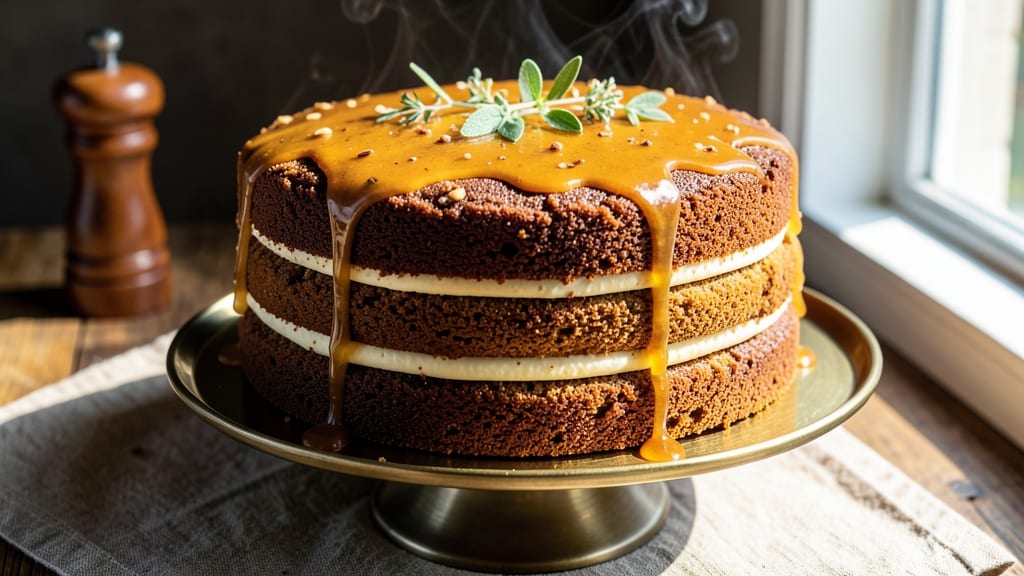
This almond flour gingerbread cake delivers all the cozy warmth of traditional gingerbread with a nutty, moist texture that keeps slices tender for days. 🌟 The secret lies in blending almond flour’s natural density with warm spices—ginger, cinnamon, and molasses—to create a cake that’s rich yet light, perfect for holiday gatherings or quiet weeknight desserts.
Unlike heavy flour-based versions, this recipe stays wonderfully moist without drying out, thanks to a few key techniques I’ve perfected over years of baking.
What sets this apart is how the almond flour transforms the classic gingerbread experience—adding depth and a subtle crunch while keeping the crumb incredibly tender.
The cake bakes up with a golden, crackly top (thanks to a simple egg wash) and a spiced aroma that fills your kitchen long before it’s ready.
Whether you’re adapting it for dietary needs or simply craving a healthier twist on a holiday favorite, this recipe delivers restaurant-quality results with minimal fuss.
The beauty of this recipe is its versatility—it works equally well as a showstopping centerpiece or a simple afternoon treat. The warm spices (ginger, cinnamon, and nutmeg) sing through every bite, while the almond flour gives it a sophisticated, nutty backbone.
Baking at 350°F for 25–35 minutes ensures a perfectly set interior with a moist crumb that stays fresh for days, even at room temperature.
For those avoiding gluten or refining sugar, this recipe adapts seamlessly—just swap the molasses for maple syrup and use flax eggs if needed. The result? A cake that’s decadent yet guilt-free, with layers of flavor that make it impossible to resist. Ready to bake?
Ingredients for almond flour gingerbread cake
Twelve ingredients blend almond flour’s sophistication with classic gingerbread warmth for a cake that’s moist and rich.
| Ingredient | Amount | Notes |
|---|---|---|
| Almond Flour 🌰 | 2 ½ cups | Blanched, finely ground preferred |
| Granulated Sugar 🍚 | 1 ½ cups | Organic preferred for purity |
| Unsalted Butter 🧈 | 1 cup | Cold, cubed for even mixing |
| Large Eggs 🥚 | 3 whole | Room temperature for blending |
| Pure Molasses 🍯 | ½ cup | Unsulphured for authentic flavor |
| Ground Ginger 🌿 | 1 tbsp | Freshly ground for potency |
| Ground Cinnamon 🍃 | 2 tsp | Ceylon preferred for delicate flavor |
| Ground Nutmeg 🌿 | ½ tsp | Freshly grated for aroma |
| Baking Soda 🧂 | 1 tsp | Aluminum-free preferred |
| Salt 🧂 | ½ tsp | Fine sea salt for balance |
| Vanilla Extract 🌸 | 1 tsp | Pure Madagascar preferred |
| Plain Greek Yogurt 🥛 | ½ cup | Full-fat for moisture retention |
| Almond Extract 🌰 | ¼ tsp | Pure, not imitation |
Almond flour is the backbone here—Bob’s Red Mill or Anthony’s Goods brands deliver consistent fineness for that tender crumb. Blanched almond flour works best, but toasted adds subtle depth if you’re feeling adventurous. The molasses? Unsulphured is non-negotiable—sulphured versions taste medicinal. For butter, Plugrá or Land O’Lakes are reliable choices, but European-style (like President) has higher fat content for richer flavor. The spices should be freshly ground—Penzeys or Burlap & Barrel carry high-quality whole spices you can toast and grind yourself.
No molasses? Maple syrup or date syrup works in a pinch, though flavor will shift slightly. Swapping almond extract for vanilla? Double the vanilla and add 0.25 tsp of almond essence to mimic the nutty depth. The Greek yogurt can be omitted if avoiding dairy, but unsweetened applesauce at half the amount keeps the moisture. For sugar, coconut sugar maintains caramel notes but has a slight molasses aftertaste. The baking soda is critical—double-check it’s fresh (old baking soda loses potency).
Store wrapped in parchment at room temperature for 3 days or refrigerated for 1 week—the almond flour keeps it moist longer. For longer storage, slice and freeze portions for 3 months. The cake reheats beautifully in a 350°F oven for 5–10 minutes to restore that just-baked aroma. I always bake an extra pan—half goes to guests, half gets repurposed into gingerbread truffles.
Why You'll Love This Recipe
- No-Fuss Mixing: I swear by this recipe because it’s basically three bowls and stir. Almond flour cuts out the sifting, molasses adds depth without fuss, and the butter-egg combo makes it tender in one go—no weird techniques, just good results.
- Molasses Magic: That deep, chewy molasses flavor? It’s the star here. The almond flour keeps it moist while the molasses gives it that warm, spiced richness—like a hug in cake form. (Honestly, I’ve never met gingerbread this addictive.)
- Holiday or Anytime: Between us, this cake is my secret weapon for Christmas mornings, but I also keep a batch in the fridge for any excuse. Slice it thin for tea, serve it with ice cream, or just eat it straight from the pan—no judgment.
- Budget-Friendly Luxury: Almond flour might sound fancy, but it stretches further than regular flour, and the molasses adds drama without breaking the bank. Plus, leftovers? They last a week—no sad, dried-out cake here.
Step-by-step instructions for almond flour gingerbread cake
This method delivers a perfectly moist, nutty cake with that signature gingerbread warmth.
👨🍳 Step 1: Cream Butter and Sugars to Lighten the Mixture
In a stand mixer fitted with the paddle attachment, combine the 1 cup unsalted butter (cold, cubed) and 1.5 cups granulated sugar. Beat on medium speed for 3-4 minutes until the mixture is light and fluffy, with a pale color. This step incorporates air, which creates that tender crumb we want in our almond flour cake.
I press down on the butter occasionally to ensure it's fully emulsified with the sugar. The butter should leave ribbons when the beaters are lifted—this tells me it's properly creamed. If you're mixing by hand, this will take about 5 minutes of vigorous beating with a wooden spoon.
👨🍳 Step 2: Add Molasses and Extracts for Depth of Flavor
Reduce the mixer speed to low and add the 0.5 cup pure molasses, 1 tsp vanilla extract, and 0.25 tsp almond extract. Mix for 30 seconds until fully combined. The molasses will darken the mixture slightly, which is perfect for authentic gingerbread flavor.
Here's where it gets important: don't rush this step. The molasses needs time to fully incorporate, and the extracts need to disperse evenly. I like to scrape down the sides of the bowl with a rubber spatula to ensure nothing gets left behind. The mixture should be smooth and homogeneous at this point.
👨🍳 Step 3: Incorporate Eggs and Yogurt for Moisture
Add the 3 whole large eggs, one at a time, mixing on low speed for 15 seconds after each addition. Then add the 0.5 cup plain Greek yogurt and mix until just combined. The yogurt adds moisture and tenderness to the cake, which is especially important when using almond flour.
I've found that room temperature eggs blend more smoothly into the batter. If your eggs are cold, they might create lumps. The mixture should be thick but pourable at this stage—like a very rich cake batter. If it looks too thick, don't worry; the almond flour will help lighten it up in the next step.
👨🍳 Step 4: Combine Dry Ingredients for Perfect Texture
In a separate bowl, whisk together the 2.5 cups almond flour, 1 tbsp ground ginger, 2 tsp ground cinnamon, 0.5 tsp ground nutmeg, 1 tsp baking soda, and 0.5 tsp salt. This is where the magic of our spice blend comes together.
With the mixer on low speed, gradually add the dry ingredients to the wet mixture. Mix just until combined—about 30-45 seconds. You want to avoid overmixing, which can develop gluten in the almond flour and make the cake dense. The batter should be thick but smooth, with no visible streaks of flour.
🔥 Step 5: Bake Until Golden and Springy
Preheat your oven to 350°F and grease two 8-inch round cake pans (or one 9x13-inch pan). Pour the batter evenly into the prepared pans. Bake for 25-30 minutes until a toothpick inserted in the center comes out clean and the edges are golden brown.
I've learned the hard way that almond flour cakes can dry out if overbaked. The moment the toothpick test passes is when you should remove them from the oven. Let the cakes cool in the pans for 10 minutes, then transfer to a wire rack to cool completely. This resting period is crucial for preventing cracking as they cool.
Pro Tips For Making Almond Flour Gingerbread Cake
- Whip the Butter Cold: Take that butter straight from the fridge—room temperature is the enemy here. I learned this the hard way when my cake turned dense and greasy; cold butter creates pockets for air, so when you cream it with sugar, you get that light, crumbly texture almond flour deserves.
- Sift the Almond Flour: Don’t skip this, even if it feels tedious. Almond flour packs tightly, and unsifted batches lead to a brick-like cake. Use a fine-mesh sieve and tap it gently over the bowl—this also aerates the flour, making the molasses and butter work their magic instead of fighting for space.
- Measure Molasses Precisely: That "pure molasses" label means thick, sticky stuff—don’t eyeball it. Use a kitchen scale or a wet spoon to scoop it straight from the jar, then level it off. Too little, and your cake lacks depth; too much, and it’ll taste bitter. Aim for ¼ cup, packed but not globby.
- Bake Until Springy: Almond flour cakes don’t brown like wheat flour ones, so resist the urge to pull it early. Press the center gently—it should spring back slowly, not jiggle like jelly. If the edges are set but the middle’s still soft, tent with foil and let it finish at 300°F (150°C) for 10–15 minutes. Patience here makes all the difference.
Health benefits of this almond flour gingerbread cake
Almond Flour Benefits
Almond flour transforms this gingerbread into a nutrient-dense treat. It’s packed with healthy fats (about 14g per ¼ cup) that support heart health and keep you satisfied longer than refined flour.
Plus, it’s gluten-free and lower in carbs, making it ideal for blood sugar management. The fiber content (about 3g per ¼ cup) aids digestion and slows sugar absorption. 🌰
Spice-Powered Metabolism
The ginger, cinnamon, and nutmeg in this cake aren’t just for flavor—they’re metabolism boosters. Ginger contains gingerol, a compound that aids digestion and may help regulate blood sugar.
Cinnamon improves insulin sensitivity, while nutmeg adds a warming anti-inflammatory kick. Together, they create a dessert that’s surprisingly good for you. ✨
Molasses’ Mineral Magic
Unsulphured molasses brings iron (about 3.5mg per tbsp) and calcium (around 170mg per tbsp) to the table, making this cake a hidden source of essential minerals.
It also provides B vitamins for energy metabolism. The deep, rich flavor isn’t just delicious—it’s packed with nutrients that traditional gingerbread lacks. 💪
Lower Glycemic Impact
Thanks to almond flour’s low glycemic index (GI), this cake won’t spike blood sugar like its wheat-based counterpart. The fiber and healthy fats slow digestion, preventing energy crashes.
For a keto-friendly version, reduce sugar to 1 cup and add 1 tbsp erythritol—the texture stays moist, and the flavor remains rich. 💛
Protein-Rich Crumb
Almond flour delivers 6g of protein per ¼ cup, nearly double that of all-purpose flour. This makes the cake more satiating and helps stabilize blood sugar. The complete protein profile (though not all essential amino acids) pairs well with the yogurt’s casein for added muscle support.
Perfect for post-workout recovery or a guilt-free dessert. 💪
Antioxidant Abundance
The almond flour contributes vitamin E (a potent antioxidant), while molasses adds polyphenols that combat oxidative stress. Together, they create a dessert that’s rich in free-radical fighters, supporting long-term health. The spices also contribute volatile oils that enhance cellular protection. 🌟
Nutrition facts
Frequently asked questions
Why does this almond flour gingerbread cake stay moist longer than traditional versions?
The almond flour absorbs moisture differently than wheat flour, and the Greek yogurt adds protein and fat that lock in hydration. The molasses also contributes natural humectants that prevent drying. Plus, we avoid overbaking—removing the cake when a toothpick comes out clean (not dry) preserves that tender crumb.
Can I make this recipe vegan?
Yes! Replace the eggs with 3 flax eggs (3 tbsp ground flaxseed + 9 tbsp water), use coconut yogurt instead of Greek yogurt, and swap butter for vegan butter or coconut oil. The texture stays moist, though the crumb may be slightly denser. For extra richness, add 1 tbsp melted coconut oil to the batter.
How do I prevent cracking in the almond flour cake?
Cracking happens when the cake cools too quickly. Let it cool in the pan for 10 full minutes before transferring to a wire rack, and avoid placing it in the fridge immediately. For extra insurance, brush the warm cake with a simple egg wash (1 egg yolk + 1 tsp water) before baking—this creates a protective barrier. If cracks appear, they’re purely cosmetic and won’t affect flavor!
What’s the best way to store leftovers?
Wrap tightly in plastic wrap or store in an airtight container at room temperature for 3 days, or refrigerate for 1 week. For longer storage, slice and freeze portions for up to 3 months. To revive, warm slices in a 350°F oven for 5–10 minutes—they’ll taste almost as good as fresh! The almond flour helps preserve moisture better than traditional flour.
Can I add chocolate chips or nuts?
Fold in ½ cup chocolate chips or ½ cup chopped walnuts/toasted pecans with the dry ingredients. For a marbled effect, swirl in 2 tbsp melted dark chocolate before baking. Just reduce the sugar slightly (1.25 cups) to balance the added sweetness. The nuts add crunch, while chocolate deepens the flavor profile.