
Desserts
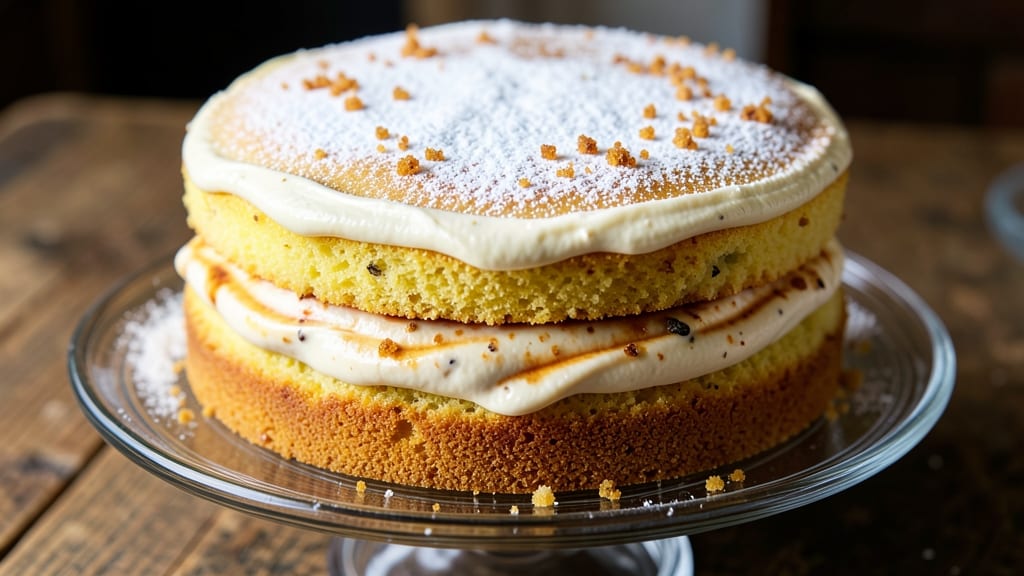
Alton Brown’s yellow cake recipe delivers moist, tender layers that bake up perfectly every time—no dry crumbs in sight. 💛 The secret lies in precise measurements and vanilla bean magic, transforming simple ingredients into a cake so good, it’ll become your new standard.
This isn’t just another boxed-mix hack; it’s a foolproof method that balances butter and oil for richness while keeping the texture light and airy.
What sets this recipe apart is Alton’s signature technique: folding in buttermilk at the end for extra moisture, and using real vanilla extract (or even vanilla bean) for depth. The cake bakes at 350°F for 25–35 minutes, yielding golden layers that stay tender even when sliced.
Whether you’re frosting it with buttercream or leaving it naked with fresh berries, the flavor is consistently restaurant-quality—just without the fuss.
No special equipment is needed—just a standard 9x13-inch pan and a whisk. The ingredients list is straightforward (flour, sugar, eggs, butter, oil, buttermilk, and vanilla), but the method ensures perfectly balanced sweetness and structure.
The result? A cake that’s moist enough to eat with a spoon but sturdy enough to hold frosting or fillings without falling apart.
For those who love creative twists, Alton’s recipe also works beautifully as a layer cake (with store-bought frosting) or even as a pound cake when adjusted slightly. The beauty of this method is its versatility—it’s perfect for birthdays, potlucks, or just a Sunday treat. Let’s get baking!
Ingredients for alton brown yellow cake
Nine essential ingredients create Alton Brown’s signature moist, golden layers—vanilla and buttermilk are the magic touch.
| Ingredient | Amount | Notes |
|---|---|---|
| All-Purpose Flour 🌾 | 2 ¼ cups | Sifted for even texture |
| Granulated Sugar 🍚 | 1 ½ cups | Superfine preferred for smoothness |
| Light Brown Sugar 🍚 | ½ cup | Packed for accurate measure |
| Unsalted Butter 🧈 | 1 cup | Room temperature, cubed |
| Vegetable Oil 🫒 | ½ cup | Light, not extra-virgin |
| Large Eggs 🥚 | 3 whole | Room temperature for even baking |
| Pure Vanilla Extract 🌿 | 2 tbsp | Or 1 vanilla bean scraped |
| Buttermilk 🥛 | 1 cup | Homemade or store-bought |
| Baking Powder 🧂 | 2 tsp | Aluminum-free preferred |
| Baking Soda 🧂 | ½ tsp | Freshly measured |
| Salt 🧂 | ½ tsp | Diamond Crystal preferred |
| Hot Water 💧 | ½ cup | For baking soda activation |
The flour is non-negotiable—King Arthur or Gold Medal brands yield the best texture, but any all-purpose will work in a pinch. Superfine sugar dissolves more smoothly, but regular granulated works if you pulse it briefly in a food processor. For the butter, Plugrá stands out for its rich flavor, but Land O’Lakes or Organic Valley are solid alternatives. Room-temperature butter is critical—press cubes between parchment paper for 10 minutes if needed. The vanilla extract should be pure, not imitation; McCormick or Nielsen-Massey are reliable brands. If using a vanilla bean, scrape only the seeds—no need for the pod itself. Whole Foods or specialty grocers carry high-quality vanilla beans, but extract is more practical for home baking.
No buttermilk? Mix 1 tablespoon vinegar or lemon juice with 1 cup milk, let sit 5 minutes. The baking powder and soda must be fresh—if your leavening agents are over a year old, replace them. For a richer cake, substitute 2 tablespoons melted butter for the vegetable oil. Want extra moisture? Add 1 tablespoon sour cream to the batter. The hot water activates the baking soda—don’t skip this step, even if your recipe seems complete without it. Diamond Crystal salt measures differently than Morton’s; if using Morton’s, reduce to 0.25 teaspoon. For a gluten-free version, swap the flour for a 1:1 blend like Bob’s Red Mill.
Store cake layers in an airtight container at room temperature for up to 3 days, or freeze for 3 months. The buttermilk and eggs should be used within 2 days of opening for best results. Whisk the dry ingredients first to avoid lumps, and fold in the buttermilk gently—overmixing develops gluten and makes the cake tough. This recipe yields two 9-inch layers or one 9x13-inch pan—perfect for birthdays or potlucks. Leftovers? Toast slices with butter for a decadent treat.
Why You'll Love This Recipe
- No-Fuss Mixing: I swear by this recipe because it’s the kind of cake that doesn’t need a stand mixer—just a bowl and a whisk. The butter and oil combo keeps it moist without being greasy, and the brown sugar adds depth with almost no extra work.
- Buttery Vanilla Bliss: That perfect balance of granulated and brown sugar? It’s what makes this cake taste like a bakery slice, not a box mix. The butter isn’t overpowering, but it’s there—rich and warm, like a hug in every bite.
- Birthday to Picnic: This cake is my go-to for anything: a last-minute birthday cake, a potluck dessert, or even a lunchbox treat. The simple frosting (or none at all) lets it shine, and it travels well—no mess, just flavor.
- Budget Baking Wins: Honestly, this recipe is a steal. Butter and oil stretch further than you’d think, and the sugar combo makes it taste premium without costing a fortune. Plus, leftovers? They disappear faster than I can say “second slice.”
Step-by-step instructions for Alton brown's signature yellow cake
Here's the method that delivers tender, moist layers with that signature Alton Brown vanilla magic.
👨🍳 Step 1: Prepare Your Mixing Tools and Ingredients
Start by sifting the 2.25 cups all-purpose flour with the 2 tsp baking powder, 0.5 tsp baking soda, and 0.5 tsp salt into a medium bowl. Set aside—this prevents lumps and ensures even distribution throughout the batter. Meanwhile, measure out the 1.5 cups granulated sugar, 0.5 cup light brown sugar, 1 cup unsalted butter, and 0.5 cup vegetable oil.
Place the 3 whole large eggs and 2 tbsp pure vanilla extract in a separate bowl. The butter should be at room temperature—press your finger into it; it should leave a slight indent but hold its shape. This ensures proper emulsification with the sugars. Preheat your oven to 350°F and grease three 9-inch round cake pans with butter or baking spray, then line the bottoms with parchment paper for easy removal.
🍳 Step 2: Cream Butter and Sugars to Light and Fluffy
In a stand mixer fitted with the paddle attachment, beat the 1 cup unsalted butter and 0.5 cup vegetable oil on medium speed for 2 minutes until completely combined. This step creates a stable fat base that prevents crumbling. Gradually add the 1.5 cups granulated sugar and 0.5 cup light brown sugar, mixing on medium-high speed for 4-5 minutes until the mixture is pale, thick, and nearly doubles in volume.
You'll notice the mixture becomes lighter in color and leaves clean streaks on the sides of the bowl when you lift the paddle. This indicates proper aeration—critical for that signature tender crumb. Scrape down the sides of the bowl with a spatula to ensure even mixing before adding the eggs.
🥘 Step 3: Combine Wet Ingredients and Alternate with Dry
Add the 3 whole large eggs one at a time, mixing on low speed after each addition until fully incorporated. Then add the 2 tbsp pure vanilla extract and mix for 30 seconds to combine. In a separate bowl, whisk together the 1 cup buttermilk and 0.5 cup hot water—this activates the baking soda for maximum rise.
With the mixer on low speed, add one-third of the dry ingredients, mixing just until combined. Then add half of the buttermilk mixture, mixing until just combined. Repeat, ending with the remaining dry ingredients. This alternating method creates a tender crumb by preventing gluten development while ensuring even distribution of leavening agents.
⏰ Step 4: Bake to Perfect Doneness
Divide the batter evenly among the three prepared 9-inch round cake pans. Tap each pan gently on the counter to release any air bubbles, then smooth the tops with a spatula. Bake in the preheated 350°F oven for 25-30 minutes, or until a toothpick inserted into the center comes out clean with just a few moist crumbs clinging to it.
Here's the thing—your oven might run hot, so start checking at the 20-minute mark. The cake should spring back when gently pressed in the center, and the edges should pull away slightly from the pan. If the tops brown too quickly, tent loosely with aluminum foil. Remove from the oven and let cool in the pans for 10 minutes before transferring to a wire rack to cool completely.
Pro Tips For Making Alton Brown Yellow Cake
- WHISK THE BUTTER-OIL MIX LONG ENOUGH: I learned this the hard way—skipping the 3-4 minute vigorous whisking of the butter, oil, and sugars leaves you with a cake that’s dense and greasy. The goal is to lighten the mixture until it’s pale and fluffy, like a cloud you could float on. (Yes, even if you’re impatient like me.)
- MEASURE FLOUR BY WEIGHT: After burning three batches with overly dry cake, I switched to weighing my flour instead of scooping. For this recipe, that’s about 250 grams—packing it or scooping it loose changes the texture dramatically. A kitchen scale is the only way to guarantee consistency.
- DON’T OVERMIX THE BATTER: Once you add the flour, mix just until combined—no more. I used to beat it like I was punishing the batter, and the result was a tough, rubbery cake. Stop when there are no more flour streaks, and resist the urge to overwork it. (Your future self will thank you.)
- USE ROOM-TEMPERATURE BUTTER: Cold butter creates pockets of air that can cause uneven baking, while overly soft butter can make the cake greasy. Let it sit out for 1-2 hours until it’s pliable but not melted—press your finger in and leave a slight indent. Sounds weird, but it works: the cake rises evenly and stays moist.
Wine and beer pairings for alton brown yellow cake
Classic White Wine
Alton Brown’s vanilla-infused yellow cake pairs beautifully with crisp Chardonnay or Sauvignon Blanc—both complement the cake’s buttery richness without overpowering. I reach for a California Chardonnay like La Crema or Kendall-Jackson for its bright acidity and subtle oak notes that mirror the cake’s vanilla depth.
For a lighter option, a New Zealand Sauvignon Blanc from Kim Crawford adds zesty citrus that cuts through the sweetness. 🍷
Sweet Sparkling Wine
Celebrate special occasions with Prosecco or Cava—their effervescence and slight sweetness create a magical contrast. A La Marca Prosecco from Italy offers floral notes that harmonize with the cake’s vanilla, while Freixenet Cordon Negro Cava provides a crisp, dry alternative.
Serve chilled in flutes for an elegant touch that elevates any cake presentation.
Rich Dessert Wine
For a decadent pairing, try Moscato d’Asti or Port—their natural sweetness enhances the cake’s caramelized sugar notes. A Bartolo Mascarello Moscato d’Asti from Piedmont delivers a honeyed finish, while a tawny Port like Graham’s 10-Year-Old adds a nutty depth that complements the cake’s buttery layers.
Serve slightly warmed for Port or well-chilled for Moscato.
Light Craft Beer
Beer lovers should opt for wheat beers or light lagers—their subtle sweetness and effervescence balance the cake’s richness. A Blue Moon Belgian White with its coriander and orange peel notes creates a refreshing contrast, while a Heineken or Peroni offers a crisp, clean finish.
For a local favorite, try a local wheat ale with a touch of honey to mirror the cake’s vanilla sweetness. 🍺
Spiced Beer Pairing
Add warmth to your pairing with a spiced ale like Samuel Adams Noble Experiment or Allagash Winter Ale. The cinnamon and clove notes in these beers echo the cake’s vanilla and brown sugar, creating a cozy, aromatic experience.
Serve the beer slightly chilled to preserve its complex flavors while enjoying the cake at room temperature.
Nutrition facts
Frequently asked questions
Why does Alton Brown's recipe use both butter and oil?
The combination creates the perfect balance of richness and moisture. Butter adds flavor and structure, while vegetable oil keeps the cake tender and prevents dryness. This classic "butter-oil blend" is a signature of Alton's method, ensuring layers that stay moist even after baking.
Can I make this cake in a 9x13-inch pan instead of rounds?
This recipe yields a single 9x13-inch pan when using the full batter. Just bake for 30-35 minutes at 350°F until a toothpick comes out clean. For even baking, rotate the pan halfway through. The texture stays just as tender!
What's the secret to getting perfectly even layers?
Use a kitchen scale to divide batter evenly between pans, and tap each pan firmly on the counter 3 times to release air bubbles. Bake in the middle rack of your oven for consistent heat distribution. For layer cakes, chill pans 10 minutes before removing to prevent doming.
How do I store leftover cake?
Wrap layers tightly in plastic wrap and store at room temperature for 3 days, or freeze for 3 months. For extra moisture, place a slice of bread between layers. To serve, thaw at room temperature or warm briefly in the oven at 300°F for 5-10 minutes.
Can I substitute vanilla extract with vanilla bean?
Yes! Scrape 1 vanilla bean (about 1 teaspoon seeds) and mix with 1 tablespoon water to replace the 2 tablespoons extract. The flavor will be more complex and aromatic. For best results, use a high-quality Madagascar vanilla bean from specialty stores.