
Desserts
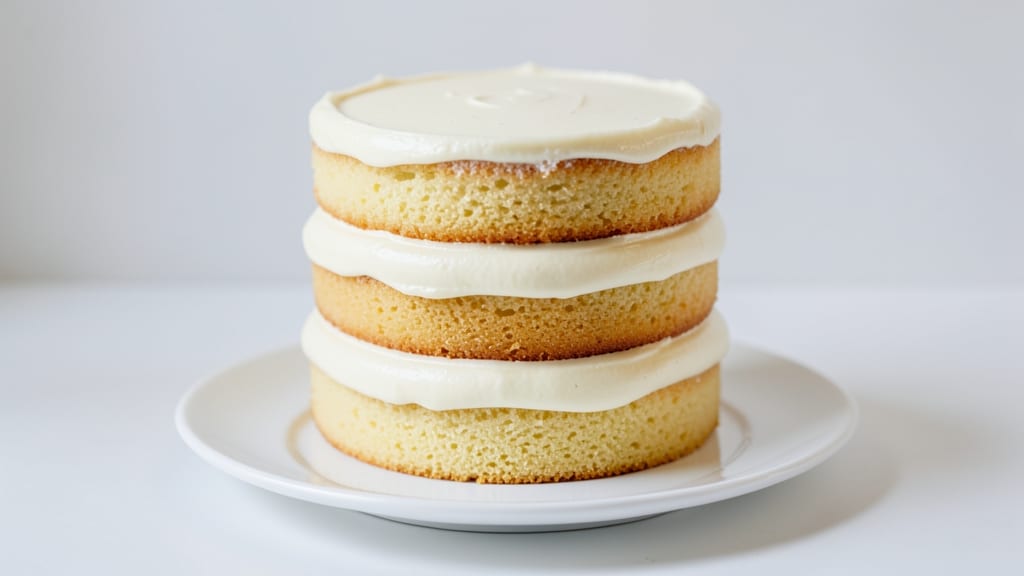
This amazing white cake recipe delivers the lightest, fluffiest vanilla cloud you've ever tasted—so tender it practically melts in your mouth. 💛 The secret lies in folding egg whites to cloud-like perfection and using room-temperature butter for that signature buttery richness.
I've baked countless versions, and this one consistently rises higher, stays moister, and separates beautifully into layers. What makes this cake truly special is its foolproof technique that works every time—no overmixing, no guessing, just a foolproof method for a cake that's as pretty as it is delicious.
The layers stay soft for days, and the frosting (vanilla buttercream or cream cheese) clings perfectly without weighing it down. It's the kind of cake that makes birthdays feel extra magical.
By the time you're done, you'll have a showstopping dessert with buttery layers that slice cleanly and a frosting so smooth it looks like it came from a bakery. The vanilla flavor shines through without being overpowering, making it versatile enough for any occasion—from elegant weddings to casual brunch celebrations.
Ready to bake? Let's get started—this cake is easier than you think, and the results will have everyone asking for seconds.
Ingredients for amazing white cake
Room-temperature butter and separated eggs create this magical white cake with layers so light they melt in your mouth.
| Ingredient | Amount | Notes |
|---|---|---|
| All-Purpose Flour 🌾 | 2 ½ cups | Sifted for fluffiness, plus extra for dusting |
| Unsalted Butter 🧈 | 1 ½ cups | Room-temperature, European-style preferred |
| Granulated Sugar 🍚 | 2 cups | Superfine for smoother texture |
| Large Eggs 🥚 | 8 whole | Room-temperature, separated carefully |
| Vanilla Extract 🌸 | 2 tsp | Pure Madagascar bourbon preferred |
| Baking Powder 🧂 | 2 tsp | Diamond Crystal brand recommended |
| Salt 🧂 | ½ tsp | Fine sea salt preferred |
| Milk 🥛 | ½ cup | Whole milk for richness |
| Vanilla Buttercream Frosting 🍰 | 2 cups | Homemade or quality store-bought |
| Powdered Sugar 🍚 | 1 cup | Sifted for smooth texture |
| Heavy Whipping Cream 🥛 | 1 cup | Cold, for buttercream |
| Vanilla Bean Paste 🌸 | 1 tsp | For extra vanilla depth |
| Lemon Zest 🍋 | 1 tsp | Brightens flavor beautifully |
The butter is non-negotiable here—European-style with at least 80% fat content gives the richest texture. Grab it from Whole Foods or Trader Joe's if you want to splurge; their cultured butter has that tangy depth. Let it sit out for 2 hours before using—no microwave shortcuts. The flour? King Arthur or Gold Medal are my go-tos, but any all-purpose will work. Pro tip: Sift it with the baking powder and salt first to avoid lumps. Eggs should be room-temperature too—cold yolks won't emulsify properly, and that's when your cake turns dense. I buy pasture-raised when I can, but regular large eggs work fine for this recipe.
No vanilla bean paste? Double the vanilla extract—it's the same flavor, just less intense. Running short on buttercream? Cream cheese frosting works beautifully here (just swap the buttercream for 8 oz softened cream cheese + 1 cup powdered sugar + 1 tsp vanilla). The powdered sugar should be sifted—those little clumps ruin the smoothness. For the milk, whole milk gives the best flavor, but 2% in a pinch. And if you're feeling fancy, add a pinch of cream of tartar to your egg whites for extra stability when whipping. Trust me, it makes a difference.
This cake stays fresh for 3 days at room temperature covered loosely, or 5 days in the fridge. For longer storage, wrap tightly in plastic and freeze the layers separately for up to 3 months. Let them thaw overnight in the fridge before frosting. The buttercream keeps for 1 week refrigerated, or 2 months frozen. I always make extra frosting—it's perfect for cupcakes or cookies later. And if anyone asks, the secret to those perfect layers? Folding the egg whites gently—don't overmix, or you'll deflate your cloud.
Why You'll Love This Recipe
- Minimal Mixing Madness: I swear, this cake only needs a bowl and a whisk—no stand mixer, no overmixing stress. Cream butter and sugar until light, toss in eggs one at a time, then fold in dry ingredients. That’s it. No waiting for flour to rest, no worrying about overbeating.
- Vanilla Butter Bliss: The secret’s in the butter. Cold, cubed unsalted butter folded into the batter gives you that just-baked richness—no greasy aftertaste, just pure, tender crumb. And that vanilla? A splash of pure extract makes every bite smell like a bakery.
- Frosting’s Best Friend: This cake is the blank canvas of desserts. Too dry? A quick brush of simple syrup fixes it. Too plain? Stack it with lemon curd, whipped cream, or even a dusting of powdered sugar. Honestly, I’ve turned leftovers into trifles, cake pops, and breakfast toast—it’s that adaptable.
- Budget Baking Win: Four simple pantry staples (flour, butter, sugar, eggs) mean no specialty shopping. A single batch costs me less than takeout, and it keeps for days wrapped in plastic. My secret? Store it in the fridge, then bring to room temp before serving—still moist, still perfect.
Step-by-step instructions for light-as-air vanilla cake
Here's how to bake a showstopping white cake with tender crumb and perfect layers—every time.
👨🍳 Step 1: Prepare the Cake Batter for Maximum Fluffiness
Preheat your oven to 350°F and generously grease and flour two 9-inch round cake pans. Line the bottoms with parchment circles for even baking. In a medium bowl, whisk together the 2.5 cups all-purpose flour, 2 tsp baking powder, and 0.5 tsp salt. Sift the mixture twice to eliminate any lumps—this ensures a light, airy texture.
In a separate large bowl, beat the 1.5 cups unsalted butter and 2 cups granulated sugar on medium-high speed for 3-4 minutes until pale and fluffy. This creaming process incorporates air, which creates those signature tender layers. Scrape down the sides of the bowl with a spatula to ensure even mixing.
🍳 Step 2: Incorporate Eggs and Wet Ingredients
Add the 8 whole large eggs, 1 at a time, beating well after each addition until fully incorporated. The mixture should be thick and ribbon-like. Here's the thing—room-temperature eggs blend more smoothly, so if yours are cold, let them sit in warm water for 5 minutes first.
In a small bowl, whisk together the 0.5 cup milk, 2 tsp vanilla extract, and 1 tsp vanilla bean paste. Gradually pour this mixture into the butter-egg combination while mixing on low speed. Finally, gently fold in the dry ingredients with a spatula, mixing just until combined—overmixing develops gluten and makes the cake dense.
🥘 Step 3: Bake to Golden Perfection
Divide the batter evenly between the prepared pans. Tap the pans gently on the counter to release any air bubbles, then bake for 25-30 minutes until a toothpick inserted in the center comes out clean. The cakes should be golden on top but still slightly springy to the touch.
I know it seems counterintuitive, but don't overbake—this cake is delicate. If you see the edges starting to brown too quickly, tent the pans with aluminum foil. Let the cakes cool in the pans for 10 minutes before transferring to a wire rack to cool completely. This gradual cooling prevents cracking.
🍳 Step 4: Prepare the Vanilla Buttercream Frosting
In a medium bowl, beat the 1 cup heavy whipping cream until soft peaks form. In another bowl, whisk together the 1.5 cups unsalted butter (softened), 1 cup powdered sugar, and 1 tsp lemon zest. Gradually fold the buttercream into the whipped cream until smooth and fluffy.
Here's where it gets fun—add the 2 cups vanilla buttercream frosting and mix until fully combined. The result should be a light, airy frosting that's perfect for filling and decorating. If it's too thick, add 1-2 teaspoons milk at a time until it reaches a smooth, spreadable consistency.
🥘 Step 5: Assemble and Decorate Your Cake
Once the cakes are completely cool, level the tops if needed. Place one cake layer on a cake stand or plate and spread a generous layer of the vanilla buttercream frosting. Top with the second cake layer and gently press down. Frost the entire cake with a thin crumb coat, then chill in the refrigerator for 15 minutes to set.
Apply the final layer of frosting, smoothing it with a spatula or bench scraper. For a polished look, pipe decorative swirls or rosettes around the edges. The 1 tsp lemon zest in the frosting adds a subtle brightness that complements the vanilla beautifully. Slice and serve immediately for the best texture!
Pro Tips For Making Amazing White Cake
- Cream Butter Properly: Beat the butter and sugar until it’s pale, fluffy, and leaves clean streaks on the bowl—about 3-5 minutes. I used to stop when it looked "light enough," but that extra minute makes the cake tender and less dense. (Yes, it feels like overkill, but trust me.)
- Room-Temp Eggs: Take eggs out of the fridge 30 minutes before using—no need to warm them in hot water. Cold eggs mix unevenly and can cause the batter to curdle, leading to a cake that’s tough instead of silky. (I learned this after a batch that looked like it had been kneaded too much.)
- Don’t Overmix: Stop folding in the flour the second it’s just combined—no gray streaks, no overworking. Overmixing develops gluten, and your cake will turn out dense and chewy instead of light. (I now set a timer for 10 seconds after the flour disappears.)
- Test for Doneness: Tap the top of the cake gently—it should spring back, not jiggle. If the edges pull away too soon, cover it loosely with foil to prevent cracking. (I used to pull it out too early, and the center was always gummy.)
Make-ahead tips for this recipe
Batter Prep Ahead
Mix the cake batter up to 24 hours ahead and store it in an airtight container in the fridge. The flavors meld beautifully overnight, and the eggs have time to fully incorporate.
When ready to bake, let the batter sit at room temperature for 30 minutes before dividing into pans. This prevents temperature shock and ensures even baking. 💡
Layer Storage
Bake the cake layers up to 3 days in advance and store them wrapped tightly in plastic at room temperature. For longer storage, freeze the layers (without frosting) for up to 3 months.
Thaw overnight in the fridge before assembling. This method keeps the layers perfectly moist and prevents drying.
Frosting Prep
Make the vanilla buttercream frosting 1 day ahead and store it in an airtight container in the fridge. Bring it to room temperature before using to make it easier to spread. If it hardens, microwave in 10-second bursts until soft. This ensures a smooth finish when decorating your cake.
Assembling Later
Assemble the cake 4-6 hours before serving to allow the frosting to set properly. Cover it loosely with plastic wrap and store at room temperature. If you need to store it longer, refrigerate the assembled cake (covered) for up to 3 days.
Bring it to room temperature before serving for the best texture and flavor.
Make-Ahead Cupcakes
Divide the batter into cupcake liners and bake as directed. Store the cooled cupcakes in an airtight container for 2 days at room temperature or freeze for 2 months. Frost just before serving. This is a great way to prep for parties or quick breakfasts—just grab and go!
Freezing Fully Frosted
For a fully assembled cake, wrap it tightly in plastic wrap and aluminum foil, then freeze for up to 1 month. Thaw in the fridge overnight before serving. The frosting may soften slightly, so let it sit at room temperature for 30 minutes before slicing for clean cuts.
This is perfect for special occasions you want to prep in advance.
Nutrition facts
Frequently asked questions
Why does this white cake turn out so light and fluffy?
The secret is in the technique: folding whipped egg whites into the batter at the end incorporates air without deflating the structure. Room-temperature butter and eggs also emulsify better, creating a tender crumb. Plus, the gentle folding of dry ingredients prevents gluten development that makes cakes dense.
Can I substitute buttercream with cream cheese frosting?
Swap the buttercream for 8 oz softened cream cheese, 1 cup powdered sugar, and 1 tsp vanilla. Whip until smooth, then add 1-2 tbsp milk if needed. The tangy flavor pairs beautifully with the vanilla cake layers.
How do I fix cracked cake layers?
Cracks usually happen from rapid cooling or overmixing. To prevent them: let cakes cool in pans for 10 minutes, then transfer to racks. For existing cracks, use leftover frosting to fill gaps before assembling. If severe, level the tops with a serrated knife for clean slices.
What's the best way to store leftovers?
Cover tightly with plastic wrap and store at room temperature for 3 days. For longer storage, refrigerate (up to 5 days) or freeze layers separately for 3 months. Thaw overnight in the fridge before serving. Frosting keeps 1 week refrigerated or 2 months frozen.
Can I make this cake gluten-free?
Yes, but with adjustments: replace flour with 2 cups gluten-free 1:1 baking flour (like Bob's Red Mill) plus 1 tbsp xanthan gum. Add 1 extra egg white for structure. Note the texture will be slightly denser, but still delicious. Always test gluten-free flours first in small batches.