
Desserts
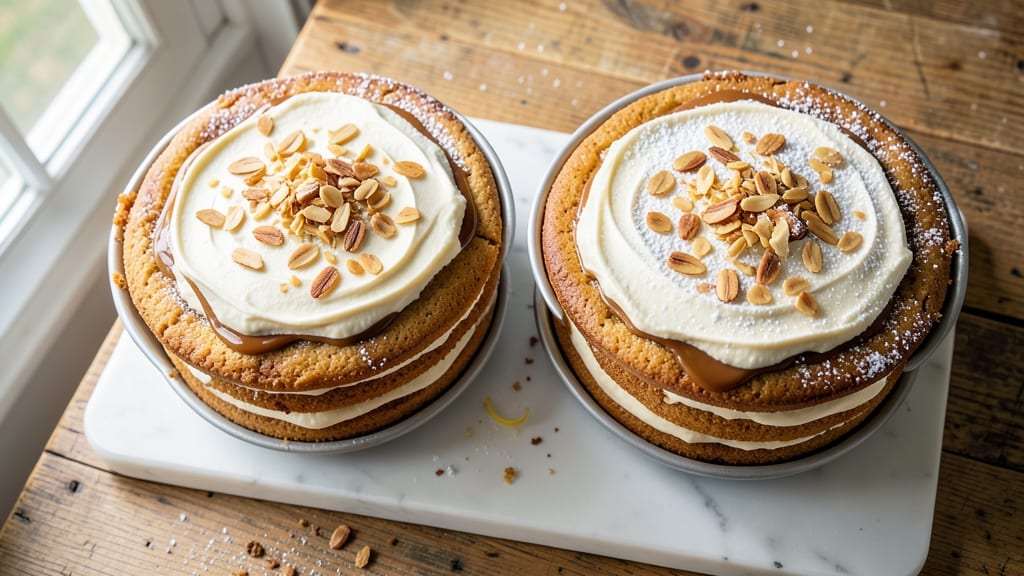
This American birthday cake recipe delivers the classic vanilla buttercream dream every celebration deserves—moist layers, perfect crumb, and a frosting so smooth it looks like it came from a bakery. The secret lies in a foolproof layering technique that ensures clean cuts and professional results, even for beginners. I've perfected this recipe over years of baking for birthdays big and small, and it never fails to impress.
The foundation is a tender vanilla cake baked to golden perfection, then cooled just enough to handle without crumbling. Between each layer, a generous swath of classic American buttercream creates that signature fluffy texture and sweet vanilla flavor.
What sets this apart is the patience in layering—chilling the cake between steps guarantees clean slices and a sturdy structure that holds up to decorations or candles.
By the time you're done, you'll have a cake that's equal parts nostalgic and impressive: layers of moist vanilla cake separated by velvety buttercream, ready for sprinkles, fondant, or a simple dusting of powdered sugar.
The frosting is thick enough to pipe decorative borders but smooth enough to spread effortlessly. This is the kind of cake that makes birthdays feel special without requiring advanced baking skills.
Whether you're celebrating a milestone or a simple childhood birthday, this recipe scales beautifully—from a single-layer sheet cake to a three-tiered masterpiece. The key to success is attention to detail during the chilling and frosting stages, but the results are worth every minute.
Let's get started on creating a birthday cake that will be the star of the celebration.
Ingredients for american birthday cake
Twelve essential ingredients for a restaurant-quality vanilla buttercream cake that's foolproof for beginners.
| Ingredient | Amount | Notes |
|---|---|---|
| All-Purpose Flour 🌾 | 2 ½ cups | Sifted for light texture |
| Granulated Sugar 🍚 | 2 cups | Superfine preferred for smoothness |
| Unsalted Butter 🧈 | 1 cup | Room temperature for creaming |
| Large Eggs 🥚 | 4 whole | Room temperature for even baking |
| Pure Vanilla Extract 🍯 | 2 tsp | High-quality bourbon-based preferred |
| Baking Powder 🧂 | 2 tsp | Diamond Crystal preferred |
| Salt 🧂 | ½ tsp | Fine sea salt preferred |
| Milk 🥛 | 1 cup | Room temperature for smooth batter |
| Unsalted Butter 🧈 | 1 ½ cups | Room temperature for buttercream |
| Powdered Sugar 🍚 | 4 cups | Sifted for smooth frosting |
| Heavy Cream 🥛 | ½ cup | Cold for stability |
| Pure Vanilla Extract 🍯 | 1 tsp | Same as cake for consistency |
| Pinch 🧂 | 1 pinch | Salt to balance sweetness |
The foundation starts with all-purpose flour—King Arthur or Gold Medal brands are ideal for their protein balance. For the sugar, superfine is worth the splurge (or pulse regular sugar in a food processor). Bourbon-based vanilla extract adds depth, and Diamond Crystal baking powder gives better lift than aluminum-free alternatives. The butter must be room temperature—press it gently if it's too soft. For milk, whole milk works best, but 2% is fine in a pinch. Pro tip: Measure flour by weight if possible for consistency, but the 1:1.25:0.5 ratio of flour:sugar:butter holds true either way. This cake thrives on precision in the dry ingredients, so sift everything thoroughly. The vanilla extract should be the good stuff—McCormick or Nielsen-Massey are reliable brands that won't break the bank.
No superfine sugar? Pulse regular sugar in a food processor for 30 seconds—it'll work in a bind. Short on buttercream time? Use 3/4 cup butter and 3 cups powdered sugar, but the texture will be slightly less stable. The heavy cream in the frosting adds lightness, but whipped cream at full fat works if you're in a hurry (though it won't hold as well). For a dietary tweak, substitute Greek yogurt for half the milk in the cake batter for moisture without altering flavor. The pinch of salt in the frosting is non-negotiable—it cuts through the sweetness and enhances the vanilla. If you're scaling up for a crowd, double the frosting recipe and use a stand mixer to avoid overworking the butter. And for the love of cake, don't skip chilling the layers—this is what guarantees clean slices.
Store cake components separately: wrap the cake layers tightly in plastic and refrigerate for up to 3 days, while the frosting can be made 2 days ahead and kept at room temperature in an airtight container. For longer storage, freeze the assembled cake (unfrosted or with a thin layer of frosting) for up to 3 months—thaw overnight in the fridge before final decorating. The frosting can be rewhipped if it softens during storage, but add a splash of milk to restore consistency. Room temperature cake layers slice best—bring them out 30 minutes before serving. And here's a pro move: pipe a thin crumb coat, chill for 15 minutes, then add the final layer of frosting for that bakery-perfect finish. Leftovers? Slice and freeze individual portions on parchment for easy grab-and-go birthday treats.
Why You'll Love This Recipe
- No Mixer Needed: I swear by this—just a bowl and a whisk. Cream that butter and sugar until it’s light and fluffy (about 3 minutes of elbow grease), then fold in the eggs one at a time. No stand mixer? No problem. The cake still rises high and stays moist because of that butter-fat magic.
- Vanilla Buttercream Dream: That vanilla extract isn’t just flavor—it’s the star. Rich, buttery layers paired with a frosting so smooth it disappears between bites. Honestly, I’ve tried boxed mixes, but this? It’s the kind of cake where the first slice makes you pause mid-bite, like, "Wait, is this really homemade?"
- Birthday or Bake Sale: Serve it at a kid’s party, a work potluck, or even a solo dessert night. The recipe scales easily—double it for a crowd, halve it for a "just me" treat. I’ve taken it to office celebrations (it vanished in 20 minutes) and used it for a last-minute mom’s birthday gift. No stress, just cake.
- Pantry Staples Only: Five ingredients, zero weird substitutions. Flour, sugar, butter, eggs, and vanilla—stuff you already own. And the leftovers? They last way longer than store-bought. I’ve reheated slices in the oven for breakfast (yes, really) and still had people asking for seconds. Budget-friendly? Check. Reliable? Double check.
Step-by-step instructions for vanilla buttercream birthday cake
Here's the straightforward method for a classic American birthday cake with perfect layers and velvety buttercream.
Prepare the Cake Batter
Preheat your oven to 350°F and grease two 9-inch round cake pans with butter, then line the bottoms with parchment paper. In a large mixing bowl, combine the 2.5 cups All-Purpose Flour and 2 tsp Baking Powder. Sift this mixture together with the 0.5 tsp Salt to remove any lumps and ensure even distribution.
In a separate bowl, cream together the 1 cup Unsalted Butter and 2 cups Granulated Sugar on medium speed until light and fluffy, about 3-5 minutes. This step is crucial—you'll know it's ready when the mixture nearly doubles in volume and becomes pale. Add the 4 whole Large Eggs, one at a time, mixing well after each addition. Stir in the 2 tsp Pure Vanilla Extract and 1 cup Milk until just combined.
Fold and Bake the Layers
Gradually add the dry ingredients to the wet mixture, mixing on low speed just until incorporated. Avoid overmixing—stop as soon as the batter comes together. Divide the batter evenly between the prepared cake pans. Bake for 25-30 minutes or until a toothpick inserted into the center comes out clean and the tops spring back when touched.
Let the cakes cool in the pans for 10 minutes before transferring them to a wire rack to cool completely. This gradual cooling prevents cracking. While they cool, prepare your work surface by laying out parchment paper and gathering all your frosting ingredients.
Make the Classic Vanilla Buttercream
In a large mixing bowl, beat the 1.5 cups Unsalted Butter until smooth and creamy, about 2-3 minutes. Gradually add the 4 cups Powdered Sugar, sifted to prevent graininess, mixing on low speed until combined. Increase the speed to medium and beat for another 3-5 minutes until light and fluffy.
Add the 0.5 cup Heavy Cream and 1 tsp Pure Vanilla Extract, beating until fully incorporated. For the perfect balance of sweetness, add a 1 pinch of Salt and mix just until dissolved. The buttercream should be smooth, spreadable, and hold its shape when piped. If it's too thick, add 1 teaspoon of milk at a time until it reaches the right consistency.
Layer and Frost the Cake
Once the cakes are completely cool, level the tops if needed using a serrated knife. Place the first layer on a cake stand or plate and spread a thin layer of buttercream on top to create a "crumb coat." This prevents crumbs from getting into your final frosting. Repeat with the second layer.
Spread a generous layer of buttercream on the top and sides of the cake, using an offset spatula to smooth the surface. For a classic look, create a swirl pattern with a bench scraper or piping bag. Use any remaining buttercream to decorate the top with rosettes or simple piping designs. Chill the cake in the refrigerator for 30 minutes before serving to help the frosting set.
Pro Tips For Making American Birthday Cake
- MEASURE BUTTER COLD: Take the butter straight from the fridge—no softening, no room-temperature nonsense. Cream it with sugar until it’s light and fluffy, but still holds peaks when you drag a spoon through. I used to rush this, and the cake turned dense. Trust me, cold butter beats greasy messes every time.
- WHISK EGGS ROOM TEMP: Crack eggs into a separate bowl first—no shells in your batter—and let them sit for 10 minutes before adding. Room-temp eggs blend smoother and incorporate better into the butter-sugar mix. I learned this after a lumpy batch ruined my first attempt at layering. Now? Silky-smooth every time.
- FOLD DRY INGREDIENTS GENTLY: When adding flour, use a spatula to cut through the batter in a zigzag, then fold just until combined—don’t overmix. Overworking the batter develops gluten, and your cake will turn tough instead of tender. I’ve seen people beat this like pancakes; don’t be that person.
- BAKE UNTIL SPRINGY: The cake’s done when the edges pull away from the pan and a toothpick comes out with one moist crumb—no wet batter clinging. Overbaking dries it out; underbaking leaves it gummy. I used to eyeball it, but now I wait for that telltale bounce. Your cake will thank you.
Best sauces and condiments for this american birthday cake
Classic Vanilla Glaze
This simple syrup glaze elevates your cake with a glossy finish and subtle vanilla flavor. Combine 1 cup powdered sugar with 2 tablespoons milk and ½ teaspoon vanilla extract, then whisk until smooth.
Drizzle over the fully frosted cake right before serving—it adds a professional sheen and balances the richness of the buttercream. 💫
Chocolate Ganache Drizzle
For chocolate lovers, a dark chocolate ganache adds decadence. Melt ½ cup heavy cream with ½ cup chopped dark chocolate (60-70%) in a heatproof bowl, then let cool slightly.
Drizzle over the cake in zigzag patterns or pool it on top for a dramatic effect. Pair with white chocolate shavings for contrast.
Cream Cheese Frosting Swirl
Swap out buttercream for a tangy cream cheese frosting by mixing 8 oz cream cheese (softened) with ½ cup butter, 3 cups powdered sugar, and 1 teaspoon vanilla.
Spread between layers and on top, then use a spatula to create elegant swirls. This adds a sophisticated twist while keeping the classic birthday cake vibe.
Berries and Whipped Cream
Fresh berries and whipped cream make a refreshing topping. Spread a layer of whipped cream (or leftover buttercream) on top of the cake, then arrange raspberries, strawberries, or blueberries in a circular pattern.
Add a dollop of whipped cream in the center for a rustic yet elegant look. This works especially well for summer birthdays.
Caramel Drizzle
For a sweet, gooey touch, drizzle warm caramel over the cake. Heat 1 cup caramel sauce (store-bought or homemade) until pourable, then drizzle in thin streams. Let it set for 10 minutes before adding sprinkles or additional decorations. The caramel adds a rich, buttery contrast to the vanilla cake.
Citrus Curd Filling
Add a bright citrus twist by filling the layers with homemade lemon or orange curd. Spread ½ cup curd between cake layers, then frost as usual. The tangy flavor cuts through the sweetness and adds a vibrant color contrast. Store-bought curd works in a pinch, but homemade tastes fresher.
Nutrition facts
Frequently asked questions
Can I make this cake in a different pan size?
Yes, but adjust the baking time! For 8-inch pans, bake 20-25 minutes and for 10-inch pans, bake 30-35 minutes. The key is to check doneness with a toothpick—it should come out clean. If using odd sizes, reduce oven temperature by 10°F to prevent over-browning.
How do I store this cake if I'm making it ahead?
Wrap the unfrosted cake layers tightly in plastic wrap and refrigerate for up to 3 days. Make the frosting 2 days ahead and store it at room temperature in an airtight container. Assemble the cake 4-6 hours before serving to allow flavors to meld. For longer storage, freeze the assembled cake (unfrosted or with a thin frosting layer) for up to 3 months.
Why did my cake sink in the middle?
This usually happens from overmixing the batter or opening the oven too soon. For next time, mix just until combined (about 30 seconds after dry ingredients are incorporated) and avoid opening the oven door in the first 20 minutes of baking. Also, ensure your oven is fully preheated to 350°F before baking.
Can I substitute buttercream with another frosting?
Try cream cheese frosting (mix 8 oz cream cheese with ½ cup butter and 3 cups powdered sugar) for a tangy twist, or whipped cream frosting (whip 2 cups heavy cream with 1 cup powdered sugar) for a lighter option. Just adjust sweetness to taste—cream cheese frosting needs less sugar than buttercream.
How do I decorate this cake for a themed birthday?
For a rustic look, use fresh berries, edible flowers, or chocolate shavings. For a party vibe, pipe swirls with colored buttercream or add sprinkles. Try fondant shapes for a polished finish, or go for a naked cake look by omitting frosting and drizzling with glaze instead. The key is to keep it simple—birthday cakes shine with joy, not complexity!