
Desserts
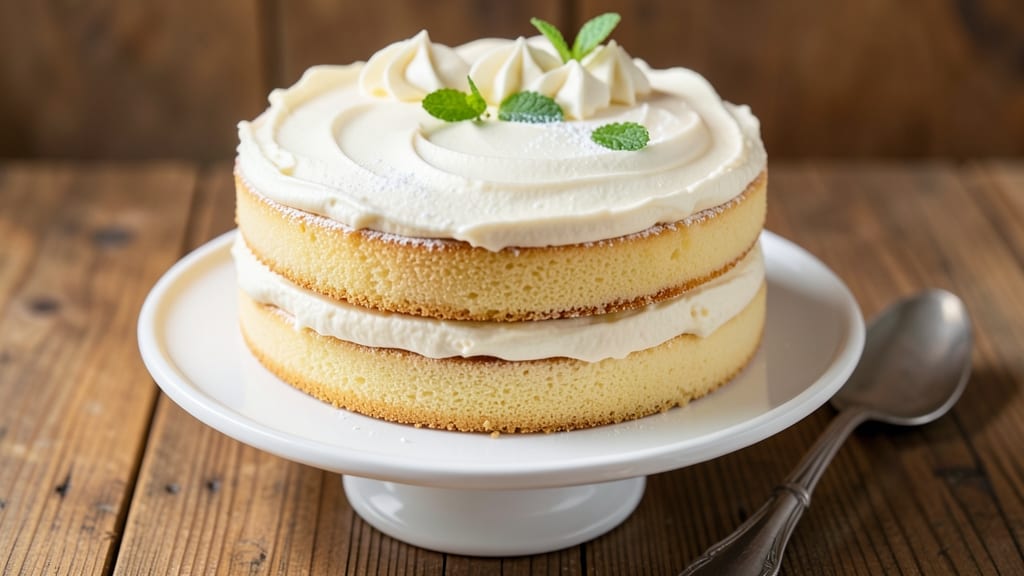
This Amish white cake recipe delivers the signature tender layers and delicate vanilla flavor that make it a beloved classic. 💛 The secret lies in a simple yet precise method—layered with buttercream that stays light and fluffy, not dense.
What sets this apart is the traditional Amish approach: minimal fuss, maximum flavor, and a frosting that balances sweetness with subtle warmth from spices like cinnamon and nutmeg.
The cake itself is famously soft and moist, thanks to a combination of all-purpose flour and a touch of cornstarch for that signature crumb. Baking at the right temperature—350°F—ensures even layers without drying out, while the frosting gets its signature texture from whipped butter and powdered sugar.
This isn’t just dessert; it’s a tradition, often served at gatherings where simplicity and heart take center stage.
What you’ll end up with is a cake that’s light as air yet rich in flavor, with layers that separate cleanly and frosting that’s smooth enough to spread effortlessly. The aroma alone—vanilla, butter, and a whisper of spice—will have guests asking for seconds before the first slice is served.
Perfect for birthdays, church socials, or any occasion where homemade goodness shines.
For those who love tradition, you can add a layer of vanilla bean paste to the batter for extra depth, or swap the spiced frosting for a classic vanilla buttercream if you prefer. Either way, this cake delivers on the promise of comfort, one tender bite at a time.
Ingredients for amish white cake
Twelve simple ingredients for a cake that’s light, tender, and full of tradition.
| Ingredient | Amount | Notes |
|---|---|---|
| All-Purpose Flour 🌾 | 3 cups | Sifted for light texture |
| Unsalted Butter 🧈 | 1 ½ cups | Room temperature, full-fat |
| Granulated Sugar 🍚 | 2 cups | White sugar preferred |
| Vanilla Extract 🌿 | 2 tbsp | Pure vanilla preferred |
| Cornstarch 🌾 | 2 tbsp | For tender crumb |
| Large Eggs 🥚 | 4 whole | Room temperature |
| Milk 🥛 | 1 cup | Whole milk preferred |
| Baking Powder 🌶️ | 2 tsp | Aluminum-free preferred |
| Salt 🧂 | ½ tsp | Fine sea salt |
| Powdered Sugar 🍚 | 4 cups | For frosting |
| Ground Cinnamon 🌿 | 1 tsp | For spiced frosting |
| Ground Nutmeg 🌿 | ½ tsp | Freshly grated preferred |
| Vanilla Bean Paste 🌿 | 1 tbsp | Optional for extra flavor |
The flour is the backbone here—King Arthur or Gold Medal are my go-tos for that signature Amish crumb. Butter? Land O’Lakes or Plugrá (the European-style stuff) melts beautifully without separating. I always grab the vanilla extract from McCormick—it’s consistently strong, and you want that flavor to shine. Cornstarch is non-negotiable for that tender crumb; don’t skip it. The eggs should be room temperature—cold eggs make the batter lumpy, and this cake needs to be smooth as silk. For the milk, whole milk gives the best moisture, but 2% works in a pinch.
No vanilla bean paste? Pure vanilla extract is fine, but if you’ve got a scraped vanilla bean, add it to the milk for infusion. The frosting spices—cinnamon and nutmeg—should be freshly ground if possible (pre-ground loses potency fast). For powdered sugar, Domino or C&H are reliable, but if it’s clumpy, sift it first. The frosting can be made ahead and stored in the fridge for 3 days—just rewhip before using. And if you’re feeling fancy, a splash of heavy cream in the frosting makes it extra luscious.
This cake keeps beautifully—3 days at room temperature covered loosely with a towel, or 1 week refrigerated in an airtight container. The frosting? Store it in the fridge for up to 5 days, then whip it back up with a splash of milk to bring it back to life. I always slice it the day it’s made—guests notice the difference in freshness. For extra fluff, let the cake cool completely before frosting; patience here makes all the difference.
Why You'll Love This Recipe
- No Mixer Needed: I swear by this recipe when my mixer’s on the fritz—just cream butter and sugar by hand until light. The cornstarch keeps it tender without overworking, so even if you rush, it still turns out properly fluffy.
- Vanilla Buttercream Magic: That single teaspoon of vanilla extract? It’s the secret. The cake’s mild sweetness lets it shine, and the buttercream—made with the same butter—is rich but not heavy. Honestly, it’s the kind of cake that makes store-bought frosting feel like a letdown.
- Crowd-Pleaser Any Day: Birthday? Bridal shower? A last-minute potluck? This cake’s neutral flavor and smooth texture let it play nice with everything—fruit compote, chocolate ganache, or even a dusting of powdered sugar. I’ve served it at weddings and book clubs, and no one’s ever asked what’s in it.
- Budget-Friendly Staples: Flour, butter, sugar—these are pantry basics, not splurges. A single batch feeds 12 easily, and leftovers? They travel well for lunches or last-minute gifts. Between us, I’ve made this cake for under $8 total, and it’s still the star of the table.
Step-by-step instructions for Amish white cake
This classic recipe delivers tender layers and rich spiced frosting—here's how to nail it every time.
👨🍳 Step 1: Cream Butter and Sugar for Lightness
In a stand mixer fitted with the paddle attachment, beat the 1.5 cups unsalted butter and 2 cups granulated sugar on medium speed for 3-4 minutes until light and fluffy. You'll see the mixture nearly double in volume and turn pale—this is your signal it's ready. I like to scrape down the sides every minute to ensure everything gets incorporated evenly.
Here's the thing—don't rush this step. The air you're incorporating now creates those signature tender layers. If your butter isn't quite room temperature, let it sit at room temperature for 15-20 minutes first. You want it soft enough to press your finger into it slightly but not melted.
👨🍳 Step 2: Add Eggs and Vanilla for Moisture
Add the 4 whole large eggs, one at a time, mixing on low speed after each addition until fully incorporated. Then stir in the 2 tbsp vanilla extract and 1 tbsp vanilla bean paste (if using). The mixture will look slightly curdled, but that's normal—the eggs will come together when you add the dry ingredients.
I always use room temperature eggs too—they blend more smoothly and help create a lighter texture. If your eggs are straight from the fridge, let them sit in warm water for 5 minutes first. This step ensures your cake will have that perfect moist crumb without being dense.
👨🍳 Step 3: Combine Dry Ingredients for Perfect Texture
In a separate bowl, whisk together the 3 cups all-purpose flour, 2 tbsp cornstarch, 2 tsp baking powder, and 0.5 tsp salt. Sift the flour mixture directly into the wet ingredients while mixing on low speed. Add the 1 cup milk and mix just until combined—you should still see a few flour streaks. Overmixing develops gluten, which makes cakes tough.
Real talk: don't skip sifting the flour. The cornstarch helps create that signature tender crumb, and sifting ensures even distribution. Mix just until everything comes together—about 30 seconds—then stop. The batter should be smooth but slightly thick.
🍳 Step 4: Bake in Layers for Perfect Rise
Divide the batter evenly between two 8-inch round cake pans lined with parchment paper. Smooth the tops with a spatula. Bake at 350°F for 25-30 minutes, or until a toothpick inserted in the center comes out clean. Rotate the pans halfway through baking for even browning.
Here's where it gets fun—let the cakes cool in the pans for 10 minutes before transferring to a wire rack to cool completely. This prevents them from cracking as they cool. The tops should be golden but not browned, and the edges should pull away slightly from the pan.
🥘 Step 5: Make Spiced Frosting for Warm Layers
Beat the 4 cups powdered sugar, 1 tsp ground cinnamon, and 0.5 tsp ground nutmeg in a large bowl until smooth. Add the 1.5 cups unsalted butter (softened) and mix until creamy. Gradually add 2-3 tbsp milk until you reach a spreadable consistency. Fold in the 2 tbsp vanilla extract and 1 tbsp vanilla bean paste for extra flavor.
This frosting should be thick but smooth enough to pipe or spread easily. If it's too thick, add more milk 1 tbsp at a time. The spices give it that classic Amish warmth—don't skimp on the cinnamon and nutmeg. Let the frosting sit at room temperature for 10 minutes before assembling to make it easier to work with.
Pro Tips For Making Amish White Cake
- Sift the Dry Mix: I learned this the hard way—skipping the sift for flour and cornstarch leaves pockets of air and uneven texture. Use a fine-mesh sieve to break up any lumps in the flour and distribute the cornstarch evenly. The cake will rise more uniformly, and that signature tender crumb won’t turn gummy.
- Cream Butter Cold: Unsalted butter straight from the fridge is your friend here. If it’s too soft, the cake batter will turn greasy and the crumb will suffer. Let it sit for 30 minutes at room temp, then press a thumbprint—if it holds, you’re good. No need to melt it; just work with it at a firm but pliable stage.
- Don’t Overmix: The second you see the batter look like pancake batter, stop. Overmixing develops gluten, and that’s how you end up with a dense, chewy cake instead of the light, fluffy texture this recipe promises. Mix just until the flour disappears—maybe 20-30 seconds beyond that.
- Bake with a Water Bath: This isn’t a fancy technique, but it’s non-negotiable for the classic Amish white cake. Place the cake pan in a larger roasting pan filled with 1 inch of hot water before baking. The steam keeps the crumb moist and prevents cracking—especially important in dry climates or when baking in a hot oven. Just remove the water once the oven reaches temp.
Regional styles of this amish white cake
Pennsylvania Dutch Roots
The Amish white cake originated in the Pennsylvania Dutch communities of Lancaster County, where simple, hearty desserts became staples of church gatherings and family celebrations. This cake reflects the Amish tradition of using basic ingredients—butter, flour, sugar—to create something extraordinary.
The spiced frosting, with its cinnamon and nutmeg, was inspired by the warm baking spices brought over by German settlers in the 18th century. 🌾
Ohio Amish Twist
In Ohio’s Amish communities, particularly around Holmes County, the cake often includes a touch of vanilla bean paste for deeper flavor, a nod to the region’s love of rich desserts. Here, the frosting might be slightly sweeter, with an extra pinch of salt to balance the sugar.
Ohio Amish bakers also sometimes add a thin layer of lemon juice to the batter for extra moisture—a trick I’ve adopted in my own baking.
Midwest Homestyle Variations
Across the Midwest, where Amish communities settled, this cake became a staple at bake sales and potlucks. Some versions replace the spiced frosting with a vanilla buttercream for a milder flavor, while others add a layer of whipped cream between the cake and frosting.
In Indiana, you’ll often see the cake baked in square pans instead of rounds, making it easier to slice for large gatherings.
Modern Adaptations
Today, many home bakers—even those without Amish roots—adopt this recipe for its versatility. Some swap the cornstarch for cake flour for an even lighter texture, while others add orange zest to the frosting for a bright twist.
The key remains the same: butter, vanilla, and patience—the hallmarks of this beloved classic. ✨
Regional Serving Traditions
In Lancaster County, this cake is often served at wedding receptions, where its light layers contrast beautifully with rich meats like roast pork. In Ohio, it’s a favorite at Christmas gatherings, paired with spiced cider.
No matter the region, the cake’s simplicity makes it a crowd-pleaser—just like the Amish intended. 💛
Nutrition facts
Frequently asked questions
Why does this Amish white cake need cornstarch?
The 2 tbsp cornstarch creates that signature tender, melt-in-your-mouth texture. It absorbs moisture differently than flour alone, keeping the cake soft and preventing a dense crumb. Without it, you risk a slightly heavier cake—this is the secret to the traditional Amish lightness!
Can I make this cake in a bundt pan instead of rounds?
The batter works perfectly in a 10-12 cup bundt pan. Bake at 350°F for 40-45 minutes until a toothpick comes out clean. The spiced frosting will cling beautifully to the intricate design—just let it cool completely first to prevent cracking.
How do I fix sunken cake layers?
Sunken layers usually happen from overmixing or opening the oven too soon. For prevention, mix dry ingredients just until combined and avoid opening the oven in the first 25 minutes. If it happens, slice horizontally and layer with extra frosting between the pieces. The frosting will hold it together beautifully!
What's the difference between this and a vanilla layer cake?
This Amish version uses cornstarch for tenderness and spiced frosting with cinnamon/nutmeg, while classic vanilla layer cakes often use cake flour and plain buttercream. The Amish method creates a lighter texture with subtle warmth—perfect for gatherings where simplicity shines.
Can I make this cake ahead of time?
Yes! Bake the layers 1 day ahead and store at room temperature covered loosely with a towel. Frost just before serving. The frosting can be made 3 days ahead and stored in the fridge—rewhip with 1 tbsp milk before using. The flavors actually improve overnight!