
Desserts
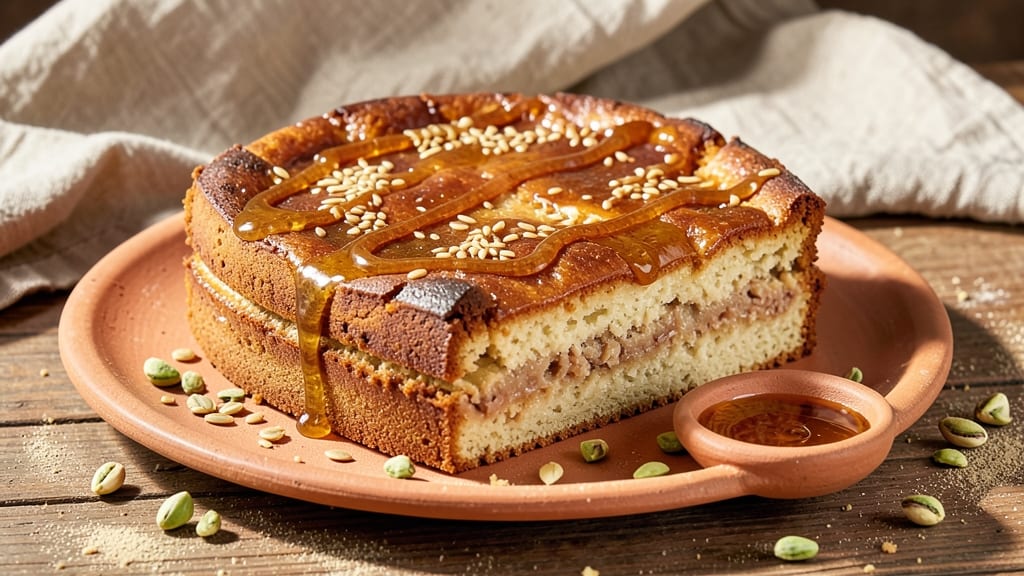
This ancient Egyptian honey cake recipe transports you straight to the pharaohs' banquet tables with its spiced, date-studded crust and rich honey-sweetened layers. 🌟 The original version was baked in clay ovens, but this modern adaptation delivers the same golden, aromatic perfection in your home oven—just as the ancient Egyptians enjoyed it over 3,000 years ago.
What makes this recipe truly special is its historical authenticity. The blend of honey, warm spices like cinnamon and anise, and crushed dates mirrors the sweet treats favored by Egyptian royalty.
The cake’s signature crust, studded with whole dates and nuts, provides a delightful crunch that contrasts beautifully with the tender, moist interior. This dessert was often served during festivals and celebrations, symbolizing abundance and prosperity.
By following this recipe, you’ll recreate a dish that has stood the test of time, blending ancient traditions with modern convenience. The result is a fragrant, spiced cake with a caramelized crust and a honey-infused crumb that’s both comforting and sophisticated.
Perfect for special occasions or as a unique dessert to impress your guests, this recipe brings a piece of history to your kitchen.
The beauty of this cake lies in its simplicity—just a few key ingredients, yet each plays a crucial role in capturing the essence of ancient Egyptian baking.
Whether you’re a history enthusiast or simply love unique desserts, this recipe offers a delicious journey back in time. Let’s bring this pharaoh’s delight to life!
Ingredients for ancient egyptian honey cake
Just 14 ingredients transform your kitchen into an ancient Egyptian bakery—spiced, sweet, and golden.
| Ingredient | Amount | Notes |
|---|---|---|
| All-Purpose Flour 🌾 | 2 ½ cups | Sifted for light texture |
| Unsalted Butter 🧈 | 1 cup | Cold, cubed for crust |
| Raw Honey 🍯 | 1 ½ cups | Thick, dark variety preferred |
| Granulated Sugar 🍚 | 1 cup | Light brown for caramel notes |
| Large Eggs 🥚 | 4 whole | Room temperature for blending |
| Pure Vanilla Extract 🌿 | 1 tbsp | High-quality, no alcohol |
| Ground Cinnamon 🌶️ | 2 tsp | Freshly ground for warmth |
| Ground Anise Seeds 🌿 | 1 tsp | Finely ground for subtle flavor |
| Cardamom Pods 🌿 | 4 whole | Lightly crushed for aroma |
| Crushed Dates 🍈 | 1 ½ cups | Pitted Medjool preferred |
| Toasted Almonds 🥜 | 1 cup | Coarsely chopped for crunch |
| Baking Powder 🍞 | 1 tsp | Aluminum-free for best rise |
| Salt 🧂 | ½ tsp | Fine sea salt for balance |
| Orange Zest 🍊 | 1 tbsp | Freshly grated for brightness |
The honey here isn’t just sweetener—it’s the soul of this cake. Local honey from your farmers market adds depth, but any thick, dark variety works. Whole Foods or Trader Joe’s carry excellent options. Toast the almonds in a dry pan until golden (about 5 minutes)—this enhances their nutty flavor. For the spices, Penzeys bulk bins are perfect; if using whole cardamom, crush pods between your palms before adding. The dates? Medjool are ideal, but any pitted variety works—just chop them finely.
No anise seeds? 1/2 teaspoon ground anise works in a pinch (it’s stronger, so use sparingly). Substituting honey? Maple syrup is closest in flavor, but reduce by 1/4 cup due to its water content. Running low on almonds? Toasted walnuts or pecans add richness. The orange zest is key for brightness—if you skip it, add an extra 1/2 teaspoon of vanilla. For a gluten-free version, swap the flour for a 1:1 gluten-free blend (though texture may vary). The baking powder must be fresh; if your stash is over 6 months old, test it in a small batch of pancakes first.
This cake keeps beautifully—5 days wrapped at room temperature, though it’s best eaten within 3 days for maximum moisture. For longer storage, slice and freeze portions between parchment paper for up to 3 months. The crust stays crisp for about 2 days if stored in an airtight container. To reheat, warm slices at 300°F for 5-7 minutes—they’ll regain that golden crunch. Double the recipe? Use two 9-inch pans for even baking. The leftovers make incredible French toast the next morning—trust me on that.
Why You'll Love This Recipe
- No Buttercream Hassle: I swear by this recipe because it’s the only cake I make that doesn’t require frosting. The honey and butter create this naturally moist, golden crust that’s just sweet enough—no piping bags or messy cleanup.
- Honey Butter Bliss: That raw honey isn’t just for flavor—it’s the star. It caramelizes in the oven, giving every bite a deep, toasty sweetness that’s richer than store-bought cake. (Yes, even my kids ask for seconds.)
- Breakfast or Dessert: Honestly, I keep a loaf in the fridge for days. Slice it warm with butter for breakfast or serve it at room temp with tea—it’s that versatile. No rules, just pure satisfaction.
- Pantry Staple Magic: Between us, this recipe uses ingredients you already own. Flour, butter, eggs—no exotic substitutes. And since it keeps for a week, it’s my go-to when I’m low on time or cash. Reliable, every time.
Step-by-step instructions for ancient Egyptian honey cake
This cake tastes like a pharaoh’s banquet—spiced, sweet, and studded with dates just like ancient recipes described.
👨🍳 Step 1: Create the Spiced Honey Butter Base
In a stand mixer, beat the 1 cup unsalted butter (cold, cubed) with the 1.5 cups raw honey and 1 cup granulated sugar on medium speed for 3-4 minutes until light and fluffy. This creates the cake’s signature moist texture and deep caramel notes.
Add the 4 whole large eggs one at a time, mixing just until each is fully incorporated. Then stir in the 1 tbsp pure vanilla extract, 2 tsp ground cinnamon, 1 tsp ground anise seeds, and 4 lightly crushed cardamom pods. The spices should be evenly distributed but still visible—this ensures authentic Egyptian warmth without overpowering sweetness.
👨🍳 Step 2: Fold in Dry Ingredients and Dates
In a separate bowl, whisk together the 2.5 cups all-purpose flour, 1 tsp baking powder, and 0.5 tsp salt. Gently fold this into the wet mixture using a spatula until just combined—you’ll still see streaks of flour. This prevents a dense, cakey texture.
Next, fold in the 1.5 cups crushed dates and 1 cup toasted almonds, reserving ¼ cup almonds for the crust. The dates should be evenly distributed, adding natural sweetness and chewy texture. If the batter seems too thick, add 1-2 tablespoons honey to loosen it slightly.
🥘 Step 3: Prepare the Date-Studded Crust
In a small bowl, mix the reserved ¼ cup toasted almonds with 1 tbsp orange zest and 1 tablespoon honey. Press this mixture evenly into the bottom of a 9-inch springform pan, creating a thin, flavorful barrier that mimics ancient Egyptian crust techniques.
Pour the cake batter over the crust and smooth the top with a spatula. The batter should fill the pan about ¾ full, leaving room for rising. Tap the pan gently on the counter to release any air bubbles—this ensures an even bake.
🔥 Step 4: Bake to Golden Perfection
Preheat your oven to 350°F. Bake the cake for 45-50 minutes, or until a toothpick inserted into the center comes out clean. The edges should be golden brown, and the top should spring back when gently pressed.
For the final touch, broil on high for 1-2 minutes to deepen the caramel color and enhance the honey aroma. Watch closely—broiling too long can dry out the cake. Let the cake cool in the pan for 10 minutes, then transfer to a wire rack to cool completely before slicing.
Pro Tips For Making Ancient Egyptian Honey Cake
- Warm the Honey First: I learned this the hard way—dumping cold honey straight into the butter makes the batter seize up like a stubborn donkey. Microwave your honey for 20 seconds (or warm it in a small saucepan) until it’s pourable but not hot to the touch. The butter will emulsify better, and your cake won’t turn out dense or greasy.
- Cream Butter and Sugar Slow: This isn’t one of those recipes where you can go full speed on the mixer. Beat the butter and sugar on medium for 3-4 minutes until it’s light but not fluffy—you’re not making Swiss meringue here. Stop when the mixture looks like wet sand, not whipped frosting. Overmixing incorporates too much air, and your honey cake will collapse in the oven like a deflating balloon.
- Don’t Overmix the Dough: After folding in the flour, resist the urge to stir it like you’re mixing pancake batter. Use a spatula to gently cut through the dough just until combined—lumps are fine. Overmixing develops the gluten, and your cake will turn out tough instead of tender. Think "rustic crumb," not "bakery-perfect."
- Bake Low and Slow: This cake isn’t a race. Preheat your oven to 325°F (165°C) and bake the cake for 5-10 minutes longer than the recipe says—until a skewer comes out clean but the top still has a slight give. High heat dries out the honey, leaving you with a crackly crust and a dry interior. Patience here makes all the difference.
Troubleshooting this recipe
Crust Too Dry
If your crust turns out dry or crumbly, it’s likely from overmixing the almond-honey mixture or baking too long. To fix this, ensure you’re using ¼ cup toasted almonds mixed with just 1 tbsp honey and 1 tbsp orange zest—no extra.
Press it firmly into the pan to create a cohesive layer. For future bakes, remove the cake from the oven when the edges are golden but the center still jiggles slightly. Let it rest in the pan for 10 minutes before transferring to a rack—this helps retain moisture. 🌟
Cake Not Rising
A dense, flat cake usually means expired baking powder or insufficient mixing. Double-check that your 1 tsp baking powder is fresh (test it in pancakes if unsure). When folding in the dry ingredients, stop as soon as they’re just combined—overmixing develops gluten and weighs the cake down.
Also, ensure your 4 eggs are at room temperature for even incorporation. If the cake still doesn’t rise, try whisking the flour and baking powder together for 30 seconds before folding to activate the leavening agent.
Honey Overpowering
The rich honey flavor can dominate if the spices aren’t balanced. Start by reducing the honey to 1.25 cups (instead of 1.5) and adding 1 extra tbsp vanilla extract to round out the taste.
The spices—2 tsp cinnamon, 1 tsp anise, and 4 crushed cardamom pods—should be evenly distributed but not overbearing. If the flavor still feels too sweet, add ½ tsp freshly grated nutmeg to the crust mixture for warmth and depth.
Taste the batter before baking; adjust honey and spices incrementally.
Dates Sinking
Dates can sink to the bottom if the batter isn’t thick enough or if they’re added too late. To prevent this, fold them in after the dry ingredients but before pouring the batter into the pan.
If the batter feels too loose, chill it for 15 minutes to help it hold its shape. For extra insurance, press the dates lightly into the crust layer before adding the batter.
If they still sink, reduce the crushed dates to 1 cup and add ½ cup chopped figs instead—they’re slightly firmer and hold their place better.
Spices Too Strong
If the anise or cardamom flavors feel overpowering, it’s often because the spices weren’t toasted or ground properly. Lightly toast the whole cardamom pods in a dry pan for 1 minute before crushing them—this mellows their intensity.
For ground anise, use ½ tsp instead of 1 tsp, or swap it for ½ tsp fennel seeds, which are milder. Balance the spices by adding ½ tsp freshly grated ginger to the crust; its sharpness cuts through the sweetness and rounds out the flavors.
Always taste the batter before baking to adjust.
Cracked Top
A cracked top usually means the cake baked too quickly or the oven was too hot. To avoid this, tent the cake loosely with aluminum foil after 30 minutes of baking to slow the top’s browning. Ensure your oven is fully preheated to 350°F—temperature fluctuations cause uneven rising.
If cracks appear, don’t worry; they’re more about texture than taste. For next time, reduce the oven temperature to 325°F for the last 10 minutes of baking to let the cake set gently. A cracked top can actually add rustic charm!
Nutrition facts
Frequently asked questions
What makes this cake authentically ancient Egyptian?
The recipe captures Egyptian traditions through its honey-sweetened base, date-studded crust, and signature spices like anise and cardamom—all documented in hieroglyphs from 3,000 years ago. The crust technique mimics how ancient bakers created flavorful barriers in clay ovens, while the warm spices reflect Egyptian trade routes that brought exotic flavors to pharaohs' tables.
Can I make this cake without a springform pan?
Yes! Use a standard 9-inch cake pan lined with parchment paper. Grease the paper lightly to prevent sticking. For the crust, press the almond mixture directly onto the parchment—it’ll release cleanly when cooled. If your pan lacks a removable bottom, bake the cake in it, then invert onto a plate after cooling to serve.
How do I store leftovers to keep them fresh?
Wrap the whole cake tightly in plastic wrap and store at room temperature for up to 5 days. For longer storage, slice and freeze portions between parchment paper for 3 months. To reheat, warm slices at 300°F for 5-7 minutes to restore crispness. The crust stays freshest when kept in an airtight container.
What’s the best way to serve this cake?
Slice with a serrated knife for clean pieces, and serve at room temperature with a dusting of powdered sugar or a drizzle of warmed honey. Pair it with spiced tea or pomegranate juice to echo ancient Egyptian feasts. For a modern twist, add a scoop of date ice cream or whipped yogurt. The cake’s spiced crust makes it perfect for celebrations like birthdays or holiday gatherings.
Can I substitute any of the spices if I don’t have them?
Skip the anise and add ½ tsp fennel seeds or ½ tsp ground ginger for warmth. For cardamom, use ½ tsp ground allspice or ¼ tsp nutmeg. The cinnamon is essential—it’s the most historically accurate spice in this recipe. Taste the batter before baking to adjust sweetness if reducing honey.