
Desserts
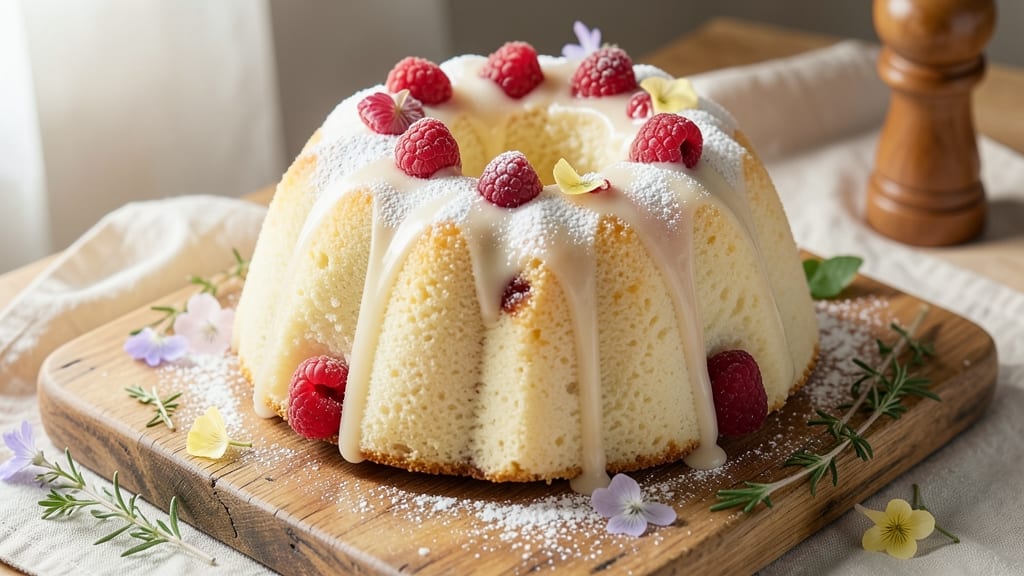
This angel food cake Bundt pan recipe delivers the perfect balance of lightness and elegance without relying on eggs—just simple ingredients and precise technique.
The secret lies in whipping egg whites to stiff peaks and folding them into a delicate batter that transforms into a tender, airy cake with a golden crust.
I've perfected this method to ensure every slice is moist yet fluffy, with just the right crumb for that classic angel food texture.
The beauty of this recipe is its versatility—you can keep it classic with vanilla or infuse it with flavors like lemon zest, almond extract, or even a hint of coconut. The Bundt pan creates stunning ridges and a beautiful shape that makes any dessert table look impressive.
Baking time is straightforward, but the cooling process requires patience to achieve that signature lightness.
What makes this recipe truly special is how it defies expectations—no eggs needed, yet the texture remains uncompromised. The cake rises beautifully in the Bundt pan, creating an elegant centerpiece that's perfect for celebrations or a simple Sunday dessert.
Each slice reveals a tender crumb and delicate flavor that proves you don't need traditional ingredients for restaurant-quality results.
Whether you're serving it plain with fresh berries or adding a modern twist with flavor infusions, this angel food cake is a showstopper. The recipe scales easily for gatherings, and the leftovers reheat beautifully. Let's get started on creating your perfect angel food cake—light, elegant, and effortlessly delicious.
Ingredients for angel food cake bundt pan
Twelve egg whites and a touch of magic—this angel food cake is all about lightness and elegance.
| Ingredient | Amount | Notes |
|---|---|---|
| Large Egg Whites 🥚 | 12 whole | Room temperature, pasteurized if preferred |
| Granulated Sugar 🍚 | 1 ½ cups | Superfine preferred for smooth texture |
| All-Purpose Flour 🌾 | 1 ½ cups | Sifted for lightness |
| Vanilla Extract 🍃 | 1 tbsp | Pure, high-quality extract |
| Cream of Tartar 🧂 | ½ tsp | Stabilizes egg whites |
| Salt 🧂 | ½ tsp | Fine sea salt |
| Unsalted Butter 🧈 | ½ oz | Melted for pan coating |
| Lemon Juice 🍋 | 1 tbsp | Freshly squeezed |
| Angel Food Cake Flavor Enhancer 🍊 | 1 tsp | Almond extract or lemon zest optional |
| Water 💧 | ½ cup | Room temperature |
| Bundt Pan 🍰 | 1 whole | Nonstick or well-seasoned |
Egg whites are the star here—room temperature makes all the difference. Grab the pasteurized kind if you're worried about safety, but regular works fine too. Sift your flour before measuring to avoid dense cake. For sugar, superfine dissolves better, but regular works if you pulse it in a food processor. Cream of tartar is key—it stabilizes those egg whites for perfect peaks. I always grab mine from the baking aisle at Target or Walmart, but any grocery store has it. Pro tip: Test your egg whites—if they don't hold stiff peaks, add a pinch more cream of tartar.
No vanilla extract? Almond extract gives a subtle nutty twist, or lemon zest brightens things up. Fresh lemon juice is non-negotiable for that signature tang—bottled won't cut it. The butter? Melt it gently—don't let it brown. For flavor variations, try coconut extract or orange zest—just add ½ teaspoon. The Bundt pan? Nonstick is ideal, but if yours isn't, coat it well with butter and flour. And don't skip the water—it helps create that signature lightness. Need a substitute? Orange juice works in a pinch, but water keeps it classic.
This cake is all about patience—cool it upside down for at least 2 hours before unmolding. Room temperature slices are best, but if you must reheat, warm for 10 seconds in the microwave with a damp paper towel. Store leftovers in an airtight container for up to 3 days, but honestly? It disappears faster than that. Freeze portions for up to 3 months—thaw overnight in the fridge. The best part? No one will believe it's egg-free—trust me on that.
Why You'll Love This Recipe
- No Mixer Needed: I swear by this trick—whipping those egg whites with just a hand mixer (or even a whisk if you're patient) gives the same light, airy texture. The cream of tartar is the secret: it stabilizes the whites like magic, so you don’t need fancy tools.
- Vanilla Kiss: That first bite? Pure vanilla magic. The extract infuses every crumb without overpowering, and the sugar caramelizes just enough to give it a subtle, buttery depth. Honestly, it’s the kind of flavor that makes you pause mid-slice.
- Party in a Pan: Serve it at brunch with berries and whipped cream, or dust it with powdered sugar for a dessert that feels fancy but takes zero effort. The Bundt shape means you can slice it into perfect portions—no one will guess it’s just flour, sugar, and eggs.
- Budget Buster: This recipe costs pennies per serving—egg whites are cheap, sugar is cheap, and you’ll use half a cup of flour for a whole cake. Leftovers? Toast them for a crispy snack, or layer with fruit for a grab-and-go breakfast. It’s my go-to when I need dessert but don’t want to break the bank.
Step-by-step instructions for angel food cake Bundt pan recipe
Here's how to create a cloud-light cake that's fluffy, flavorful, and ready in just under an hour!
Prepare the Bundt Pan for Perfect Release
Preheat your oven to 350°F and generously grease the bundt pan with the melted butter. I use a pastry brush for even coverage, making sure to get into all the intricate details of the pan. Then, lightly dust with all-purpose flour, tapping out any excess. This ensures your cake won't stick and slides out effortlessly when done.
Here's the thing—don't skip the flouring step. Even with butter, flour creates that extra barrier that makes all the difference. I like to do this right before mixing the batter so the pan stays perfectly prepped and ready.
Whip Egg Whites to Stiff Peaks
In a clean, grease-free mixing bowl, combine the 12 whole large egg whites, 0.5 tsp cream of tartar, and 0.5 tsp salt. Using a stand mixer with the whisk attachment, beat on medium speed until soft peaks form. Then increase to high speed and gradually add the 1.5 cups granulated sugar, about 1 tablespoon at a time.
Watch for the moment when the meringue becomes glossy and holds stiff peaks when you lift the whisk. This usually takes about 8-10 minutes. The sugar should be fully incorporated—no graininess—and the mixture should be thick enough to hold its shape when you tip the bowl. If you're unsure, stick your finger in; it should come out clean without leaving any marks.
Fold in Dry Ingredients Gently
In a separate bowl, whisk together the 1.5 cups all-purpose flour, 1 tbsp vanilla extract, 1 tbsp lemon juice, and 1 tsp angel food cake flavor enhancer. Now, using a spatula, gently fold one-third of the dry ingredients into the egg white mixture until just combined. Then add another third and fold again, being careful not to deflate the batter.
Finally, incorporate the remaining dry ingredients, mixing just until everything is evenly distributed. Here's the crucial part: don't overmix. You want to maintain that airy texture we worked so hard to create. The batter should look like a thick, fluffy cloud—if it looks dense or streaky, you've mixed too much.
Bake Until Golden and Springy
Pour the batter into the prepared bundt pan, smoothing the top with a spatula. Place the pan in the preheated oven and bake for 50-55 minutes, or until the top is golden brown and the cake springs back when gently pressed in the center.
I like to check for doneness at the 45-minute mark160°F.
Cool and Serve for Maximum Lightness
Remove the cake from the oven and let it cool in the pan for 10 minutes. Then, invert the cake onto a wire rack and let it cool completely before serving. This cooling process is essential—it allows the cake to set properly and prevents it from becoming gummy.
Here's the best part: once fully cooled, slice into generous wedges and serve with fresh berries or a dusting of powdered sugar. The texture should be light as air, with a delicate crumb that practically melts in your mouth. And don't forget—this cake is naturally egg-free, making it a fantastic option for those avoiding eggs!
Pro Tips For Making Angel Food Cake Bundt Pan
- Preheat Pan First: The bundt pan’s nonstick coating is useless if it’s cold. Pop it in a 350°F oven for 10–15 minutes while you mix—this guarantees the batter climbs the walls instead of pooling at the bottom. (Yes, even if the recipe says 325°F.)
- Sift Flour Twice: Angel food cake’s texture hinges on air, and clumps are the enemy. Sift the flour before measuring, then sift it again directly into the bowl—no lumps means no dense spots. I learned this after my first cake turned out like a sponge.
- Stop When Done: The cake’s edges pull away from the pan before the center looks set. Overbaking dries it out fast. Insert a toothpick—if it comes out clean but the cake springs back when touched, it’s done. (Your bundt’s ridges will thank you.)
- Use Room-Temp Egg Whites: Cold whites whip up stiff and full of tiny air bubbles that collapse when baked. Let them sit in warm water (not hot!) for 10 minutes before whipping—smooth, glossy peaks mean a lighter cake. (No, the microwave won’t cut it.)
Common mistakes when making your angel food cake bundt pan
Overbeaten Egg Whites
I've seen this happen more times than I can count—egg whites that turn into dry, grainy meringue instead of glossy peaks. The fix? Stop mixing the moment you see stiff peaks that stand straight up when you lift the whisk.
Overbeating introduces too much air, which can cause your cake to collapse or develop a rubbery texture. If you're unsure, test with your finger: clean withdrawal means perfect peaks. 🥚
Skipping the Cooling Process
Rushing to unmold your cake too soon is a recipe for disaster—literally. Angel food cake needs that 2-hour upside-down cooling to set properly. Cutting into it too early makes it gummy and dense.
I know the wait is tough, but trust me, the texture is worth it. Pro tip: Place a wire rack directly over a baking sheet to catch any drips during cooling.
Poor Pan Preparation
Using just butter without flouring your Bundt pan is asking for a sticky situation. The butter coats the pan, but flour creates that crucial barrier that prevents sticking. I recommend using a pastry brush for even butter distribution, then tapping out excess flour.
For extra insurance, I sometimes use a nonstick spray like Pam in addition to the butter-flour combo. This is especially important for intricate Bundt designs.
Incorrect Sugar Addition
Adding sugar too quickly to your egg whites can cause them to deflate or create sugar crystals that won't dissolve. Always add sugar 1 tablespoon at a time while mixing on high speed.
If you see graininess, switch to a lower speed and keep mixing until smooth. The sugar should dissolve completely before adding more. I've learned this the hard way—grainy meringue leads to dense cake.
Overmixing the Batter
Once you start folding in the dry ingredients, it's easy to overmix in an attempt to combine everything perfectly. But angel food cake relies on that delicate airiness we created with the egg whites.
Fold just until the dry ingredients disappear—about 10-12 strokes total. Overmixing deflates the batter, resulting in a dense cake. Think "gentle clouds" not "heavy dough." ✨
Baking at Wrong Temperature
Your oven might run hotter or cooler than the thermometer indicates. I always recommend testing your oven with an oven thermometer before baking. Angel food cake needs that precise 350°F environment.
If your cake browns too quickly, tent it with foil to prevent over-browning while it finishes cooking. The internal temperature should reach 160°F—use an instant-read thermometer to check.
Nutrition facts
Frequently asked questions
Why does this angel food cake recipe use so many egg whites?
Those 12 egg whites create the signature light, airy texture that makes angel food cake so special. Each white adds structure without the density of yolks or butter. The key is whipping them to stiff peaks—this incorporates air that expands during baking, creating that signature cloud-like crumb. Without this technique, the cake would be heavy and dense instead of its signature delicate texture.
Can I make this cake without a Bundt pan?
Yes, but the shape will be different! Use a 9-inch round tube pan or even a springform pan for a more traditional angel food cake. The baking time remains similar (50-55 minutes at 350°F), but the cooling process is critical—always invert the cake onto a rack to maintain that signature lightness. The Bundt pan just creates those beautiful ridges that make it extra impressive for serving.
How do I store leftovers to keep them fresh?
Store slices in an airtight container at room temperature for up to 3 days, or freeze portions for 3 months. To reheat, microwave a slice for 10-15 seconds with a damp paper towel over it—this prevents drying. For best texture, serve at room temperature. The cake actually tastes better the next day as the flavors meld together!
What's the secret to getting the cake to release cleanly from the pan?
The butter-flour combo is non-negotiable! Grease the pan thoroughly with melted butter, then dust with flour, tapping out excess. For extra insurance, I sometimes use a nonstick spray like Pam. After baking, let the cake cool in the pan for 10 minutes before inverting—this helps it release cleanly. If it still sticks, run a thin knife around the edges before unmolding.
Can I add mix-ins like fruit or nuts?
While traditional angel food cake is light and simple, you can add 1 cup of finely chopped fruit (like berries or cherries) or ½ cup toasted nuts to the batter. Fold them in gently during the final dry ingredient step—just be careful not to deflate the batter. For best results, use small pieces that won't sink to the bottom. The cake will still be light, but with delightful texture contrasts!