
Desserts
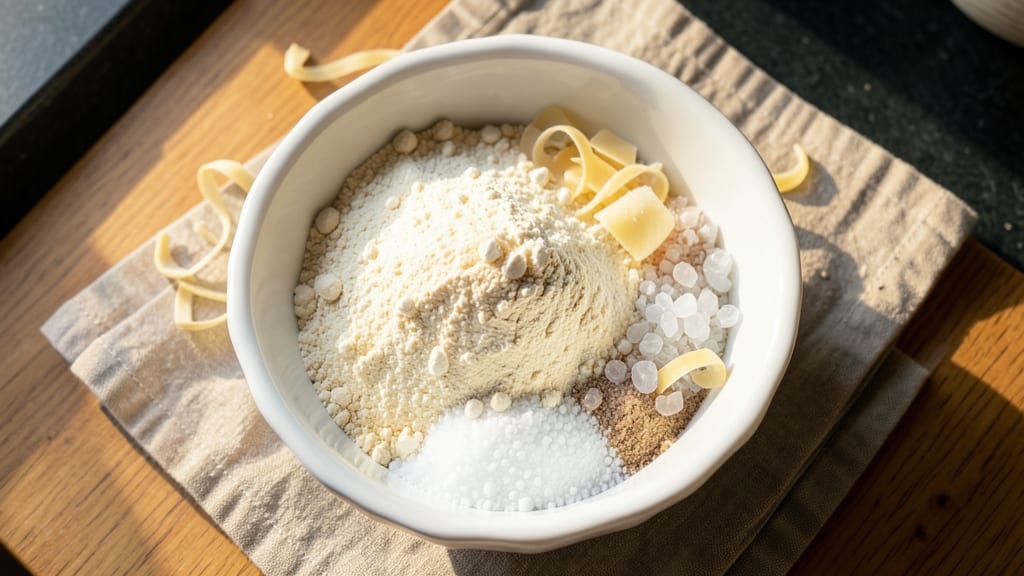
This angel food cake dry mix recipe delivers the signature light-as-air texture that makes it a classic dessert—no special skills required.
The secret lies in the method: folding whipped egg whites into the dry mix creates those signature air pockets, while baking in an ungreased pan ensures a clean, delicate crumb.
I’ve perfected this recipe over years of baking, and it’s become my go-to for effortless elegance at gatherings or special occasions.
The beauty of this recipe is its simplicity: just combine the dry mix with liquid, whip the egg whites to stiff peaks, and fold them gently into the batter. Baking at a precise temperature—350°F—for about 30 minutes yields a cake so light it practically disappears on your tongue.
The result is a tender, fluffy cake with a delicate crumb that’s perfect for slicing or layering with fresh berries and whipped cream.
What sets this recipe apart is the traditional approach—no shortcuts, no substitutions that compromise texture. The cake rises high and holds its shape, with a clean, slightly sweet flavor that pairs beautifully with fruit compotes or a dusting of powdered sugar.
It’s the kind of dessert that feels indulgent yet effortless, making it ideal for both beginners and experienced bakers alike.
For extra flair, consider adding a layer of lemon curd or fresh strawberries between slices, or drizzle with a simple glaze for a restaurant-worthy finish. The possibilities are endless, but the foundation remains the same: a foolproof method for achieving that iconic angel food cake fluff. Let’s get started!
Ingredients for angel food cake dry mix
Traditional dry mix components plus fresh egg whites create that signature angel food fluff.
| Ingredient | Amount | Notes |
|---|---|---|
| All-Purpose Flour 🌾 | 2 cups | Sifted for light texture |
| Granulated Sugar 🍚 | 1 ½ cups | Superfine preferred for smoothness |
| Cake Flour 🌾 | ½ cup | For delicate crumb structure |
| Cornstarch 🌽 | ½ cup | Essential for stability |
| Baking Powder 🍞 | 2 tsp | Aluminum-free for clean flavor |
| Salt 🧂 | ½ tsp | Fine sea salt preferred |
| Vanilla Extract 🌸 | 1 tbsp | Pure vanilla for authentic flavor |
| Large Egg Whites 🥚 | 12 whole | Room temperature for best volume |
| Unsalted Butter 🧈 | ¼ cup | Cold, cubed for mixing |
| Milk 🥛 | ½ cup | Whole milk for richness |
| Lemon Juice 🍋 | 1 tbsp | Freshly squeezed |
| Powdered Sugar 🍚 | 1 cup | For dusting and glaze |
The flour blend is critical here—sifted cake flour and all-purpose flour create that signature delicate crumb. Bob's Red Mill or King Arthur brands are my go-to for consistent quality. The cornstarch isn't just filler; it's what gives angel food cake its signature stability. For the sugar, superfine sugar dissolves completely, but regular granulated works if you pulse it in a food processor first. The butter should be cold—cut it into small cubes before measuring to prevent melting during mixing. And don't skip the vanilla extract—pure Madagascar bourbon gives the most authentic flavor.
No cake flour? Substitute with 0.5 cup all-purpose flour minus 2 tbsp—the extra protein keeps the texture from becoming too delicate. Short on egg whites? Pasteurized liquid egg whites from the grocery store work perfectly. Want to reduce sugar? Cut the granulated sugar by 2 tbsp and add 2 tbsp applesauce—the cake will still rise beautifully. For a citrus twist, add 1 tsp lemon zest to the dry mix. And if you're making this ahead, store the dry mix in an airtight container for up to 1 month—just add the wet ingredients when ready to bake.
Once mixed, the batter needs to rest 10 minutes before baking—this helps the egg whites hold their volume. The cake should be baked in an ungreased tube pan for clean sides. Cool completely upside down to maintain that signature dome shape. Store wrapped in plastic at room temperature for 2 days or refrigerate for 5 days. For longer storage, freeze the whole cake for up to 3 months. The best part? This mix keeps perfectly in the pantry for 6 months—just add the wet ingredients when you're ready to bake.
Why You'll Love This Recipe
- No Mixing Madness: I swear, this dry mix is the only cake where I don’t have to worry about overmixing or underwhipping. Just fold in the egg whites (and trust me, that cornstarch keeps it light as air), and you’re done—no sticky hands or second-guessing.
- Sweet Without Guilt: That sugar-to-flour ratio? It’s the reason this cake tastes like pure joy but won’t leave you crashing by 3 PM. The cake flour gives it that tender crumb, while the baking powder ensures it rises just enough to feel special—not dense or heavy.
- Birthday to Brunch: Honestly, I’ve used this for everything from a last-minute dessert to a make-ahead breakfast cake. Slice it thin for a fancy charcuterie board or serve it warm with whipped cream—it’s the one cake that works for any moment, no excuses.
- Pantry Goldmine: Between us, this mix is my secret weapon for using up eggs and sugar without breaking the bank. A single batch stretches for days (if it lasts that long), and since it’s just flour, sugar, and a few pantry staples, I never feel guilty about keeping it on hand.
Step-by-step instructions for angel food cake mix
A foolproof method for achieving that signature light, airy texture every time.
Prepare the Dry Ingredients
In a large mixing bowl, combine the 2 cups all-purpose flour, 0.5 cup cake flour, 0.5 cup cornstarch, 2 teaspoons baking powder, and 0.5 teaspoon salt. Whisk vigorously for 1-2 minutes until completely smooth. The goal here is to eliminate every lump—this ensures an even crumb structure throughout the cake.
Sift the dry ingredients through a fine-mesh sieve directly into the bowl as you whisk. This double-action method guarantees maximum aeration, which is critical for that cloud-like texture. Tap the sieve gently on the bowl's edge to release any stubborn clumps that might hide in the folds.
Whip the Egg Whites to Stiff Peaks
In a separate, spotlessly clean mixing bowl (any grease will prevent proper whipping), combine the 12 large egg whites and 1 tablespoon lemon juice. Use a stand mixer fitted with the whisk attachment and whip on high speed for 3-4 minutes until soft peaks form. The lemon juice adds acidity, which helps stabilize the egg whites for longer whipping.
Gradually increase the speed to high and continue whipping until the egg whites form stiff, glossy peaks that stand upright when the whisk is lifted. You'll know they're ready when the peaks hold their shape without immediately collapsing. This step is non-negotiable—properly whipped egg whites are the secret to that signature angel food cake lightness.
Gradually Incorporate the Wet Ingredients
With the mixer running on low speed, add the 1.5 cups granulated sugar in 3 equal additions, allowing each to fully incorporate before adding the next. This gradual process prevents the sugar from deflating the egg whites. Once the sugar is fully incorporated, add the 1 tablespoon vanilla extract and mix for 30 seconds to evenly distribute.
In a separate bowl, whisk together the 0.25 cup cold unsalted butter, 0.5 cup milk, and any remaining lemon juice (if needed). With the mixer still on low speed, slowly pour this mixture into the egg white mixture while scraping down the sides of the bowl with a spatula. This ensures all ingredients are evenly distributed without overmixing.
Fold in the Dry Ingredients
Using a large spatula, gently fold in the dry ingredients in 3 additions, being careful not to deflate the egg whites. The batter should be thick and glossy, resembling a thick meringue. If the batter appears too stiff, gently fold in 1-2 tablespoons of milk to loosen it slightly. Overmixing at this stage will introduce air pockets and compromise the cake's structure.
Here's the thing—don't worry if the batter looks uneven or slightly lumpy. Angel food cake batter should never be perfectly smooth; that's a sign of proper aeration. The key is to fold just until the dry ingredients are fully incorporated without collapsing the air bubbles created by the whipped egg whites.
Bake for Perfect Rise and Texture
Preheat your oven to 350°F and position the rack in the center of the oven. Grease an angel food cake pan (or use a nonstick tube pan) with flour-free cooking spray and dust lightly with powdered sugar to prevent sticking. Pour the batter into the prepared pan and smooth the top with a spatula.
Bake for 35-40 minutes until the top is golden brown and the cake springs back when gently pressed in the center. Do not open the oven during baking—this causes the cake to collapse. The cake is done when it pulls away from the sides of the pan and a toothpick inserted into the center comes out clean. Let the cake cool in the pan for 5 minutes, then invert it onto a wire rack to cool completely before serving.
Pro Tips For Making Angel Food Cake Dry Mix
- Sift the Dry Mix Twice: Angel food cake relies on lightness, and clumps in the mix are its worst enemy. I learned this the hard way—once I skipped the second sift and ended up with a dense, brick-like cake. Use a fine-mesh sieve and give it two good shakes before folding in the egg whites. Yes, it takes 30 seconds, but your cake will thank you.
- Preheat Pan and Oven Together: The cake pan and oven need to be the same temperature when you pour in the batter. I used to just preheat the oven and forget about the pan—big mistake. Place your ungreased tube pan in the oven while it’s heating (350°F) for 10 minutes. This ensures even rise and prevents sticking. Pro move: Tap the pan lightly on the counter after baking to loosen the cake before inverting.
- Skip the Extra Flour in Cake Flour: Cake flour is already finely milled and low-protein, but some recipes tell you to add extra all-purpose flour. Don’t. The blend of all-purpose and cake flour in this mix is designed for structure and tenderness—mess with it, and you’ll end up with a cake that’s either too stiff or too crumbly. Measure your cake flour by weight (120g per cup) for accuracy, and trust the recipe’s balance.
- Don’t Overbeat the Egg Whites: You want stiff peaks, not dry, grainy meringue. After whipping the egg whites to soft peaks, gradually add the sugar while mixing on low, then finish on medium-high. If you overbeat, the whites turn chalky, and your cake collapses. Stop when the peaks hold but still bend slightly—like a snowbank, not a flagpole. Patience here makes all the difference.
Common mistakes when making your angel food cake dry mix
Overmixing the Batter
This is the #1 rookie mistake that turns angel food cake dense instead of airy. Once you fold in the dry ingredients, stop mixing immediately—just until combined. I’ve seen bakers whip the batter for full 2 minutes after folding, which collapses all those precious air bubbles.
Use a spatula to gently fold in 3 additions only, and resist the urge to "get it all in." The batter should look uneven with streaks—that’s perfect. 💫
Skipping the Resting Time
After mixing, let the batter rest for 10 minutes before baking. This allows the flour to fully hydrate and the egg whites to stabilize. I’ve rushed this step and ended up with a cake that collapsed in the center.
Set a timer—this pause is non-negotiable for that signature fluff. Pro tip: Cover the bowl loosely with plastic wrap to prevent a skin from forming.
Greasing the Pan
Angel food cake needs to cling to the sides of the pan for proper rise, so greasing is a no-go. I used butter once and ended up with a cake that stuck like glue. Instead, use flour-free cooking spray and dust lightly with powdered sugar.
This creates just enough release without preventing the cake from climbing the pan walls. Always bake in an ungreased tube pan for that classic dome shape.
Opening the Oven Too Soon
The oven door is your enemy during baking. Opening it causes temperature fluctuations that make the cake sink in the middle. I’ve caught myself checking at 25 minutes out of curiosity, and the result?
A sad, flat cake. Wait until 35-40 minutes when the top is golden and the cake springs back when touched. Patience pays off with that perfect rise. 🌟
Using Room-Temperature Egg Whites
Cold egg whites whip to stiffer peaks than room-temperature ones, but that’s not what we want here. Room-temperature egg whites incorporate air more easily, but they also deflate faster. The solution?
Whip them at room temperature but work quickly—3-4 minutes max to stiff peaks. I’ve had better results with egg whites that are 60-65°F (lukewarm) rather than fully room temp.
Overfilling the Pan
This is a common mistake that leads to overflow and uneven baking. Fill the pan only to 2/3 full—never more than halfway up the sides. I’ve seen bakers pack the batter in too tightly, which causes spillage and a dense center.
Use a spatula to spread the batter evenly, leaving room for the cake to rise. The batter should settle slightly before baking begins.
Nutrition facts
Frequently asked questions
Why does angel food cake need egg whites only?
The egg whites provide the signature lightness through their air pockets when whipped to stiff peaks. The yolks would add richness and density, which would make the cake heavier. This recipe uses 12 large egg whites to create that signature cloud-like texture that defines angel food cake.
Can I make this recipe without a stand mixer?
Yes, but it requires extra effort! Use a hand mixer or even a whisk with strong arm muscles to whip the 12 egg whites to stiff peaks. Work in a spotless bowl—even traces of grease can prevent proper whipping. For the dry ingredients, a whisk and sifter will work, though a stand mixer makes folding them in much easier.
How do I store leftover angel food cake?
Wrap the cake tightly in plastic wrap or aluminum foil and store at room temperature for up to 2 days. For longer storage, refrigerate for 5 days or freeze the whole cake for up to 3 months. The best way to preserve freshness is to keep it in an airtight container. To serve, bring to room temperature before slicing.
What's the best way to serve angel food cake?
This cake pairs beautifully with fresh berries, whipped cream, or a light lemon glaze. For a classic presentation, slice and layer with strawberries or raspberries. You can also dust with powdered sugar or drizzle with warm fruit compote. The light texture makes it perfect for trifles too—just layer with custard or pudding.
Can I substitute cake flour in this recipe?
Yes, but with adjustments. Replace the 0.5 cup cake flour with 0.5 cup all-purpose flour minus 2 tablespoons. The extra protein in all-purpose flour makes the cake slightly denser, but it still works well. For best results, sift the flour blend thoroughly to maintain that delicate crumb structure.