
Desserts
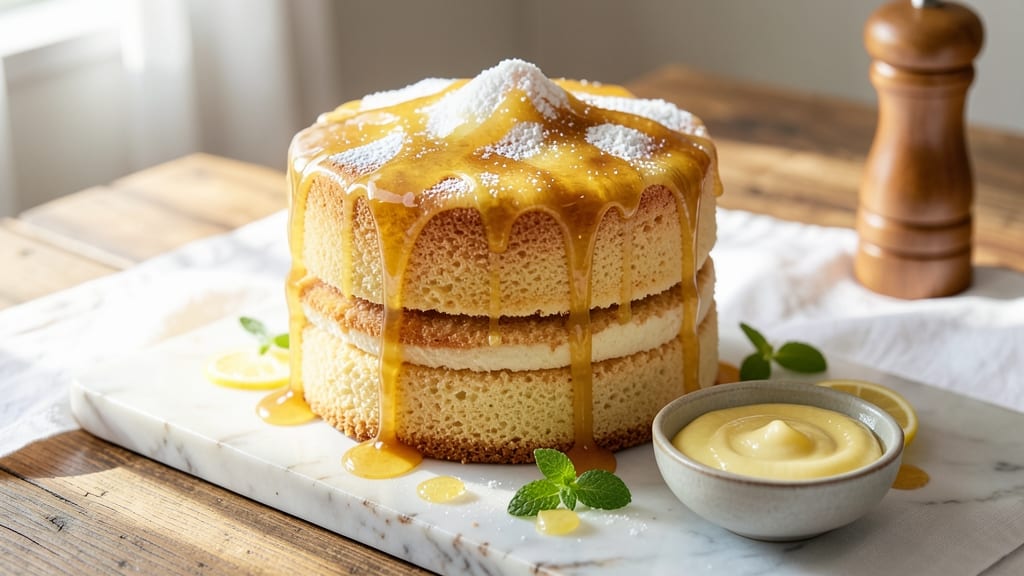
This angel food cake with lemon glaze delivers the perfect balance of ethereal lightness and vibrant citrus brightness—no butter or oil in sight. ✨ The secret lies in whipping egg whites to stiff peaks and folding them gently into dry ingredients, creating a cake so airy it practically dissolves on your tongue.
What makes this recipe truly special is how the lemon glaze transforms an already delicate dessert into something extraordinary, with its glossy sheen and tangy-sweet contrast.
The cake itself is a study in precision: no creaming, no mixing—just folding to preserve those delicate air pockets. Baking at high heat ensures a golden crust while keeping the interior impossibly tender.
The lemon glaze, made with just powdered sugar, fresh lemon juice, and a touch of zest, adds a professional finish that elevates this classic dessert to restaurant-quality levels.
What you'll end up with is a cloud-like cake topped with a smooth, glossy glaze that shimmers under the light. Each bite delivers that signature fluffiness, while the lemon glaze cuts through the sweetness with a refreshing zing.
This is the kind of dessert that feels both elegant and effortless—perfect for special occasions or a Sunday treat.
The best part? This recipe comes together in just one bowl with minimal cleanup, making it surprisingly approachable for home bakers. Whether you're serving it at a brunch spread or enjoying a slice with afternoon tea, this angel food cake with lemon glaze is sure to impress. Let's get baking!
Ingredients for angel food cake lemon glaze
Twelve egg whites, a whisper of citrus, and one bowl—this is your ticket to cloud-like perfection.
| Ingredient | Amount | Notes |
|---|---|---|
| Large Egg Whites 🥚 | 12 whole | Room temperature, pasteurized if preferred |
| Granulated Sugar 🍚 | 1 ½ cups | Superfine preferred for even dissolving |
| All-Purpose Flour 🌾 | 1 ½ cups | Sifted, spooned lightly |
| Cream of Tartar 🧂 | 1 ½ tsp | For stable meringue peaks |
| Salt 🧂 | ½ tsp | Fine sea salt preferred |
| Vanilla Extract 🌿 | 1 tsp | Pure vanilla for authentic flavor |
| Lemon Zest 🍋 | 1 tbsp | Fresh, finely grated |
| Powdered Sugar 🍚 | 1 ½ cups | For glaze, sifted smooth |
| Fresh Lemon Juice 🍋 | ½ cup | Strained, no pulp |
| Unsalted Butter 🧈 | ¼ cup | For greasing pan (optional) |
The egg whites are non-negotiable here—room temperature is key for proper volume. Kirkland Signature or Vital Farms pasteurized whites work great if you're worried about salmonella. Superfine sugar dissolves faster, but regular granulated works if you pulse it in a food processor first. The cream of tartar stabilizes the meringue—don't skip it. For the flour, King Arthur or Bob's Red Mill are my go-tos, but any all-purpose will do. And that lemon zest? Organic lemons from Whole Foods or your local farmers market have the most vibrant flavor.
No cream of tartar? Lemon juice at half the amount works in a pinch. Superfine sugar unavailable? Pulse regular sugar in a blender for 30 seconds. The butter for greasing? Melted coconut oil is a vegan alternative that works beautifully. Fresh lemon juice too sour? Mix with 1 tsp powdered sugar to balance. And if you're worried about the cake being too dry, add 1 tbsp milk or almond milk to the dry ingredients. The glaze is where the magic happens—sift the powdered sugar to avoid lumps, and use a fine-mesh strainer for the lemon juice.
This cake is best served the day it's made, but 1-2 slices reheated in the oven for 10 seconds will bring back that fresh-baked magic. Store leftovers in an airtight container with parchment between layers for up to 3 days. The glaze hardens over time, so re-pipe a thin layer before serving if it looks dry. For extra flair, dust with powdered sugar or edible gold leaf before serving. And trust me—everyone will ask for the recipe
Why You'll Love This Recipe
- No Mixer Needed: I swear by this trick—whipping egg whites with a hand mixer (or even a whisk if I’m in a pinch) gives that signature fluffy texture without clogging up my stand mixer. Cream of tartar is the secret weapon here, stabilizing the whites like magic.
- Bright & Tangy Magic: That lemon glaze? It’s not just sweet—it’s a zesty punch of citrus that cuts through the cake’s lightness. Honestly, the first time I tasted it, I thought, “Why didn’t I do this sooner?” The glaze soaks in just enough to make every bite taste like a little burst of sunshine.
- Weekend Brunch Star: This cake is my go-to for lazy mornings or when I’ve got friends over. Serve it with fresh berries, a dollop of whipped cream, or even a scoop of ice cream—it’s that versatile. (Yes, even on a Tuesday night when I need something special.)
- Pantry-Friendly & Frugal: I make a double batch and freeze half—no weird aftertaste, just fluffy perfection when I pull it out. Plus, the ingredients? Eggs, sugar, flour—stuff I already have. It’s the kind of recipe that feels indulgent but won’t break the bank.
Step-by-step instructions for angel food cake with lemon glaze
This cake is all about technique—whisking, baking, and glaze timing create that signature cloud.
🍳 Step 1: Whip Egg Whites to Stiff Peaks
Begin by separating the 12 whole large egg whites into a completely grease-free bowl—even a trace of fat will prevent proper whipping. I like to use a stand mixer fitted with the whisk attachment for this step. Add 1.5 teaspoons of cream of tartar and 0.5 teaspoon of salt to the egg whites, then whip on high speed until soft peaks form.
Gradually add the 1.5 cups of granulated sugar while continuing to whip. Here's the thing—add the sugar slowly, about 1 tablespoon at a time, allowing each addition to fully incorporate before adding more. You're looking for glossy, stiff peaks that hold their shape when the whisk is lifted. This should take about 10-12 minutes total. The meringue should be thick enough to hold a peak that stands straight up but still have a slight sheen.
👨🍳 Step 2: Fold in Dry Ingredients Gently
In a separate bowl, whisk together the 1.5 cups of all-purpose flour and 1 teaspoon of vanilla extract. I always sift the flour first to prevent lumps—this ensures a smoother texture in the final cake. Add the 1 tablespoon of lemon zest to the flour mixture as well.
Now comes the delicate part: folding. Using a spatula, gently fold about ⅓ of the flour mixture into the meringue until just combined. Then add another ⅓ and fold again, being careful not to deflate the meringue. Finally, fold in the remaining flour until no streaks remain. The batter should be thick and glossy—if it looks too dry, you've overmixed. This step is all about patience; don't rush it or you'll end up with a dense cake instead of a light one.
🔥 Step 3: Bake at High Heat for Perfect Rise
Preheat your oven to 375°F and prepare a 10-inch tube pan by greasing it lightly with the 0.25 cup of unsalted butter (if using). I like to use a pastry brush for even coverage. Tap the pan on the counter a few times to remove any air bubbles, then pour the batter in, spreading it evenly to the edges.
Bake for 35-40 minutes until the top is golden brown and the cake springs back when gently touched. Here's the crucial part: don't open the oven door during baking—this causes the cake to collapse. The internal temperature should read 160°F when checked with an instant-read thermometer. Immediately invert the cake onto a wire rack and let it cool completely before removing from the pan. This inversion helps maintain that signature cloud-like texture.
🥘 Step 4: Make the Lemon Glaze
While the cake cools, prepare the glaze by whisking together the 1.5 cups of powdered sugar and 0.5 cup of fresh lemon juice in a bowl until smooth. I like to sift the powdered sugar first to prevent lumps—this ensures a silky glaze. Add a splash of lemon juice at a time until you reach your desired consistency. It should be thick enough to coat the back of a spoon but still drizzle smoothly.
Once the cake has completely cooled, place it on a serving plate and carefully pour the glaze over the top. Let it drip down the sides naturally—don't spread it around. The glaze will set as it cools, creating that beautiful, glossy finish. For extra zing, you can sprinkle a little more lemon zest on top right before serving.
Pro Tips For Making Angel Food Cake Lemon Glaze
- Fold in the flour fast: Sift the flour and fold it into the egg whites in three quick additions—don’t dink around. The moment you linger, you risk deflating those meringue peaks. I used to take my time here, and my cakes ended up dense. Now I do it in one swift motion, like a baker with a deadline.
- Chill the bowl first: Pop your mixing bowl in the freezer for 10 minutes before whipping the egg whites. Cold surfaces help stabilize the meringue, especially in humid kitchens. I learned this after a batch in summer Florida turned out like marshmallow soup—no one wants that.
- Skip the grease in the pan: Angel food cake needs no oil or butter in the tube pan—just a light dusting of flour. Grease makes the cake stick, and that’s a fight you don’t need. My grandmother’s trick? Use a dry pan and flip the cake immediately after baking. Works every time.
- Strain the lemon juice: For the glaze, strain your fresh lemon juice through a fine-mesh sieve to remove pulp—it keeps the glaze silky, not grainy. I was lazy once and skipped this, and the glaze looked like it had sand in it. Now I strain it, and the finish is restaurant-quality.
Creative variations of these flavors
Citrus Variations
Swap the lemon glaze for orange glaze by using ½ cup fresh orange juice and 1 tbsp orange zest instead of lemon. For a lime twist, reduce lemon juice to ¼ cup and add ¼ cup lime juice plus 1 tbsp lime zest.
Both work beautifully—just adjust sweetness to taste. 🍊
Fruit Compote Toppings
Replace the glaze with warm berry compote made from 1 cup mixed berries, 2 tbsp sugar, and 1 tsp lemon juice, simmered until thick.
Or try passion fruit curd—whisk ½ cup passion fruit pulp, ½ cup powdered sugar, and 1 egg yolk until smooth, then bake at 350°F for 10 minutes. Both add vibrant color and juicy contrast. 🍓
Spiced Glaze Twists
Infuse the lemon glaze with warmth by adding ½ tsp ground cardamom or ¼ tsp cinnamon. For a ginger kick, steep 1 tsp grated ginger in 2 tbsp hot water, strain, then mix into the glaze.
These spices deepen the flavor while keeping the cake light. I love the cardamom version with black tea for an elegant afternoon treat. 🌶️
Chocolate-Dipped Layers
For a decadent twist, slice the cooled cake horizontally and layer with dark chocolate ganache (melt ½ cup chocolate chips with ¼ cup heavy cream).
Drizzle the lemon glaze over the top. The chocolate adds richness that balances the citrus perfectly. Use 70% dark chocolate for a sophisticated touch. 🍫
Seasonal Adaptations
In summer, add fresh mint leaves to the glaze for a refreshing twist. For fall, swap lemon for pumpkin spice syrup (simmer ½ cup pumpkin puree, 2 tbsp maple syrup, and ½ tsp pumpkin pie spice).
In winter, a white chocolate drizzle (melt ½ cup white chocolate with 1 tbsp lemon juice) adds creamy contrast. Each season transforms this classic into something new. ❄️
Gluten-Free Option
Replace the all-purpose flour with a 1:1 gluten-free flour blend (like Bob's Red Mill 1-to-1). For extra moisture, add 1 tbsp cornstarch to the dry ingredients. The texture stays light, though slightly denser than traditional angel food cake. The lemon glaze remains unchanged—it’s already gluten-free! 🌾
Nutrition facts
Frequently asked questions
Why does my angel food cake collapse after baking?
Collapse usually happens when the meringue isn't whipped enough or the oven door opens too soon. Make sure your egg whites reach stiff peaks and keep the oven door closed during baking. Also, avoid overmixing the batter when folding in flour—just combine until no streaks remain. Patience is key!
Can I make this cake without a tube pan?
Yes! Use a 9-inch round or Bundt pan instead. Just grease it well and adjust baking time to 30-35 minutes. For a Bundt cake, tap the pan to remove air bubbles before baking. The texture will still be light, but the shape will differ. A round pan works best for layering with glaze.
How do I fix a glaze that's too thick or too runny?
For a thick glaze, add 1-2 teaspoons of lemon juice at a time until smooth. If it's too thin, whisk in 1-2 tablespoons of powdered sugar gradually. The ideal consistency coats the back of a spoon but still drizzles. For extra shine, let the glaze sit for 10 minutes before drizzling—it thickens as it cools.
Is this cake safe to eat if it develops a slightly yellowed crust?
Yes, a golden or slightly yellowed crust is normal and safe! The cake's interior remains light and fluffy. If the top looks pale, broil for 1-2 minutes at the end of baking. Just avoid overbrowning, which can dry out the cake. The lemon glaze will still look beautiful on top.
Can I add whipped cream or ice cream as a topping?
Serve slices with vanilla whipped cream or a scoop of lemon sorbet for a layered dessert experience. For a showstopper, pipe whipped cream around the plate and place the cake on top. The contrast of cold cream with the warm cake is delicious. Just add toppings right before serving.