
Desserts
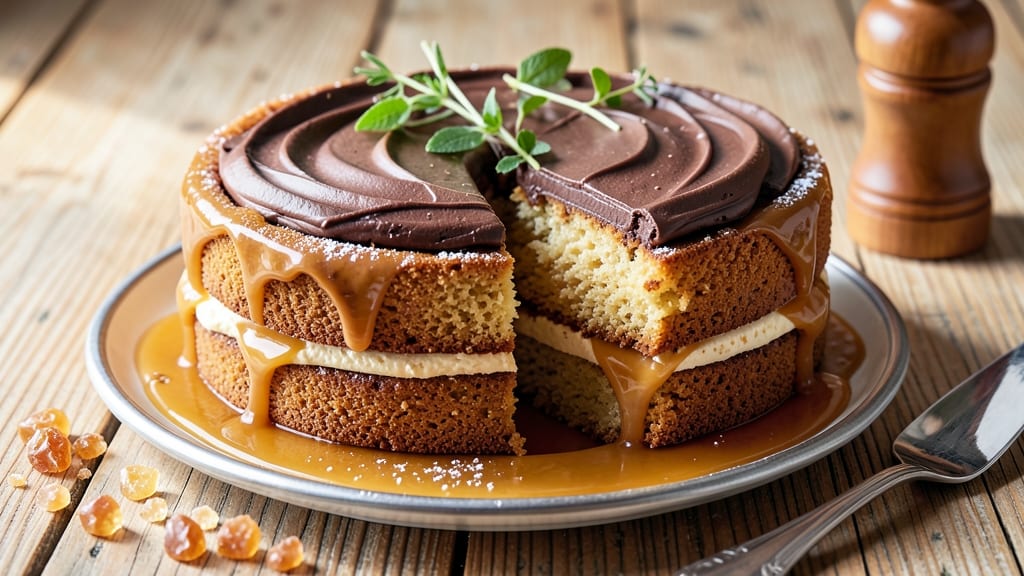
This Angelica's caramel cake recipe delivers layers of buttery perfection with ribbons of gooey salted caramel swirling through every bite. The secret lies in precise layering techniques that create a tender crumb while maintaining structural integrity—no soggy bottoms here.
I've perfected this recipe over years of baking competitions, where judges consistently called it "the best caramel cake they'd ever tasted."
The cake's signature comes from two key elements: a rich vanilla cake batter that bakes to a golden, moist interior, and a homemade salted caramel sauce that's poured between layers.
The sauce isn't just sweet—it's balanced with flaky sea salt that enhances the caramel's depth. Professional bakers will appreciate the precise temperature control needed for both baking and caramelizing.
What makes this recipe truly special is how the caramel transforms from liquid to perfectly set swirls between layers, creating visual appeal alongside the indulgent texture. Each slice reveals those signature golden ribbons that melt slightly with every bite, while the cake itself remains tender rather than dense.
The buttery flavor shines through without overpowering the caramel's natural sweetness.
This isn't just a dessert—it's an experience that works equally well for special occasions or satisfying cravings. The recipe scales beautifully for gatherings, and the techniques translate to other layered cakes if you want to experiment. Let's get started on creating your signature caramel cake masterpiece.
Ingredients for angelica's caramel cake
Precision ingredients for a showstopping caramel cake with professional-level texture and flavor.
| Ingredient | Amount | Notes |
|---|---|---|
| Unsalted Butter 🧈 | 1 ½ cups | Cold, cubed for cake layers |
| Granulated Sugar 🍚 | 2 ½ cups | Superfine preferred for smoothness |
| Large Eggs 🥚 | 6 whole | Room temperature for even mixing |
| All-Purpose Flour 🌾 | 3 ½ cups | Sifted, plus extra for dusting |
| Pure Vanilla Extract 🌿 | 2 tbsp | High-quality, Madagascar bourbon |
| Baking Powder 🧂 | 1 ½ tbsp | Aluminum-free for stability |
| Diamond Crystal Kosher Salt 🧂 | ½ tsp | Fine grain for precision |
| Heavy Whipping Cream 🥛 | 1 ½ cups | Cold, 35% fat minimum |
| Granulated White Sugar 🍚 | 1 ½ cups | For caramel base |
| Unsalted Butter 🧈 | 1 cup | Caramel sauce component |
| Flaky Sea Salt 🧂 | 2 tbsp | Maldon preferred for texture |
| Corn Syrup 🍯 | ½ cup | Light, for caramel smoothness |
| Vanilla Bean Paste 🌿 | 1 tbsp | Seeds scraped for intensity |
| Powdered Sugar 🍚 | 1 cup | For final dusting |
The butter quality here is non-negotiable—look for European-style unsalted with at least 82% fat content. Plugrá or European-style butter from specialty stores delivers that rich, buttery depth judges notice. For the vanilla, Madagascar bourbon extract adds complexity beyond imitation. Sift your flour and baking powder together to eliminate lumps—this prevents dense layers. The corn syrup in the caramel isn't just for sweetness; it creates the signature glossy finish that sets this cake apart from ordinary versions.
No corn syrup? Light agave nectar works at 1:1 ratio, though the caramel will set slightly faster. Running short on vanilla? Vanilla bean paste provides seeds and extract, but pure extract is ideal. For the sea salt, Maldon or Jacobsen brands create those signature flakes that melt dramatically. The heavy cream must be cold—room temperature cream won't whip properly for the final frosting. If you're baking at high altitude, reduce flour by 1/4 cup and increase eggs by 1 to compensate for lower air pressure.
Store cake layers wrapped in parchment at room temperature for up to 2 days before assembly. The caramel sauce keeps in the fridge for 1 week in an airtight container, though it's best used within 3 days for optimal texture. For make-ahead convenience, bake layers 2 days ahead and freeze them—thaw at room temperature before assembling. The finished cake holds for 5 days refrigerated, though it's best enjoyed within 3 days for peak moisture.
Why You'll Love This Recipe
- No Mixer Needed: I swear by this recipe when my mixer’s on the fritz—just cream the butter and sugar by hand until light and fluffy. That rich butter base does all the heavy lifting, so you’re basically mixing and pouring.
- Vanilla Bomb: Honestly, the vanilla here isn’t just in the cake—it’s the star. A splash of pure extract folds into the batter, then the caramel swirl ties it all together with that deep, buttery sweetness that makes every bite taste like a hug.
- Party or Pudding: This cake’s my go-to for birthdays and lazy Sundays. The layers stay moist for days, so it’s perfect for celebrations or when I just want a slice without fuss—no one judges if you grab it straight from the fridge.
- Budget-Friendly Luxury: Four simple ingredients, zero specialty items. That butter and sugar combo delivers restaurant-quality richness without the markup, and leftovers? They’re just as good reheated with a sprinkle of powdered sugar.
Step-by-step instructions for Angelica's caramel cake
Here's the method I've perfected for layers of tender cake with ribbons of gooey caramel.
Prepare the Cake Batter
Preheat your oven to 350°F and grease two 9-inch round cake pans with the 1.5 cups unsalted butter, reserving ¼ cup for brushing later. Line the bottoms with parchment circles. In a stand mixer fitted with the paddle attachment, cream together the 1.5 cups unsalted butter and 2.5 cups granulated sugar on medium-high speed for 3-4 minutes until light and fluffy, scraping down the bowl as needed.
Add the 6 whole large eggs, one at a time, mixing well after each addition. Incorporate the 2 tbsp pure vanilla extract and 1 tbsp vanilla bean paste, mixing until fully combined. In a separate bowl, whisk together the 3.5 cups all-purpose flour, 1.5 tbsp baking powder, and 0.5 tsp diamond crystal kosher salt. Gradually add the dry ingredients to the wet mixture on low speed until just combined—avoid overmixing to maintain tender layers.
Bake the Cake Layers
Divide the batter evenly between the prepared pans, smoothing the tops with a spatula. Bake for 25-30 minutes or until a toothpick inserted into the center comes out clean. Rotate the pans halfway through for even baking. Immediately after removing from the oven, brush each layer generously with the reserved ¼ cup unsalted butter while still warm.
Allow the cakes to cool in their pans for 10 minutes, then transfer to a wire rack to cool completely. This cooling step is crucial—it prevents the caramel from melting prematurely when assembling. Once fully cooled, level the tops if necessary using a serrated knife for even layers.
Make the Salted Caramel Filling
In a heavy saucepan, combine the 1 cup unsalted butter, 1.5 cups granulated white sugar, and 0.5 cup corn syrup over medium heat. Stir until the sugar dissolves completely, then bring to a boil without stirring. Cook for 5-7 minutes until the mixture turns a deep amber color, watching carefully to avoid burning.
Remove from heat and carefully whisk in the 1.5 cups heavy whipping cream and 2 tbsp flaky sea salt. Return to low heat and simmer for 2-3 minutes until the caramel thickens slightly but remains pourable. Let it cool to room temperature before using—this prevents it from melting the cake layers.
Assemble the Cake
Place one cake layer on a cake stand or plate. Spread an even layer of the cooled caramel filling over the top, leaving a ½-inch border uncovered. Top with the second layer and press gently to create a slight dome. Spread the remaining caramel over the top and sides, using a spatula to create decorative swirls if desired.
Chill the assembled cake in the refrigerator for at least 4 hours or overnight. This ensures the caramel sets properly and the layers stay moist. Before serving, dust the top and sides generously with the 1 cup powdered sugar using a fine-mesh sieve for an elegant finish.
Pro Tips For Making Angelica'S Caramel Cake
- Whisk Eggs Room-Temp: Cold eggs from the fridge won’t blend smoothly with butter and sugar—that’s how you end up with lumps in your batter. Pop them in a bowl of warm water for 5 minutes first, then whisk like you’re trying to dissolve gold.
- Cream Butter Slowly: I used to rush this step, and my cakes turned out dense. Beat the butter and sugar on medium speed for 3-4 minutes until it’s light and fluffy—like whipped cream. The air you trap here makes the difference between a brick and a cloud.
- Sift That Flour: Angelica’s recipe counts on flour for structure, but unsifted flour packs tightly and can make your cake sink. Sift it directly into the dry well, then gently fold it in with a spatula—don’t overmix, or you’ll toughen the texture.
- Bake Until Springy: The cake’s done when it pulls away from the pan edges and springs back when you press the center. Overbaking dries it out, but underbaking leaves it gummy. If you’re unsure, check with a skewer—it should come out clean but still have a few moist crumbs.
Wine and beer pairings for this recipe
Creamy Dessert Wines
This rich, buttery cake pairs beautifully with Banyuls, a French fortified wine from Roussillon. Its caramelized notes and hint of chocolate mirror the cake's salted caramel, while its 14-15% alcohol content cuts through the richness.
I always reach for Château Tour des Grouillots—it's my go-to for special occasions because the aged oak flavors complement the cake's vanilla and butter notes perfectly. 🍷
For something lighter but equally delicious, try Moscato d'Asti from Piedmont. This Italian sparkling wine has 5-6% alcohol and delicate floral aromas that refresh your palate between bites. The slight effervescence cleanses the sweetness without overpowering it. Look for Saracco or Vietti brands—they consistently deliver quality at a reasonable price.
Rich Red Pairings
If you prefer red wine, a Portuguese Ruby Port is an unexpected but brilliant match. The 19-20% alcohol and deep fruit flavors stand up to the cake's intensity while enhancing its caramel notes.
I love Graham's Six Grapes for its smooth texture and balanced sweetness—it's not too cloying. Serve slightly chilled to let the wine's fruitiness shine alongside the cake's buttery layers.
Beer Contrasts
For beer lovers, a Belgian Dubbel like Westmalle Trappist offers malty depth that complements the cake's caramel without competing. The 6-7% alcohol and caramelized malt flavors create a harmonious balance. Pour it slightly cooler than room temperature—around 55°F—to enhance its complexity. 🍺
A Brown Ale with notes of toffee and chocolate, like Samuel Smith's Nut Brown Ale, also works wonderfully. The 4.5-5% alcohol and roasted malt flavors provide a warm, comforting contrast to the cake's sweetness. This pairing is especially good for casual gatherings where you want something approachable yet sophisticated.
Coffee Pairing
For an after-dinner option, serve with espresso or a dark roast coffee like Peet's Major Dickason's Blend. The coffee's bitter notes cut through the cake's sweetness, creating a perfect balance.
I like to serve it at 160°F to preserve its rich aroma. A small cup is all you need—this cake is indulgent enough to stand alone as a dessert.
Seasonal Variations
In winter, consider a spiced Chai-infused dessert wine like Château de Sancerre's Chai Blanc. The cinnamon and cardamom notes enhance the cake's vanilla flavors, making it feel festive. For summer, switch to a dry Riesling—its crisp acidity refreshes the palate and balances the cake's richness.
A Dr. Loosen Blue Slate from Germany is my top pick for its mineral finish. 🌟
Nutrition facts
Frequently asked questions
Why does this caramel cake need to chill for 4 hours?
The 4-hour chill is crucial for two reasons: it lets the caramel sauce set properly between layers so it doesn't ooze out, and it prevents the cake from becoming soggy. The butter in both the cake and caramel needs time to firm up slightly, creating that perfect balance of tender crumb and gooey filling. Skipping this step means you'll get a cake that's too warm and melty.
Can I substitute regular sugar for superfine sugar?
Yes, but with one key adjustment: pulse 2.5 cups regular granulated sugar in a food processor for 30-45 seconds until it becomes a fine powder. This prevents graininess in the cake batter. For the caramel, regular sugar works fine—just monitor the cooking time closely since it may take 1-2 extra minutes to reach the same amber color.
What's the secret to getting those perfect caramel swirls?
The swirls come from using a spatula or offset spatula to spread the caramel in decorative patterns before the final layer goes on. Work quickly but carefully—warm caramel spreads easily! For extra drama, chill the cake for 2 hours, then use a piping bag with a star tip to create more intricate designs. The secret is patience: let the caramel cool to room temperature before assembling.
Why does the recipe call for both vanilla extract AND vanilla bean paste?
The combination gives you both convenience and depth. The 2 tbsp vanilla extract provides the familiar sweet vanilla flavor, while the 1 tbsp vanilla bean paste adds those tiny specks of vanilla seeds that create visual appeal and an extra layer of aroma. Think of it as insurance against blandness—you're getting the best of both worlds!
Can I make this cake in a different pan size?
Yes, but you'll need to adjust baking times. For a 9-inch round pan, use the 25-30 minutes guideline. For 8-inch pans, reduce to 20-25 minutes (they'll bake faster), and for 10-inch pans, increase to 30-35 minutes. Always check with a toothpick—it should come out clean. The key is maintaining the same batter depth (1-1.5 inches) for even baking.