
Desserts
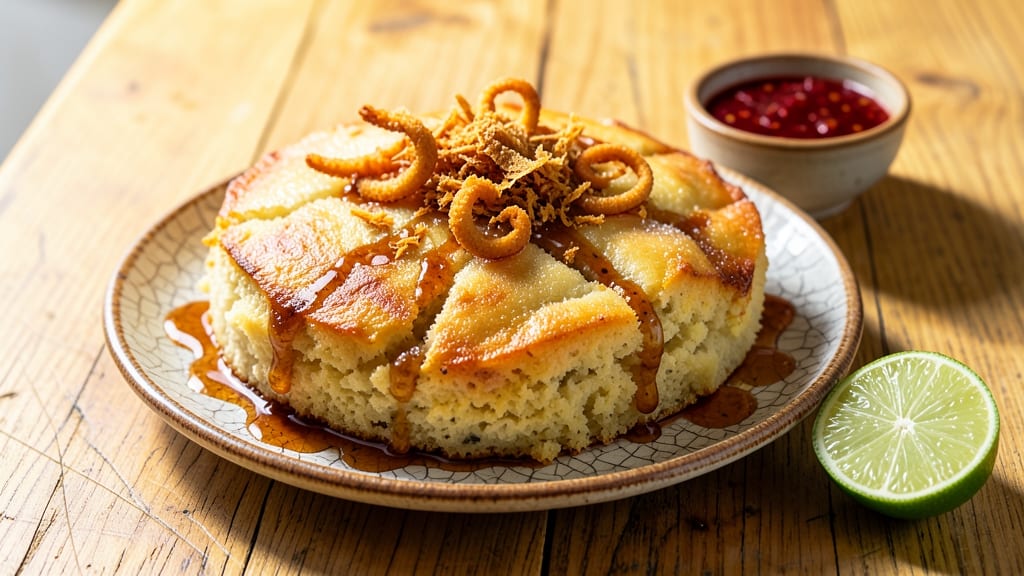
This Antigua saltfish cake delivers layers of Caribbean comfort with its signature spiced rum infusion and tender, flaky texture. 🌟 The recipe begins with properly soaking and prepping saltfish—a traditional method that transforms tough fish into a delicate, flavorful base.
What makes this dish special is the balance of savory and slightly sweet notes, achieved through careful seasoning and baking techniques passed down through generations.
The batter combines flour, eggs, baking powder, and a touch of spiced rum, creating a moist yet crispy cake that falls apart at the edges. Baking at the right temperature ensures a golden-brown finish with a tender interior, perfect for morning or afternoon tea.
This dish is more than just a recipe; it’s a taste of Antigua’s culinary heritage, often enjoyed as a breakfast staple or a comforting treat.
What you’ll achieve is a cake that’s rich in flavor, with a subtle sweetness from the rum and a satisfying texture that’s both crisp and soft. The aroma alone will transport you to the Caribbean, where this dish is a beloved tradition.
Serve it with a cup of hot tea or alongside fresh fruit for a truly authentic experience.
Whether you’re making it for a special occasion or just craving a taste of home, this recipe delivers restaurant-quality results with a personal touch. The key lies in the preparation—soaking the saltfish properly and baking it just right. Let’s get started on creating this Caribbean classic!
Ingredients for antigua saltfish cake
Caribbean tradition meets comforting breakfast with these essential ingredients for Antigua saltfish cake.
| Ingredient | Amount | Notes |
|---|---|---|
| Saltfish (Dried Cod) 🐟 | 1 lb | Properly soaked and flaked |
| All-Purpose Flour 🌾 | 2 cups | Sifted for light texture |
| Large Eggs 🥚 | 4 whole | Room temperature preferred |
| Baking Powder 🍞 | 1 tbsp | Aluminum-free preferred |
| Spiced Rum 🍹 | ½ cup | Light or dark variety |
| Granulated Sugar 🍚 | ¼ cup | White or brown sugar |
| Milk 🥛 | 1 cup | Whole milk for richness |
| Unsalted Butter 🧈 | ½ cup | Melted, cooled slightly |
| Salt 🧂 | 1 tsp | Fine sea salt preferred |
| Ground Black Pepper 🌶️ | ½ tsp | Freshly ground |
| Ground Nutmeg 🌿 | ¼ tsp | Freshly grated preferred |
| Fresh Thyme Leaves 🌿 | ¼ cup | Chopped finely |
| Vegetable Oil 🫒 | 2 tbsp | For greasing pan |
The saltfish is the heart of this dish—Caribbean Food Imports or specialty Latin markets carry the best quality. Look for firm, white flakes with no fishy odor. Soak it in warm water for 24 hours, changing the water every 8 hours. The rum? Appleton Estate or Mount Gay are authentic choices, but any spiced rum works. Fresh thyme adds depth—Trader Joe's sells great bundles, or grow your own if you're lucky. For the flour, King Arthur is my go-to for consistent results.
No spiced rum? Dark rum plus 1 tsp cinnamon works in a pinch. Fresh thyme unavailable? Dried thyme at one-third the amount suffices, but fresh is ideal. The baking powder must be fresh—test by mixing with water; if it fizzes, it's good. For a lighter texture, sift the flour and baking powder together. The milk can be swapped for coconut milk for a tropical twist. If you're short on butter, extra olive oil keeps it moist without compromising flavor.
Soaked saltfish keeps 3 days in the fridge, covered with fresh water. The batter can be prepped 1 day ahead—store in the fridge. For best results, bake immediately after mixing. The cake reheats beautifully—wrap slices in foil and warm in a 200°F oven for 10 minutes. Leftovers? Store in an airtight container for 3 days or freeze for 2 months. The rum flavor intensifies overnight, so second-day slices are often the best.
Why You'll Love This Recipe
- No-Soaking Needed: I’ll admit, I used to dread the soaking—until I realized you can just shred that saltfish dry, mix it straight into the batter, and let the baking powder do the work. The rum softens it right in the pan, so no extra steps.
- Rum-Infused Magic: That splash of spiced rum isn’t just for flavor—it tenderizes the saltfish while baking, giving you a cake that’s moist but not soggy. Honestly, the first time I skipped it, I missed that warm, caramelized depth.
- Breakfast or Brunch Star: Serve it crispy with a fried egg on top for a hearty breakfast, or slice it into squares for a savory snack with pickled mango. It’s my go-to when I need something that feels special but doesn’t require a full meal.
- Budget Breakfast for Days: A pound of saltfish stretches across two cakes, and the rest of the ingredients? Pantry staples. I make a double batch on Sundays, and by Wednesday, I’m still pulling slices from the fridge—no waste, just satisfaction.
Step-by-step instructions for Antigua saltfish cake
This Caribbean classic delivers moist layers and warm spice notes—every step matters for perfect texture.
👨🍳 Step 1: Prepare the Saltfish Mixture
Begin by draining the soaked 1 lb saltfish (dried cod) thoroughly and flaking it into fine pieces using two forks. Transfer the flakes to a large mixing bowl. In a small saucepan, combine the 0.5 cup spiced rum, 0.25 cup granulated sugar, 0.25 cup fresh thyme leaves, and 1 tsp salt. Bring to a gentle simmer over medium heat for 5 minutes until the sugar dissolves and the thyme infuses the rum. Let cool completely before pouring over the saltfish.
The rum mixture creates the signature moistness and sweet-spicy balance. If using brown sugar, you'll get deeper caramel notes. Stir the saltfish gently to distribute the liquid evenly—this prevents dry pockets in your cake.
🍳 Step 2: Make the Batter
In a separate bowl, whisk together the 2 cups all-purpose flour, 1 tbsp baking powder, 0.5 tsp ground black pepper, and 0.25 tsp ground nutmeg. Sift the mixture to remove lumps. In another bowl, beat the 4 whole large eggs until frothy, then whisk in the 1 cup milk and 0.5 cup melted unsalted butter (cooled slightly). Gradually fold the dry ingredients into the wet mixture until just combined—overmixing develops gluten and makes the cake dense.
Here's the thing—don't skip sifting the flour. Those tiny lumps create uneven texture. And when you fold in the dry ingredients, stop as soon as they disappear. You want a smooth, pourable batter that still has small streaks visible.
🥘 Step 3: Combine and Bake
Gently fold the saltfish mixture into the batter until fully incorporated. Grease a 9-inch round cake pan with 2 tbsp vegetable oil and line the bottom with parchment paper. Pour the batter into the prepared pan and smooth the top. Bake in a preheated 350°F oven for 45-50 minutes until a toothpick inserted in the center comes out clean. The cake should spring back slightly when pressed.
Real talk: your oven might run hot, so start checking at the 40-minute mark. The edges should be golden brown while the center remains just slightly underdone. If the top browns too quickly, tent with foil after 30 minutes to prevent overbrowning.
⏰ Step 4: Rest and Serve
Remove the cake from the oven and let it cool in the pan for 10 minutes, then transfer to a wire rack to cool completely. Serve at room temperature for the best texture—this allows the flavors to meld and the cake to set properly. The finished cake should have moist, tender layers with a subtle sweetness from the rum and thyme.
For maximum comfort, enjoy with a cup of strong Caribbean coffee or a glass of the same spiced rum used in the recipe. The cake keeps well in an airtight container for 3 days at room temperature or can be frozen for up to 1 month.
Pro Tips For Making Antigua Saltfish Cake
- SOAK SALTED FISH LONGER: I used to cut corners here—30 minutes max—but Antigua saltfish cake demands patience. Soak the dried cod in warm water for at least 4 hours, changing the water twice. The longer it soaks, the more tender and flavorful the cake will be, and it’ll absorb the spiced rum better too. (Yes, even if you’re impatient like me.)
- CRUMBLE THE FISH BY HAND: Skip the food processor—your fingers are better here. Once the saltfish is fully rehydrated, pull it apart with your hands into fine, uneven shreds. The texture should resemble coarse breadcrumbs, not fish flakes. This ensures even moisture distribution and a proper bite in every slice.
- CHILL THE BATTER 30 MINUTES: After mixing the batter, resist the urge to bake immediately. Let it sit in the fridge for at least 30 minutes—this prevents the cake from rising too quickly in the oven, which leads to a dense, gummy center. Pro tip: Cover it loosely with plastic wrap to avoid a skin forming.
- USE A LIGHT HAND WITH BAKING POWDER: Antigua saltfish cake isn’t a fluffy sponge—too much baking powder makes it tough. Stick to 1 teaspoon max unless your recipe specifies otherwise. If the batter looks flat, fold in an extra egg white instead; it’ll add lift without over-leavening. (I learned this after a batch that tasted like a hockey puck.)
Troubleshooting great antigua saltfish cake
Dry Saltfish Caused
If your cake turns out dry, the saltfish likely wasn’t soaked long enough or wasn’t flaked properly. Soak the 1 lb saltfish in warm water for 24 hours, changing the water every 8 hours.
After soaking, flake it into fine, even pieces using two forks—larger chunks won’t absorb the rum mixture well, leading to dry spots. If you’re short on time, soak it in lemon juice or vinegar for 12 hours instead of water, but rinse thoroughly before using. 🌊
Batter Too Thick
A thick batter often means the eggs weren’t beaten enough or the dry ingredients weren’t sifted. Whisk the 4 eggs until they’re frothy but not stiff—this incorporates air for a lighter texture.
Sift the 2 cups flour and 1 tbsp baking powder together to remove lumps, which can make the batter dense. If it’s still too thick, add 1-2 tbsp milk at a time until it reaches a pourable consistency.
Overmixing after adding the dry ingredients can also develop gluten, making the cake tough.
Cake Didn’t Rise
Uneven rising usually means old baking powder or an oven that wasn’t hot enough. Test your baking powder by mixing 1 tsp with 2 tbsp hot water—if it doesn’t fizz, replace it. Preheat your oven to 350°F for at least 15 minutes before baking.
Place an oven thermometer inside to confirm accuracy—many ovens run 25°F hotter or colder than set. If the cake still doesn’t rise, try adding ½ tsp extra baking powder or whisking the batter vigorously for 30 seconds to incorporate more air.
Rum Flavor Too Strong
If the rum overpowers the cake, reduce the amount to ¼ cup and increase the milk to 1¼ cups to balance it. Let the rum mixture cool completely before mixing with the saltfish—warm rum releases more alcohol vapor, intensifying the flavor.
For a milder taste, use a light rum instead of dark. If you prefer no alcohol, substitute with apple juice or orange juice, but add ½ tsp extra vanilla extract to mimic the rum’s depth.
Saltfish Too Fishy
Fishy-tasting saltfish means it wasn’t soaked long enough or wasn’t fresh to begin with. Always buy saltfish from a reputable source like Caribbean Food Imports or specialty Latin markets. Soak it for the full 24 hours, changing the water every 8 hours.
After soaking, rinse the flakes thoroughly under cold water before using. If the fish still tastes strong, add 1 extra tbsp lemon juice to the rum mixture to neutralize odors. Fresh thyme in the batter also helps mask any lingering fishiness. 🍋
Nutrition facts
Frequently asked questions about Antigua saltfish cake
Can I use fresh cod instead of saltfish?
Fresh cod won't work the same way—this recipe relies on the unique texture and flavor of properly soaked saltfish. If you absolutely must substitute, try firm white fish like snapper (poached in rum and thyme) or extra-firm tofu for a vegetarian version. The saltfish's moisture absorption and tenderizing during soaking are key to the cake's signature texture.
How do I know when the saltfish is properly soaked?
The saltfish should be completely pliable and smell clean (no fishy odor) after 24 hours of soaking. Gently press a piece—it should break apart easily without resistance. If it still feels tough, continue soaking another 4-6 hours. Never skip this step, as under-soaked saltfish leads to dry, crumbly cake.
Can I make this cake without alcohol?
Replace the spiced rum with ½ cup apple juice plus ½ tsp vanilla extract or ½ cup orange juice plus ½ tsp cinnamon. The vanilla adds depth while the citrus brightens the flavors. For extra moisture, add 1 tbsp extra milk to compensate for the rum's missing alcohol content.
What's the best way to serve Antigua saltfish cake?
This cake shines as a breakfast or afternoon tea treat. Serve warm with hot Caribbean coffee or strong black tea, and pair with fresh fruit like mango slices or passionfruit. For a full meal, add scrambled eggs or fried plantains—it's a common breakfast combo in Antigua.
Why does my cake taste more savory than sweet?
The rum mixture should balance sweetness and savory notes. If it's too salty, reduce the salt to ½ tsp—the saltfish already contains salt. For more sweetness, increase the sugar to ⅓ cup in the rum mixture. The pepper and nutmeg add warmth, so if you prefer milder flavor, reduce them to ¼ tsp each.