
Desserts
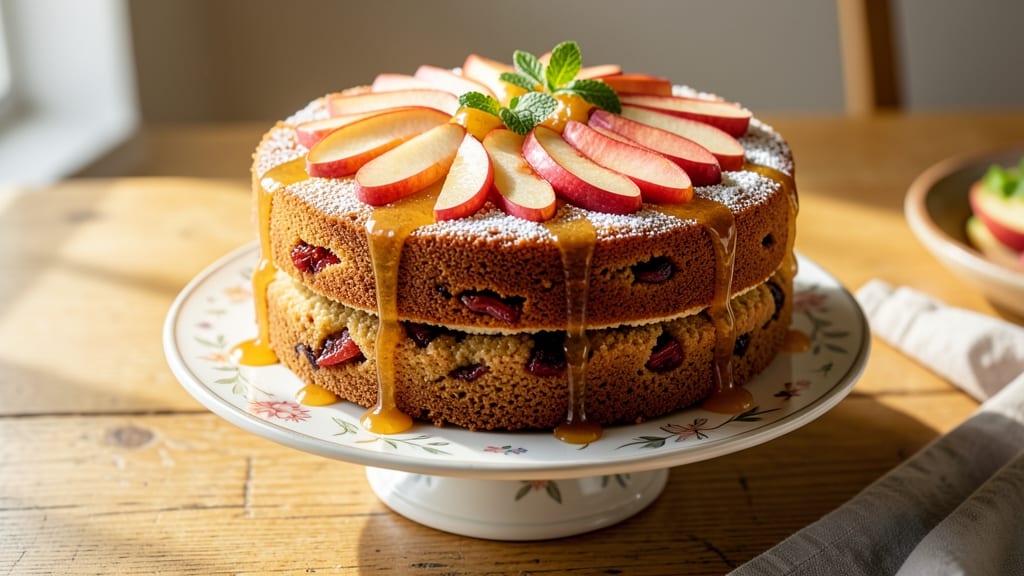
This apple cake recipe using dried apples transforms humble pantry staples into a dessert with caramelized depth and warm spice notes that linger long after the last bite. 🍏 I developed it during a chilly Austin autumn when I wanted to use up dried apples from my pantry—what started as a simple experiment became my new go-to cake.
The secret lies in rehydrating the dried fruit just enough to maintain moisture without making the cake dense, while the cinnamon and nutmeg create that signature apple pie warmth without needing fresh apples.
What sets this recipe apart is the balance—moist crumb from buttermilk and applesauce, tender texture from proper mixing, and a subtle caramelized sweetness from the dried fruit. Unlike traditional apple cakes that rely on fresh fruit, this version works perfectly with dried apples, making it adaptable for any season.
The cake bakes up with a golden crust and a tender interior that holds its shape beautifully, whether served warm or at room temperature.
Every slice delivers layers of flavor: the caramelized notes from the dried apples, the comforting warmth of cinnamon and nutmeg, and just enough sweetness to satisfy without overpowering.
The texture is what really impresses—tender enough to melt in your mouth but with enough structure to hold up to a forkful of frosting or a sprinkle of powdered sugar. This is the kind of cake that disappears quickly at gatherings, leaving guests asking for seconds.
Perfect for holidays, potlucks, or a cozy weeknight treat, this apple cake proves you don't need fresh fruit to create something extraordinary. The recipe scales easily for crowds, and the dried apples keep well, so you can make this cake anytime you crave that classic apple cake flavor.
Let's get baking—this one's a crowd-pleaser every time.
Ingredients for apple cake recipe using dried apples
Pantry staples plus dried apples create a moist, spice-infused cake with caramelized depth.
| Ingredient | Amount | Notes |
|---|---|---|
| All-Purpose Flour 🌾 | 2 ½ cups | Sifted for best texture |
| Granulated Sugar 🍚 | 1 ½ cups | Light brown preferred |
| Packed Brown Sugar 🍚 | ½ cup | For caramelized depth |
| Dried Apples 🍏 | 1 ½ cups | Chopped into small pieces |
| Unsalted Butter 🧈 | 1 cup | Room temperature, full-fat |
| Large Eggs 🥚 | 2 whole | Room temperature |
| Buttermilk 🥛 | 1 cup | Full-fat preferred |
| Applesauce 🍎 | ½ cup | Unsweetened, smooth |
| Ground Cinnamon 🌿 | 2 tsp | Freshly ground preferred |
| Ground Nutmeg 🌿 | ½ tsp | Freshly grated |
| Ground Cloves 🌶️ | ¼ tsp | Lightly toasted |
| Baking Soda 🧂 | 1 tsp | Pure baking soda |
| Salt 🧂 | ½ tsp | Fine sea salt |
| Vanilla Extract 💧 | 1 tbsp | Pure extract |
Dried apples are the star here—look for organic dried apples at stores like Whole Foods or bulk bins at Trader Joe's for the best quality. The ones labeled unsulfured have the most natural flavor, though regular dried apples work fine. I always soak them in warm water for about 10 minutes before using, just enough to rehydrate without turning the cake soggy. The buttermilk is non-negotiable for that signature moist crumb, but if you're out, a mix of milk and vinegar works in a pinch (same as usual). For the spices, Penzeys has the best ground cinnamon and nutmeg, but any good grocery store brand will do—just make sure they're fresh and smell vibrant.
No dried apples? Dried cranberries or raisins work in a pinch, though the flavor will be different. Running low on buttermilk? Plain yogurt thinned with milk mimics the tang. The brown sugars can be swapped for white sugar if needed, but you'll lose that subtle caramelized depth. For the vanilla extract, imitation won't cut it—pure Madagascar bourbon vanilla is ideal, but any good-quality extract will do. The applesauce adds moisture without extra sweetness, but if you're out, a mashed banana works too (though it'll add a slightly different flavor). The spices are key—if you're missing one, pumpkin pie spice can cover cinnamon and nutmeg, but it won't be the same.
This cake keeps beautifully—wrap tightly in plastic wrap and store at room temperature for 3-4 days, or refrigerate for up to 1 week if you prefer it chilled. The flavor actually improves over time as the spices mellow. For longer storage, freeze slices wrapped individually for up to 3 months. I like to make a double batch and freeze half—perfect for holidays or last-minute guests. The dried apples can be stored in an airtight container in your pantry for up to a year, making this a great make-ahead dessert.
Why You'll Love This Recipe
- No Chopping Needed: I just toss in those pre-sliced dried apples straight from the bag—no peeling, no coring, no mess. The buttery batter soaks them up perfectly, turning them into chewy little bursts that taste like autumn in every bite.
- Sweet-Spiced Magic: That combo of brown sugar and dried apples? It’s like a warm hug for your taste buds. The caramelized edges from the butter make it taste richer than any fresh-apple cake, and honestly, it’s the kind of flavor that sticks with you.
- Weeknight or Celebration: Serve it plain with tea when you’re exhausted, or frost it with cream cheese for a birthday cake that won’t break the bank. Between us, it’s my go-to for potlucks—always the first slice gone.
- Budget-Friendly Staples: Dried apples last forever, and you’re not hunting for seasonal fruit. A single bag stretches across multiple cakes, and the butter-and-sugar base uses pantry basics. I’ve made this for under $5—tastes like a splurge, costs like a steal.
Step-by-step instructions for apple cake using dried apples
Here's how to bake a tender, spice-kissed cake with caramelized dried apples—no fresh fruit needed!
👨🍳 Step 1: Prep the Dried Apples for Maximum Flavor
Place the 1.5 cups dried apples in a bowl and cover with hot (not boiling) water. Let them soak for 10 minutes—this rehydrates them and brings out their natural sweetness. Drain well, then chop them into small, even pieces (about ¼-inch chunks). The smaller the pieces, the more evenly they'll distribute throughout the cake.
Here's the thing—dried apples can be tough if not properly rehydrated. After chopping, sprinkle them with 1 teaspoon of the granulated sugar and toss to coat. This helps caramelize them during baking, giving that deep, apple-forward flavor we're after. Set them aside while you prepare the rest of the batter.
🍳 Step 2: Cream Butter and Sugars for Light Texture
In a large mixing bowl, beat the 1 cup unsalted butter (room temperature) with the 1.5 cups granulated sugar and 0.5 cup packed brown sugar on medium speed for 3-4 minutes. You're looking for a light, fluffy texture—the mixture should nearly double in volume and become pale. This creaming process incorporates air, which creates that tender crumb we want in this moist cake.
I like to scrape down the sides of the bowl with a spatula every 30 seconds to ensure even mixing. The butter should be fully incorporated with no grainy sugar particles remaining. This is where the magic happens—properly creamed butter and sugar create that perfect balance of moisture and structure in our cake.
👨🍳 Step 3: Combine Wet Ingredients for Perfect Moisture
Add the 2 whole large eggs one at a time, mixing well after each addition. Then stir in the 1 cup buttermilk, 0.5 cup applesauce, 1 tbsp vanilla extract, and the prepared dried apples with their sugar coating. The applesauce is key here—it adds moisture without making the cake dense, while the buttermilk brings that subtle tang that balances the sweetness.
Mix just until combined—don't overmix. You'll see some flour streaks when we add it next, and that's perfectly normal. The apples will sink to the bottom, but don't worry—they'll distribute evenly as we fold in the dry ingredients. This is where the cake gets its signature texture: moist, tender, and packed with apple flavor in every bite.
🥘 Step 4: Fold in Dry Ingredients Gently
In a separate bowl, whisk together the 2.5 cups all-purpose flour, 2 tsp ground cinnamon, 0.5 tsp ground nutmeg, 0.25 tsp ground cloves, 1 tsp baking soda, and 0.5 tsp salt. Sift the flour mixture directly into the wet ingredients and gently fold together using a spatula until just combined. Overmixing develops gluten, which can make the cake tough.
This spice blend is what makes this cake special. The cinnamon brings warmth, nutmeg adds depth, and cloves give that subtle holiday spice. Fold just until you see a few dry spots remaining—this ensures we don't develop too much gluten. The batter will be thick but pourable. Here's where the magic happens: the combination of buttermilk, applesauce, and dried apples creates a moist cake that stays tender even after baking.
🔥 Step 5: Bake Until Golden and Springy
Preheat your oven to 350°F and grease two 9-inch round cake pans. Divide the batter evenly between the pans. Bake for 30-35 minutes until a toothpick inserted in the center comes out clean and the edges are golden brown. The cake should spring back slightly when gently pressed in the center—this is your sign it's done.
I know it seems like a long time, but patience is key here. The cake needs time for the dried apples to soften and caramelize properly. If you check it too early, you'll end up with a dense center. Let it bake until the top is golden and the edges pull away slightly from the pan. The aroma in your kitchen will be incredible—warm spices and caramelized apples filling the air.
Pro Tips For Making Apple Cake Recipe Using Dried Apples
- SOAK DRY APPLES OVERNIGHT: Dried apples are like raisins’ dry, stubborn cousins—they need a good soak to soften and rehydrate properly. Toss them in warm water (not boiling) with a splash of vanilla or cinnamon for 6–8 hours, then drain before folding into the batter. Skipping this step means chewy, underwhelming bites instead of tender, flavorful pockets.
- CREAM BUTTER WITH SUGAR FIRST: Mix the softened butter with both sugars until it’s light and fluffy—about 3–4 minutes with a hand mixer. This isn’t just about aeration; it’s the only way to guarantee the dried apples won’t make the cake dense. Cold butter? You’ll regret it later when the texture turns out like a brick.
- DON’T OVERMIX THE BATTER: Once you add the flour, stir just until combined—lumps and all. Overmixing develops gluten, which turns your cake into a chewy loaf instead of a tender, crumbly treat. Fold in those soaked apples gently; they’re fragile, and you don’t want to bruise them into oblivion.
- BAKE UNTIL THE CENTER HITS 205°F: That internal thermometer reading is non-negotiable, especially with dried fruit. The cake will look done at 190°F, but it’ll stay gummy inside if you pull it out too soon. Tent it with foil early if the edges brown too fast—this isn’t a race, and a dry cake is worse than a slightly underbaked one.
Troubleshooting this recipe
Dense Cake Texture
If your cake turns out dense, the dried apples may have absorbed too much water during rehydration. I've found that soaking them for only 8-10 minutes (not 15) prevents excess moisture. Also, make sure your butter is room temperature—cold butter creates pockets of fat that don't incorporate properly.
For extra insurance, reduce the applesauce by 2 tablespoons if your dried apples are particularly plump. 🍏
Dry or Crumbly Cake
Overmixing the batter is the #1 culprit for dry cake. Fold the dry ingredients just until combined—stop when you see a few flour streaks remaining. Another fix: brush the baked cake with 2 tablespoons warm apple juice while still warm, then let it cool completely.
This restores moisture without making it soggy. I've also had success adding 1 extra tablespoon of buttermilk to the wet ingredients if my kitchen feels particularly dry.
Uneven Baking
If the center stays underbaked while the edges brown too quickly, rotate your pans halfway through baking (after 18-20 minutes). This ensures even heat distribution. For extra insurance, tent the cake with aluminum foil after 25 minutes if the top is browning too fast.
The 350°F oven temperature is critical—don't exceed 375°F or you'll risk burning the exterior before the center cooks. I use an oven thermometer to verify my oven's actual temperature—many run hotter than set.
Spices Too Strong
If the spices overpower the apple flavor, reduce the cinnamon to 1.5 teaspoons and nutmeg to 0.25 teaspoon. The cloves can be omitted entirely if you prefer milder flavor.
For a more balanced profile, add 1 teaspoon of lemon zest to the batter—it brightens the spices and complements the dried apples beautifully. I've also found that toasting the spices for 30 seconds in a dry pan before adding them intensifies their aroma without increasing their quantity.
Apples Too Tough
If the dried apples remain tough after baking, they likely didn't rehydrate enough. Next time, try soaking them in warm water with 1 teaspoon of sugar for 12-15 minutes before chopping. For extra tenderness, bake the cake 5 minutes longer at 325°F after the initial 30 minutes at 350°F.
This slows the baking process and allows the apples to soften more evenly. I've also had success adding 1 tablespoon of apple cider to the wet ingredients for natural moisture.
Cake Sticks to Pans
Grease your pans thoroughly with butter or baking spray, then dust with flour before adding batter. For extra insurance, I line the bottoms with parchment paper circles cut to fit. After baking, let the cake cool in the pans for 10 minutes, then transfer to a wire rack.
If it still sticks, run a thin knife around the edges before cooling. For stubborn cases, place the hot pan in the freezer for 2 minutes before attempting to remove the cake—this contracts the metal and releases the cake more easily.
Nutrition facts
Frequently asked questions
Can I substitute fresh apples for dried apples in this recipe?
You can try, but the texture and moisture balance will change. Fresh apples release more liquid, so reduce the buttermilk and applesauce by ¼ cup total if substituting. Also, pre-cook the fresh apples for 5 minutes to remove excess juice before adding to the batter. The dried apples work best for their concentrated flavor and caramelization.
How do I store leftover apple cake?
Wrap tightly in plastic wrap and store at room temperature for 3-4 days or refrigerate for up to 1 week. For longer storage, freeze slices wrapped individually for 3 months. The spices actually mellow over time, making the flavor even more complex! Let it come to room temperature before serving for the best texture.
What's the best way to serve this cake?
Warm slices with a scoop of vanilla ice cream or whipped cream make it extra special! Try brushing with warm apple compote or dusting with powdered sugar. For a Southern touch, serve with a dollop of sour cream and a sprinkle of cinnamon. The caramelized dried apples shine when paired with creamy elements.
Can I make this cake gluten-free?
Yes, but with adjustments. Replace the all-purpose flour with a 1:1 gluten-free baking flour blend and add ½ teaspoon xanthan gum to the dry ingredients. You may need to reduce the buttermilk by 2 tablespoons to prevent a gummy texture. Test with a small batch first, as gluten-free flours behave differently.
Why does this cake stay moist longer than other apple cakes?
The combination of buttermilk, applesauce, and dried apples creates a moisture reservoir. The buttermilk adds natural acids that keep the crumb tender, while the applesauce provides moisture without extra sweetness. The dried apples absorb just enough liquid during baking to maintain that signature moist texture for days.