
Desserts
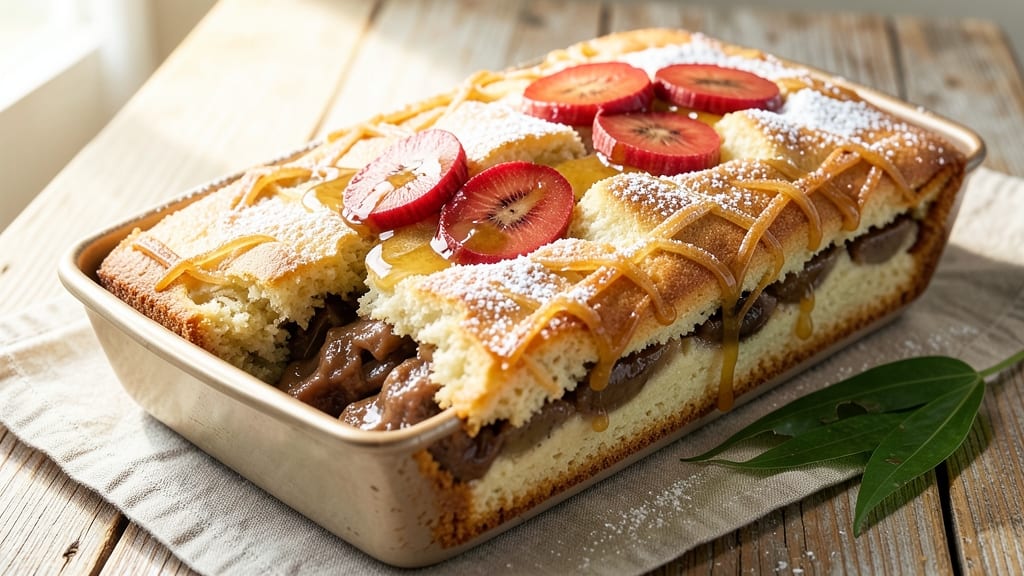
This Asian banana cake delivers layers of silky moisture and warm spices that transform ordinary bananas into something extraordinary. 🌟 The secret lies in blending ripe bananas with coconut milk and a touch of pandan extract, creating a texture that stays tender for days while infusing subtle floral notes.
I developed this recipe after years of experimenting with Asian baking techniques, and the result is a cake that's light yet rich, with a delicate crumb that practically melts in your mouth.
The baking process is where the magic happens—high heat creates a slightly domed top with a golden crust, while the interior remains impossibly soft. A simple coconut glaze ties everything together, adding a glossy finish and just enough sweetness to complement the natural banana flavor.
What sets this apart from traditional banana cakes is the balance of spices: cinnamon for warmth, cardamom for depth, and a hint of vanilla to round out the flavors.
By the time you slice into this cake, you'll discover layers of flavor and texture that make it impossible to eat just one piece.
The bananas remain moist without being overly sweet, the coconut milk adds a subtle richness, and the spices create a comforting warmth that feels like a hug. Perfect for celebrations or quiet afternoons, this cake proves that homemade desserts can be both impressive and effortlessly delicious.
For those who love customization, you can easily swap in other tropical fruits like mango or pineapple, or adjust the spice levels to suit your taste. The recipe scales perfectly for gatherings, and leftovers keep well for up to five days. Let's get baking!
Ingredients for asian banana cake
These 15 ingredients transform simple bananas into a fragrant, moist cake with floral notes.
| Ingredient | Amount | Notes |
|---|---|---|
| Ripe Bananas 🍌 | 3 cups | Mashed, about 3 large bananas |
| All-Purpose Flour 🌾 | 2 ½ cups | Sifted for light texture |
| Granulated Sugar 🍚 | 1 ½ cups | White or light brown |
| Coconut Milk 🥥 | 1 can | 13.5 oz can, full-fat preferred |
| Pandan Extract 🌿 | ½ tsp | For floral aroma |
| Large Eggs 🥚 | 2 whole | Room temperature preferred |
| Unsalted Butter 🧈 | ¾ cup | Melted, unsalted |
| Baking Powder 🍞 | 2 tsp | Aluminum-free preferred |
| Ground Cinnamon 🌶️ | 1 ½ tsp | Freshly ground preferred |
| Ground Cardamom 🌿 | ½ tsp | Freshly ground preferred |
| Vanilla Extract 🍯 | 1 tsp | Pure vanilla preferred |
| Salt 🧂 | ½ tsp | Fine sea salt |
| Shredded Coconut 🥥 | 1 cup | Sweetened or unsweetened |
| Coconut Oil 🫒 | ¼ cup | For greasing pan |
| Powdered Sugar 🍚 | 1 cup | For coconut glaze |
The bananas need to be ripe—spotted skins mean sweeter flavor. Trader Joe's and Asian markets often have the perfect ones, but grocery store bananas work too if they're soft. Coconut milk matters here—full-fat canned coconut milk gives the best texture. If you can't find pandan extract, vanilla bean paste adds depth, but it won't be identical. The cardamom is key for that authentic Asian warmth—Penzeys Spices sells it pre-ground, or toast whole pods and grind them yourself.
No pandan extract? Double the vanilla extract and add a drop of almond extract for complexity. Short on shredded coconut? Toasted flaked coconut works too—just pulse it in a food processor. The butter should be unsalted—Land O'Lakes or Plugrah melt perfectly. For the glaze, powdered sugar needs to be 10x powdered (check the label)—superfine sugar won't dissolve properly. Eggs can be separated if you want extra fluffiness, but whole eggs keep it simple. The baking powder? Diamond Crystal is aluminum-free and gives a lighter rise.
This cake stays moist for 5 days in an airtight container, but honestly, it disappears faster. Wrap leftovers in plastic wrap and store at room temp for 2 days or fridge for 5 days. The glaze sets quickly, so assemble the cake right before serving. Freezes beautifully for 3 months—thaw overnight at room temperature. I always make a double batch because it's impossible to resist.
Why You'll Love This Recipe
- Here’s what sold me: that faint floral note from pandan extract. It’s like a whisper of vanilla and coconut rolled into one, but way more interesting. The coconut milk keeps it moist, and the sugar caramelizes just enough to make every bite feel like a little vacation.
- No Mashing Needed: I’ll be real—this cake uses ripe bananas, but you don’t have to puree them into oblivion. Just smash them with a fork until they’re lumpy, then fold in the coconut milk. That’s it. The texture stays tender without the fuss of blending.
- Pandan Magic: Here’s what sold me: that faint floral note from pandan extract. It’s like a whisper of vanilla and coconut rolled into one, but way more interesting. The coconut milk keeps it moist, and the sugar caramelizes just enough to make every bite feel like a little vacation.
- Lunchbox Hero: Between us, this cake is my go-to for packed lunches or quick breakfasts. Slice it up, wrap it in parchment, and it stays fresh for days. My kids grab it before school, and I sneak a piece at my desk—no one judges.
Step-by-step instructions for Asian banana cake
Here's how to create layers of silky banana goodness with aromatic spices.
👨🍳 Step 1: Prepare the Banana-Coconut Mixture
Mash the 3 cups ripe bananas until completely smooth with no lumps - I press through a fine-mesh sieve for extra silkiness. In a large mixing bowl, combine the mashed bananas with the 1 can coconut milk and 0.75 cup melted unsalted butter. The mixture should be velvety and well-blended.
Add the 1.5 cups granulated sugar, 1 tsp vanilla extract, 0.5 tsp pandan extract, 1.5 tsp ground cinnamon, 0.5 tsp ground cardamom, and 0.5 tsp salt. Mix until everything is fully incorporated. The pandan extract gives that signature floral aroma while the cardamom adds warm depth - trust me, these spices make all the difference in this cake.
👨🍳 Step 2: Combine Wet and Dry Ingredients
In a separate bowl, whisk together the 2.5 cups all-purpose flour and 2 tsp baking powder. Sift the mixture directly into the banana-coconut mixture while gently folding with a spatula. Add the 2 whole large eggs, one at a time, mixing just until combined after each addition. Overmixing develops gluten, which makes the cake dense instead of light and fluffy.
Fold in the 1 cup shredded coconut until evenly distributed throughout the batter. The coconut adds delightful texture contrast to the soft banana layers. At this point, the batter should be thick but pourable - if it's too thick, you can add 1-2 tablespoons of coconut milk to loosen it slightly.
🥘 Step 3: Layer and Bake to Golden Perfection
Preheat your oven to 350°F and grease two 9-inch round cake pans with 0.25 cup coconut oil. Divide the batter evenly between the pans. For extra flavor, I sprinkle a thin layer of shredded coconut on the bottom of each pan before adding the batter.
Bake for 30-35 minutes or until a toothpick inserted in the center comes out clean. The edges should be golden brown while the top remains slightly soft - this cake stays moist longer. Real talk: your oven might run hot, so start checking at the 25-minute mark. If the top browns too quickly, tent with foil.
🍽️ Step 4: Create the Signature Coconut Glaze
While the cakes cool, prepare the coconut glaze by whisking together the 1 cup powdered sugar with 2-3 tablespoons of coconut milk until smooth. You want a thick but pourable consistency - add more coconut milk if needed. The glaze should coat the back of a spoon without being too runny.
Once the cakes have cooled completely (about 1 hour), spread the glaze evenly over the top of each cake. The glaze adds that beautiful sheen and extra coconut flavor that makes this cake so special. For presentation, I like to dust the top with a little extra shredded coconut before serving.
Pro Tips For Making Asian Banana Cake
- MASH THE BANANAS WELL: I learned this the hard way—lumpy banana puree means uneven texture. Use a fork first to break up clumps, then press through a fine-mesh sieve or blend until completely smooth. No chunks, no excuses.
- DON’T OVERMIX THE BATTER: This isn’t a pancake—handle it like a delicate soufflé. Stir just until the flour disappears, or you’ll end up with a dense, chewy cake instead of that signature tender crumb. Stop when it’s barely combined.
- BAKE UNTIL THE TOOTHPICK TEST FAILS: The cake should pull away slightly with a light crumb clinging to the toothpick—this is normal. Overbaking dries it out, but underbaking leaves it gummy. Check at 45 minutes, then let it cool 10 minutes before testing.
- SWAP PANDA FOR VANILLA IF NEEDED: Can’t find pandan extract? Vanilla extract works in a pinch, but reduce it to ½ teaspoon and add ¼ teaspoon of coconut extract (if you have it) for depth. The flavor won’t be identical, but it’ll still taste like a proper banana cake.
Troubleshooting this recipe
Dense Cake Texture
If your cake turns out dense instead of light and fluffy, you likely overmixed the batter or used too much flour. I’ve found that gently folding the dry ingredients into the wet mixture—rather than beating vigorously—keeps the gluten from developing.
Also, make sure your bananas are ripe (spotted skins mean sweeter flavor) and that you’re using full-fat coconut milk, which adds moisture and richness. If the batter seems too thick, thin it with 1-2 tablespoons of coconut milk before baking. 🌶️
Cake Sticks Together
This usually happens when the cake hasn’t cooled completely before slicing. Let the cake rest for at least 1 hour after baking—this allows the moisture to redistribute and the structure to set properly. If it’s still sticky, try chilling it in the fridge for 30 minutes before serving.
Another trick? Brush the top with a little extra coconut milk glaze before slicing—it adds a barrier and keeps layers intact. 💡
Dry or Crumbly Cake
A dry cake often means the bananas weren’t ripe enough or the oven was too hot. Double-check your ripe banana selection—spotted skins are key! Also, avoid overbaking. Remove the cake from the oven when a toothpick comes out with moist crumbs (not completely clean).
If the cake still feels dry, try adding 1 tablespoon of coconut milk to the batter for extra moisture. Preheating the oven properly (350°F) is critical too—cold ovens can cause uneven baking. ✨
Glaze Too Thin or Thick
For the perfect coconut glaze, start with 2 tablespoons of coconut milk and adjust as needed. If it’s too thin, whisk in ½ teaspoon of powdered sugar at a time until it thickens. Too thick? Add ½ teaspoon of coconut milk at a time.
The glaze should coat the back of a spoon smoothly—this ensures it spreads evenly and gives that glossy finish. Pro tip: Let the glaze sit for 5 minutes before applying so it thickens slightly. 🥥
Uneven Baking
If one side of the cake is underbaked or overbaked, your oven might have hot spots. Rotate the pans halfway through baking (after 15 minutes) to ensure even heat distribution. Also, check that your oven thermometer is accurate—many home ovens run 25°F hotter or colder than set.
If the edges brown too quickly, tent the pans with foil to prevent overbrowning while the center finishes baking. 🔥
No Pandan Flavor
If your cake lacks that signature floral aroma, you might not have enough pandan extract. Start with ½ teaspoon and taste the batter before baking—add another ¼ teaspoon if needed. No pandan extract?
Swap in 1 teaspoon of vanilla bean paste or a drop of almond extract for a similar depth of flavor. The cardamom and cinnamon will still shine, but pandan is what truly elevates this cake to Asian-inspired perfection. 🌿
Nutrition facts
Frequently asked questions
Can I substitute regular milk for coconut milk in this recipe?
While you can technically use regular milk, it won't give the same rich texture and coconut flavor that makes this cake special. For a similar effect, try using 1 cup heavy cream plus 1/4 cup water to mimic coconut milk's fat content, but the taste will differ. The coconut milk is key for that authentic Asian-inspired moistness and subtle sweetness.
How do I know when my bananas are ripe enough for this cake?
Look for bananas with dark brown speckles on the peel and slightly soft spots when pressed. The riper the bananas, the sweeter and more flavorful your cake will be. If they're too green, the cake may taste bland, while overripe bananas can make it too sweet—balance is key!
Can I make this cake in a single 9-inch pan instead of two?
Yes, but you'll need to reduce the baking time to 25-30 minutes since a single layer will cook faster. The cake will be denser in the center, so check for doneness with a toothpick at 20 minutes. For best results, use a larger pan (like 10-inch) if possible to maintain the right thickness.
What's the best way to store leftovers?
Wrap the cake tightly in plastic wrap and store at room temperature for up to 3 days, or refrigerate for 5 days for maximum freshness. For longer storage, freeze slices between parchment paper for up to 3 months. The glaze may soften when refrigerated, so bring it to room temp before serving.
Can I add other fruits to this recipe?
Try adding 1 cup diced mango or pineapple (drained well) to the batter for extra tropical flavor. For best results, fold in the fruit during the final mixing step. Just reduce the shredded coconut to 1/2 cup to maintain the right texture balance.