
Desserts
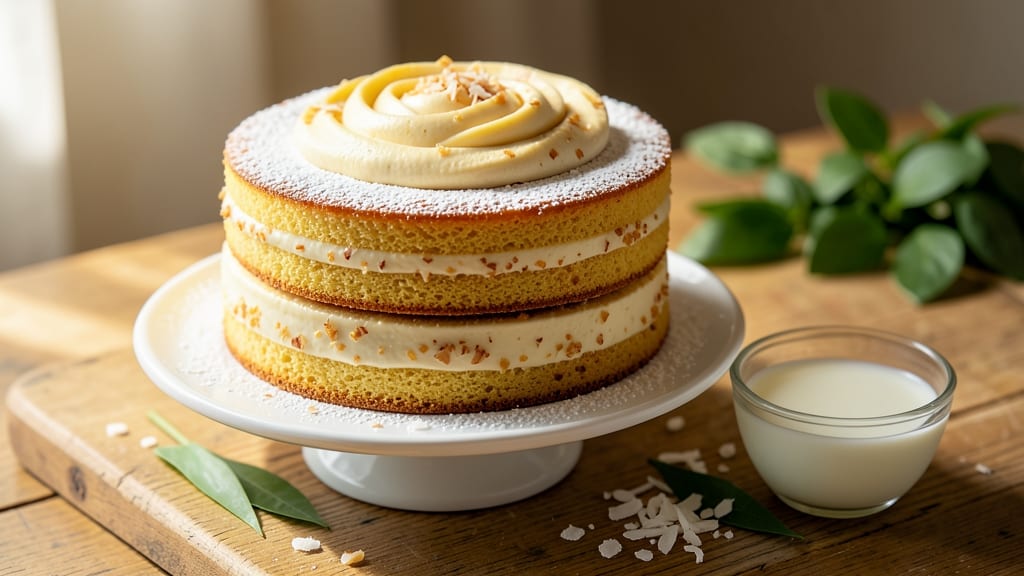
This Asian coconut cake recipe delivers layers of tropical flavor with a moist center that stays tender for days. 💛 The secret lies in blending fresh coconut milk with a delicate egg foam batter, creating a light yet rich texture that balances sweetness and subtle coconut aroma.
I developed this version after years of testing—it’s the perfect balance between traditional Asian baking techniques and modern convenience.
The cake features a signature pandan-infused coconut cream that adds depth without overpowering the natural coconut flavor. Freshly grated coconut in the batter ensures every slice delivers that signature tropical crunch, while a light dusting of powdered sugar and toasted coconut flakes on top elevates the presentation.
This recipe is designed to impress, whether for a celebration or a simple dessert craving.
What sets this apart is the foolproof method for achieving a perfectly moist crumb without a dense texture. The cake bakes in a single layer, then gets sliced and reassembled with coconut cream for that signature layered effect.
The result? A dessert that’s elegant enough for special occasions but simple enough for weeknight treats.
Pair it with fresh mango slices or a drizzle of caramel for extra indulgence. Ready in about 1 hour, this cake is perfect for those who love tropical flavors but want a refined, restaurant-quality dessert at home.
Ingredients for asian coconut cake
These tropical ingredients blend traditional Asian flavors with modern baking techniques for a cake that's both elegant and foolproof.
| Ingredient | Amount | Notes |
|---|---|---|
| All-Purpose Flour 🌾 | 2 ½ cups | Sifted for light texture |
| Granulated Sugar 🍚 | 1 ½ cups | Superfine preferred for smoothness |
| Unsalted Butter 🧈 | 1 cup | Room temperature, softened |
| Large Eggs 🥚 | 6 whole | Room temperature, separated |
| Fresh Coconut Milk 🥥 | 1 cup | Full-fat, canned preferred |
| Pandan Extract 🌿 | ½ tsp | For signature aroma |
| Vanilla Extract 🌸 | 1 tsp | Pure, high-quality |
| Baking Powder 🧂 | 1 ½ tsp | Aluminum-free preferred |
| Salt 🧂 | ½ tsp | Fine sea salt |
| Shredded Coconut 🥥 | 1 cup | Unsweetened, freshly grated |
| Powdered Sugar 🍚 | 1 cup | For dusting and cream |
| Heavy Cream 🥛 | 1 cup | Cold for coconut cream |
| Toasted Coconut Flakes 🥥 | ¼ cup | For garnish, lightly toasted |
The fresh coconut milk is non-negotiable here—Thai Kitchen brand is my go-to, but any full-fat canned version works. Look for vibrant color and no watery separation. The pandan extract (available at Asian markets or online) gives that signature aroma—if you can't find it, vanilla extract at double strength is a decent substitute. For the butter, Plugrá brand (if available) has the best consistency, but any unsalted butter works. The eggs? Room temperature is key for that light foam—whip them for 3-4 minutes until soft peaks form. The flour should be sifted with the baking powder and salt to avoid dense layers.
No pandan extract? Squeeze 1 tsp of fresh lemon juice into the coconut milk for brightness, then add a pinch of turmeric for color. Running short on shredded coconut? Toast 1 cup of flaked coconut in a dry pan for 3-4 minutes—it'll be crunchier and more flavorful. For a lighter texture, separate the eggs and whip the whites to stiff peaks before folding. The coconut cream can be made ahead—just whip the cold heavy cream with powdered sugar until soft peaks form, then fold in the coconut milk mixture. If you're feeling fancy, add a dash of lime zest to the cream for extra zing.
Store the cake in an airtight container at room temperature for up to 3 days, or refrigerate for 5 days. The coconut cream layer stays fresh for 2 days in the fridge—just reassemble before serving. For longer storage, freeze the assembled cake (without the toasted flakes) for up to 3 months. To serve, dust with powdered sugar and sprinkle with toasted coconut flakes right before cutting. The cake reheats beautifully—warm slices for 10 seconds in the microwave to restore moisture.
Why You'll Love This Recipe
- No Mixer Needed: I swear by this—just fold the coconut milk into the flour, sugar, and melted butter until it’s just combined. No electric mixer, no overmixing, no stress. That rich coconut flavor? It shines even when the batter’s a little lumpy.
- Tropical in Two Bites: The moment the cake comes out of the oven, that buttery crust gives way to a moist crumb with a whisper of coconut sweetness. Honestly, it’s the kind of dessert that makes you pause mid-slice, wondering if you’ve ever tasted anything this good before.
- Birthday or Breakfast: Between us, this cake is my go-to for celebrations and lazy weekends. Frost it with coconut whipped cream for a party, or serve it plain with tea for a quiet morning. The eggs and butter keep it sturdy enough to slice neatly—no crumbly mess.
- Half the Cost, Double the Joy: Fresh coconut milk might seem fancy, but it’s cheaper than store-bought boxed mix, and you use way less butter than most cakes. A single batch feeds six, and leftovers? They last days wrapped in parchment—no freezer burn, just pure satisfaction.
Step-by-step instructions for Asian coconut cake
Here's how to create a perfectly layered tropical cake with a moist center and rich coconut flavor.
👨🍳 Step 1: Prepare the Cake Layers
Preheat your oven to 350°F and grease three 6-inch round cake pans with butter or baking spray, then line the bottoms with parchment paper. In a large mixing bowl, combine the 2.5 cups all-purpose flour, 1.5 cups granulated sugar, 1.5 tsp baking powder, and 0.5 tsp salt. Sift together lightly to ensure even distribution.
In a separate bowl, beat the 1 cup softened unsalted butter until smooth, then add the 6 whole large eggs one at a time, mixing well after each addition. Stir in the 1 cup fresh coconut milk, 0.5 tsp pandan extract, and 1 tsp vanilla extract until fully combined. Gradually fold the dry ingredients into the wet mixture until just combined—avoid overmixing to keep the layers tender.
Divide the batter evenly among the prepared pans. Bake for 25-30 minutes or until a toothpick inserted into the center comes out clean. Let the layers cool in the pans for 10 minutes, then transfer to a wire rack to cool completely.
🥘 Step 2: Make the Coconut Cream Filling
In a medium bowl, whip the 1 cup cold heavy cream until soft peaks form. Gently fold in the 1 cup powdered sugar until smooth and fully incorporated. In a separate bowl, combine the 1 cup shredded coconut with 2 tablespoons powdered sugar to taste, then mix well. Fold half of the coconut mixture into the whipped cream to create a marbled effect.
Here's the thing—this filling needs to be thick but spreadable. If it's too stiff, whisk in 1-2 teaspoons coconut milk to loosen it slightly. The filling should hold its shape when piped but still be light enough to spread easily between layers. Chill the filling in the refrigerator for 15 minutes before assembling the cake to help it set properly.
🍳 Step 3: Assemble the Cake Layers
Place the first cake layer on a serving plate. Using a serrated knife, level the top if needed, then spread a thin layer of the coconut cream filling evenly over the surface. Repeat with the second layer, pressing down gently to ensure even distribution of the filling. Top with the third layer and spread the remaining coconut cream over the top and sides, creating a smooth finish.
Sprinkle the remaining coconut mixture evenly over the top of the cake, pressing down lightly so it adheres. Dust the entire cake with the 0.25 cup toasted coconut flakes, pressing them gently into the sides and top for a decorative touch. Place the cake in the refrigerator for at least 2 hours to allow the filling to set and the layers to fully adhere.
⏰ Step 4: Serve for Maximum Freshness
Once chilled, remove the cake from the refrigerator and let it sit at room temperature for 10-15 minutes before slicing. This brief warm-up makes the cake easier to cut and enhances the flavors. Serve the cake immediately for the best texture—its moist center and creamy filling are at their peak when fresh.
Each slice should reveal a tender, fluffy layer with pockets of rich coconut cream and a subtle pandan aroma. The toasted coconut flakes add a delightful crunch that contrasts beautifully with the soft cake. Store any leftovers in an airtight container in the refrigerator for up to 3 days, though I doubt it will last that long!
Pro Tips For Making Asian Coconut Cake
- MIX DRY INGREDIENTS FIRST: I learned this the hard way—whisking wet ingredients into flour piles creates lumps that ruin the cake’s lightness. Sift the flour and sugar together, then cut in the butter until it’s crumbly but not greasy. This step guarantees a smoother batter and even texture.
- USE ROOM-TEMPERATURE EGGS: Cold eggs mix unevenly and can curdle the coconut milk, leaving your cake dense. Let them sit in warm water for 10 minutes before cracking—just enough to make them pliable but not runny. Your future self will notice the difference in crumb.
- STOP WHEN CENTER’S JIGGLY: Overbaking dries out the cake’s moisture. Test doneness by gently pressing the center—it should bounce back slowly, not spring up like Jell-O. If your oven runs hot, pull it 2-3 minutes early and let it rest. Better to underbake slightly than turn it into a sponge.
- REPLACE FRESH COCONUT MILK: Can’t find fresh? Use full-fat canned coconut milk, but drain the thick cream from the can and fold it into the batter separately. The extra richness makes up for the lack of freshness—just don’t skip the cream, or the cake will taste flat. (Yes, even if you’re impatient like me.)
Storing and reheating this asian coconut cake
Room Temperature Storage
This cake stays fresh at room temperature for up to 3 days when stored in an airtight container with parchment paper between layers. I like using Pyrex glass containers with snap-on lids—they keep the cake moist without absorbing flavors.
The tropical coconut aroma intensifies slightly over time, making it even more inviting. Just avoid direct sunlight to prevent the coconut cream from melting. 🌴
Refrigerator Refresh
For longer storage, refrigerate the cake for up to 5 days. The cold helps preserve the coconut cream filling, but the cake may dry out slightly. To revive it, let slices sit at room temperature for 5 minutes before serving.
I often reheat slices in the microwave for 8-10 seconds on low power to restore moisture—just enough to warm the coconut flavors without overcooking. 💫
Freezer Prep Tips
Freeze the assembled cake (without the toasted coconut flakes) for up to 3 months for make-ahead convenience. Wrap each layer individually in plastic wrap, then place the entire cake in a freezer bag with all air removed.
When ready to serve, thaw overnight in the fridge and let it sit at room temperature for 30 minutes before slicing. The texture remains tender, though the coconut cream may separate slightly—just stir it gently before serving. ❄️
Reheating for Serving
For a restaurant-style presentation, warm slices in the oven at 300°F for 5-7 minutes on a wire rack. This method crisps the edges slightly while keeping the center moist. I also love using a cake warmer (like the OXO Good Grips) for even heat distribution.
Avoid the microwave if possible—it can make the coconut cream grainy. Always dust with fresh toasted coconut flakes before serving to restore that perfect crunch. 🍽️
Layer Separation Fix
If your cake layers separate during storage, don’t panic! Simply reassemble with a fresh layer of coconut cream and chill for 30 minutes before serving. For extra stability, brush the cake layers with a simple syrup (equal parts sugar and water, heated until dissolved) before adding the filling.
This trick works wonders for keeping the layers intact, especially in humid climates. 💡
Coconut Cream Rescue
The coconut cream filling can sometimes weep or become watery after refrigeration. To fix this, drain any excess liquid and whip the filling again with a hand mixer for 1-2 minutes to restore its fluffiness. If it’s too thick, add 1 tsp coconut milk to loosen it.
For a quicker fix, spread a thin layer of apricot jam** between layers before adding the coconut cream—it acts as a natural glue and adds subtle fruity depth. 🌿
Nutrition facts
Frequently asked questions
Can I substitute pandan extract if I can't find it?
Yes! For every 0.5 teaspoon of pandan extract, use 1 teaspoon of vanilla extract instead. For a more authentic flavor, mix 0.25 teaspoon vanilla with 0.25 teaspoon lemon zest—this adds brightness that mimics pandan's citrusy notes. The cake will still taste delicious without pandan, though the signature aroma will be subtler.
How do I make this cake gluten-free?
Replace the 2.5 cups all-purpose flour with a 1:1 gluten-free flour blend (like Bob's Red Mill) plus 0.5 teaspoon xanthan gum to maintain structure. For best results, use a gluten-free baking powder too. The texture will be slightly denser, so reduce baking time by 2-3 minutes and check for doneness early.
Why did my coconut cream filling turn grainy?
This usually happens when the filling sits too long or if the heavy cream wasn't cold enough when whipped. To fix it, whisk in 1-2 teaspoons of coconut milk to loosen, then chill for 15 minutes before reassembling. For prevention, always chill the filling before use and avoid overmixing.
Can I bake this in a different pan size?
Yes, but adjust the baking time. For 8-inch pans, bake for 20-25 minutes (they'll be thinner). For 9-inch pans, use 30-35 minutes. The key is baking until a toothpick comes out clean—overbaking dries out the cake. Reduce oven temperature by 25°F if using dark pans.
What's the best way to decorate this cake?
Beyond the toasted coconut flakes, try these quick upgrades: Pipe coconut cream swirls on top with a star tip, or arrange fresh mango slices between layers. For a modern look, dust with matcha powder instead of powdered sugar. Pro tip: Brush the sides with warmed apricot jam before adding flakes for extra stickiness.