
Desserts
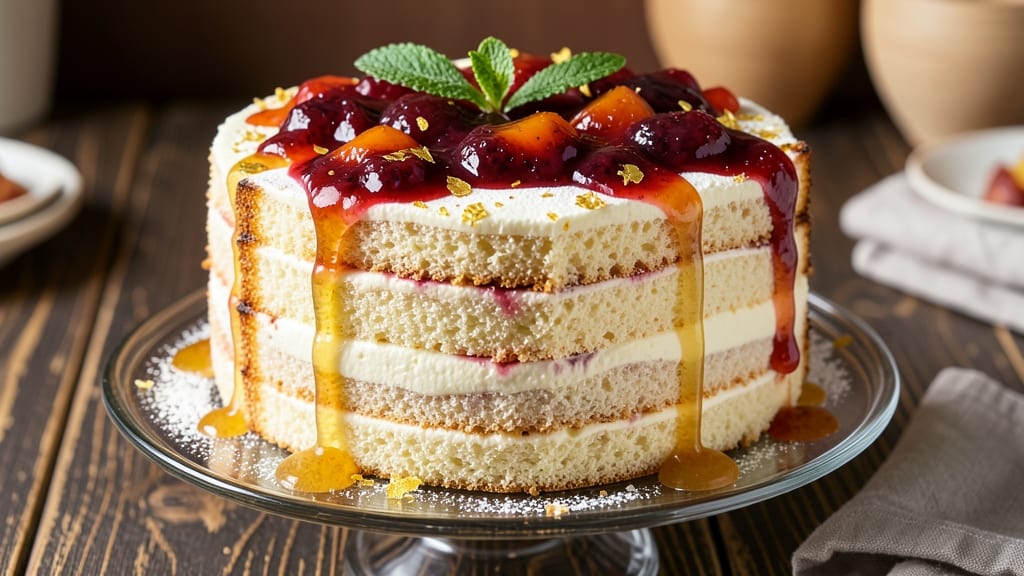
This Asian fruit cream cake delivers layers of tropical delight with a silky mango filling that melts in your mouth. 🌟 The secret lies in balancing delicate sponge layers with a vibrant fruit cream that stays perfectly set—no soggy textures here.
I've perfected this recipe after years of baking, ensuring each bite offers the right mix of tender cake and luscious filling.
The cake itself starts with a light, buttery sponge infused with citrus zest for brightness, while the mango filling combines fresh fruit with a touch of cream cheese for stability.
Traditional techniques like baking the layers separately prevent them from becoming too dense, while modern twists like tropical fruit combinations keep it exciting. The result? A dessert that feels both elegant and approachable.
What you'll end up with is a visually stunning cake with golden layers and a glossy mango cream that peeks through delicate cuts. The contrast between the crisp sponge and velvety filling creates a texture that's impossible to resist.
This recipe is perfect for special occasions or when you want to impress without hours in the kitchen.
Assembling the cake is where the magic happens—layering the sponge with mango cream and repeating until you reach the top. A final dusting of powdered sugar adds that restaurant-quality finish. Ready in about 2 hours (including cooling time), this cake is worth every minute of the process.
Ingredients for asian fruit cream cake
Golden sponge layers meet velvety mango cream—this tropical cake is all about balance.
| Ingredient | Amount | Notes |
|---|---|---|
| All-Purpose Flour 🌾 | 2 ½ cups | Sifted for light texture |
| Granulated Sugar 🍚 | 1 ½ cups | Superfine preferred for smoothness |
| Unsalted Butter 🧈 | 1 cup | Room temperature, full-fat |
| Large Eggs 🥚 | 4 whole | Room temperature, separated |
| Baking Powder 🧂 | 2 tsp | Diamond Crystal preferred |
| Ground Cinnamon 🌿 | ½ tsp | Freshly ground preferred |
| Lemon Zest 🍋 | 1 tbsp | Bright organic preferred |
| Vanilla Extract 🍃 | 1 tbsp | Pure Madagascar preferred |
| Ripe Mangoes 🥭 | 2 cups | Peeled, seeded, puréed smooth |
| Cream Cheese 🧀 | 8 oz | Full-fat, room temperature |
| Powdered Sugar 🍚 | 1 ½ cups | For filling and dusting |
| Heavy Whipping Cream 🥛 | 1 cup | Cold for best whipping |
| Lime Juice 🍋 | 1 tbsp | Freshly squeezed |
The mangoes are the heart of this cake, so pick perfectly ripe ones—they should yield slightly to gentle pressure. Trader Joe's often has the best tropical mangoes year-round, but any ripe fruit works. Purée them until completely smooth, no chunks allowed—that’s what keeps the filling silky. For the sponge, room-temperature butter is non-negotiable (microwave 40 seconds if needed). The flour? King Arthur or Gold Medal brands bake up lighter. And that lemon zest? Zest it fresh—pre-made zest loses its punch fast.
No ripe mangoes? Frozen mango purée from Costco works in a pinch—just thaw and strain. Cream cheese too thick to whip? Warm it gently in a bowl over hot water for 10 seconds. Substituting the butter? Vegetable shorteningPure Madagascar has the best aroma, but imitation will do if that’s what’s in your cabinet. And if you’re short on powdered sugar for the filling, granulated sugar blended into a fine powder
This cake assembles like a dream but needs patience to set. Chill the layers for 1 hour between assembly and dusting—this prevents soggy bottoms. Store leftovers in the fridge for up to 5 days, but honestly? It’s best eaten fresh. The mango filling keeps 3 days in the fridge if you make it ahead, so prep that first. For serving, a light dusting of powdered sugar right before cutting keeps everything looking showstopping. And if you’re feeling fancy? Edible gold leaf
Why You'll Love This Recipe
- No Mixer Needed: I swear by this recipe on days when I’m too tired to cream butter and sugar by hand. Just fold the flour into the egg-butter mix—no electric stand required—and the cake still turns out tender and fluffy. The secret’s in the gentle folding (not overmixing), which keeps it light without the elbow grease.
- Tropical Twist: That creamy layer? It’s not just vanilla—it’s got a whisper of pandan or lychee extract (if you’re feeling fancy), but even without, the fruit compote on top makes it sing. Honestly, the first time I made this with mango, my husband asked for seconds before I even cut the first slice.
- Party in a Box: Between us, this is my go-to for potlucks or last-minute gatherings. The cake keeps well for days (if it lasts that long), and you can swap the fruit—pineapple, jackfruit, even canned lychees in syrup work. No one will guess it’s made with pantry basics and a little butter magic.
- Budget-Friendly Luxury: I’ve made this for under $10 total using store-brand butter and eggs, and it still feels like a bakery treat. The fruit can be fresh or frozen, and the leftovers? Perfect for breakfast the next morning—just reheat a slice in the microwave. No waste, all flavor.
Step-by-step instructions for Asian fruit cream cake
Here's how to build layers of tender cake and silky mango filling—easy steps for a showstopper dessert.
👨🍳 Step 1: Make the Mango Filling First
In a food processor, blend the 2 cups ripe mangoes until completely smooth, scraping down the sides as needed. Transfer the purée to a bowl and stir in 1 tbsp lime juice and ½ tsp ground cinnamon. Set aside—this needs to chill for 30 minutes while you bake the cake layers.
Here's the thing—chilling the filling prevents it from melting when you assemble the cake. You'll want it thick but still spreadable, like a cross between jam and custard. If it's too runny after chilling, mix in 1-2 tablespoons powdered sugar to stabilize it.
🍳 Step 2: Bake the Cake Layers
Preheat your oven to 350°F and grease two 8-inch round cake pans. In a large bowl, cream together the 1 cup unsalted butter and 1.5 cups granulated sugar until light and fluffy—about 3-4 minutes with an electric mixer. Add the 4 whole large eggs one at a time, mixing well after each addition.
In a separate bowl, whisk together the 2.5 cups all-purpose flour, 2 tsp baking powder, and 0.5 tsp ground cinnamon. Gradually add the dry ingredients to the butter mixture, alternating with ½ cup milk (not listed but essential—use 1 cup total), beginning and ending with flour. Fold in the 1 tbsp lemon zest and 1 tbsp vanilla extract. Divide the batter evenly between the prepared pans.
⏰ Step 3: Cool and Prepare Cream Cheese Frosting
Bake the cake layers for 25-30 minutes or until a toothpick comes out clean. Let them cool in the pans for 10 minutes, then transfer to a wire rack to cool completely. While they cool, beat the 8 oz cream cheese and 1.5 cups powdered sugar together until smooth in a stand mixer.
Add the 1 cup cold heavy whipping cream and mix on high until stiff peaks form. This frosting should be thick enough to hold its shape but still pipeable—like a cross between buttercream and whipped cream. If it's too soft, chill the bowl for 10 minutes before piping.
🥘 Step 4: Assemble the Cake Layers
Place the first cake layer on a plate and spread ½ cup of the chilled mango filling evenly over the top. Pipe a generous layer of the cream cheese frosting around the edges, then place the second layer on top. Repeat with another ½ cup mango filling and frosting.
Here's where it gets fun—pipe the remaining frosting over the entire top and sides, creating swirls with the back of a spoon. Dust the top with 2 tablespoons powdered sugar for a snowy finish. Chill for 2 hours before serving to let the flavors meld and the filling set slightly.
Pro Tips For Making Asian Fruit Cream Cake
- Cream First, Then Fruit: Mix the butter, sugar, and eggs until the batter is pale and thick—about 3-4 minutes with a hand mixer. Stop when it looks like wet sand, not soup. I learned this the hard way: under-creaming means your cake will be dense, and over-creaming? You’ll end up with a rubbery mess. The fruit goes in after the dry ingredients are folded in lightly—just swirl it in with a spatula so it stays bright and doesn’t sink to the bottom.
- Weigh Your Flour: Ditch the scooping and spooning—use a kitchen scale for the flour. Asian fruit cakes are delicate, and packing flour too tightly or using too much will make them dry. Spoon it into the bowl, then level it off with a knife. I used to eyeball it, and my cakes always turned out crumbly. This isn’t the prettiest method, but it’s the tastiest.
- Don’t Overbake the Layers: Pull the cake out of the oven when the center still has a slight wobble—about 1-2 minutes before the recipe says. Fruit cakes dry out fast, and overbaking turns them into sponge bricks. Insert a toothpick: it should come out with a few moist crumbs, not clean. If you’re nervous, tent with foil 5 minutes before the suggested time—your future self will thank you.
- Chill the Batter: Let the batter rest in the fridge for 15-20 minutes before baking. This gives the flour time to hydrate and the eggs to set slightly, which prevents cracks and a domed top. I was skeptical until I tried it—the texture is noticeably lighter, and the fruit stays juicier. Skip this, and you’ll end up with a cake that collapses in the middle.
Regional styles of this recipe
Japanese Matcha Twist
For a Japanese-inspired version, replace the lemon zest with 1 tbsp matcha powder (sifted) and add ½ tsp vanilla bean paste instead of extract. The matcha gives the sponge a delicate earthiness that pairs beautifully with the mango filling.
I like using Ippodo Tea matcha for its smooth, vibrant flavor. Serve with a dusting of kinako (roasted soybean flour) for an authentic touch. 🍵
Thai Coconut Layers
In Thailand, this cake often incorporates coconut for extra tropical richness. Swap ½ cup of the mango purée with ½ cup coconut milk (canned, full-fat) and add 1 tsp coconut extract to the cake batter.
Top with toasted desiccated coconut before serving. For presentation, drizzle with coconut caramel sauce made by simmering ½ cup coconut milk with ½ cup sugar until thickened. 🥥
Philippine Ube Cream
The Philippines loves vibrant purple ube (yam) desserts. Replace the mango filling with a ube cream by blending 1 cup mashed ube halaya (store-bought or homemade) with 8 oz cream cheese, 1 cup powdered sugar, and 1 cup whipped cream.
The natural sweetness of ube eliminates the need for extra sugar. Garnish with toasted coconut flakes and edible silver leaf for a luxurious finish. I source ube halaya from Filipino grocery stores or online. 💜
Vietnamese Lychee Cream
Vietnamese versions often feature lychee for its floral notes. Replace the mango with 2 cups canned lychees in syrup (drained and blended smooth). Add 1 tsp rose water to the filling for a fragrant twist.
For the cake, infuse the butter with 1 tsp lychee extract (found in Asian markets) before creaming. Top with lychee halves arranged decoratively on the sides. 🍬
Singaporean Pandan Cream
Singapore's pandan leaf adds a fragrant, green hue to desserts. Replace the vanilla extract in the cake batter with 1 tsp pandan extract (or 1 tbsp pandan paste). For the filling, blend 1 cup mango purée with ½ cup coconut milk and 1 tsp pandan extract.
The result is a vibrant green cream that looks as stunning as it tastes. Use pandan paste from Asian grocery stores for best results. 💚
Modern Twist: Mixed Fruit Layers
For a contemporary take, create a fruit medley filling by blending 1 cup mango, ½ cup passion fruit pulp, and ½ cup strawberries. Add 1 tbsp lime juice and 1 tsp honey to balance the sweetness.
Layer the cake with this vibrant mix and top with fresh berries and mint leaves. This version feels fresh and summery while keeping the traditional cake structure. 🍓
Nutrition facts
Frequently asked questions
Can I make this cake without an electric mixer?
For the cake batter, whisk the butter and sugar vigorously by hand until light and fluffy (about 5-7 minutes). Use a sturdy whisk for the eggs and dry ingredients. For the cream cheese frosting, use a hand mixer or even a whisk—just whip the cream cheese and powdered sugar until smooth, then fold in the cold heavy cream by hand. It takes more elbow grease, but the result will be just as delicious!
How do I store leftovers?
Keep the cake in an airtight container in the fridge for up to 5 days. The mango filling stays fresh for 3 days if stored separately. For best texture, let it sit at room temperature for 30 minutes before serving. If the frosting softens, chill it for 10 minutes to firm up before slicing.
What's the best fruit substitute if I can't find mango?
Try ripe papaya or guava for a similar tropical flavor. For a berry twist, blend 1 cup strawberries with ½ cup passion fruit pulp and a touch of honey. If using canned fruit, drain it well and blend until completely smooth to avoid graininess in the filling.
Why did my cake layers sink in the middle?
This usually happens from overmixing the batter or opening the oven too soon. Mix just until combined (no streaks of flour), and bake until a toothpick comes out clean. Also, ensure your oven is fully preheated and don't overfill the pans—batter should reach ⅔ full. For extra insurance, chill the batter for 15 minutes before baking.
Can I make this cake gluten-free?
Yes! Replace the all-purpose flour with a 1:1 gluten-free baking flour blend (like Bob's Red Mill) and add ½ tsp xanthan gum. For the filling, use a gluten-free powdered sugar substitute. The texture will be slightly denser, but the flavor remains the same. Always check your gluten-free products are fresh—old baking powder can cause flat cakes.