
Desserts
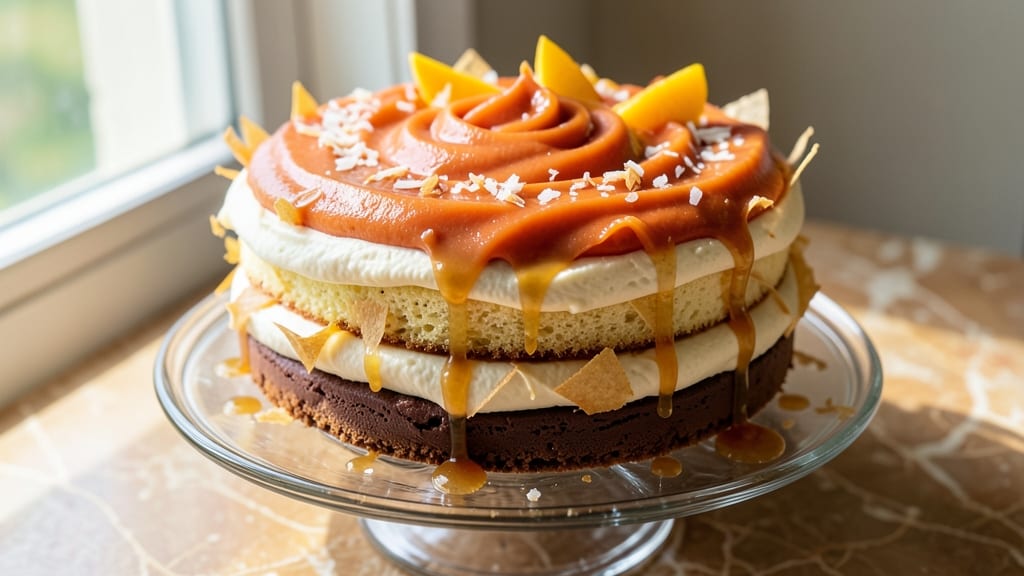
This Asian mango cake recipe brings vibrant tropical flavors to your kitchen with layers of juicy mango and buttery frosting. 🌴 The secret lies in balancing sweetness with subtle pandan and coconut notes, creating a dessert that's both elegant and approachable.
I've perfected this recipe over years of baking, ensuring every slice delivers that perfect mix of tender cake and luscious filling.
The recipe combines a moist vanilla cake base with a rich mango jam layer, all topped with velvety buttercream frosting. What makes it special is the pandan extract—just a hint adds that signature Asian flair without overpowering the sweet mango flavor.
The frosting is thick and smooth, designed to hold up beautifully for slicing and serving.
By the time you're done, you'll have a multi-layered cake that's visually stunning and irresistibly delicious. The mango jam adds bursts of tropical sweetness, while the buttery frosting ties everything together with a smooth, creamy finish.
This cake is perfect for celebrations, special occasions, or simply treating yourself to something extraordinary.
Ready in about 2 hours (including baking and cooling time), this recipe is designed to be approachable yet impressive. Whether you're baking for a crowd or just craving a taste of the tropics, this mango cake delivers every time. Let's get started!
Ingredients for asian mango cake
Twelve tropical ingredients for a cake that tastes like sunshine in every bite.
| Ingredient | Amount | Notes |
|---|---|---|
| All-Purpose Flour 🌾 | 3 cups | Sifted, for tender crumb |
| Granulated Sugar 🍚 | 2 cups | White or light brown |
| Unsalted Butter 🧈 | 1 ½ cups | Room temperature, full-fat |
| Large Eggs 🥚 | 4 whole | Room temperature, separated |
| Pandan Extract 🌿 | ½ tsp | Pure, not imitation |
| Pure Vanilla Extract 🍯 | 1 tbsp | Bourbon or pure vanilla |
| Ripe Mangoes 🥭 | 4 whole | Sweet variety, peeled |
| Granulated Sugar (for jam) 🍚 | 1 ½ cups | For mango jam layer |
| Lemon Juice 🍋 | 2 tbsp | Freshly squeezed |
| Powdered Sugar 🍚 | 4 cups | For buttercream frosting |
| Heavy Whipping Cream 🥛 | 1 ½ cups | Cold, full-fat |
| Unsweetened Shredded Coconut 🥥 | ½ cup | Toasted for texture |
| Baking Powder 🧂 | 1 ½ tsp | Double-acting preferred |
| Salt 🧂 | ½ tsp | Fine sea salt |
The pandan extract is non-negotiable—it’s what gives this cake its signature Asian flair. Find it at Asian markets or online—avoid imitation extracts, which lack depth. For the mangoes, go for ripe but firm fruit like Atkinson or Keitt varieties—they hold their shape better when cooked. The butter should be room temperature (press it with a finger—it should leave a slight indentation). If your coconut is pre-shredded, toast it in a dry pan for 2-3 minutes to bring out its natural sweetness. The baking powder is key here: Diamond Crystal works best since it’s twice as potent as other brands.
No pandan extract? Substitute 1 tsp of vanilla extract plus 1/4 tsp of almond extract for a milder effect. Pre-shredded coconut? Toast it first—it makes all the difference. The mango jam layer can be made ahead and stored for up to 2 weeks in the fridge. For a richer frosting, add 1 tbsp of coconut milk to the buttercream. If your cake layers are too dry, brush them with a simple syrup (equal parts sugar and water, heated until dissolved) before frosting. And trust me on the room-temperature butter—it mixes so much more smoothly.
Store the cake layers separately in an airtight container with parchment between them for up to 3 days. The frosting keeps for 5 days in the fridge, but assemble the cake just before serving. For a special touch, dust the top with toasted coconut flakes right before slicing. If you're making this ahead for a party, freeze the fully assembled cake (unfrosted) for up to 1 month)—thaw at room temperature before adding the frosting. The flavors actually deepen overnight, so leftovers are just as good as fresh slices.
Why You'll Love This Recipe
- Here’s what sold me: this cake stays fresh for days without drying out. I’ve had it for breakfast the next morning (yes, even on a Tuesday night) and it’s still just as good. Plus, the ingredients are basic—no specialty items to break the bank.
- No Mixer Needed: I’ll be real—this cake is ridiculously simple. You’re just creaming butter and sugar, folding in eggs, and gently tossing in flour. No stand mixer, no fuss, and honestly? The texture comes out tender every single time.
- Mango-Pandan Magic: That first bite—sweet, fragrant, with a hint of tropical pandan—is exactly what you want. The mango puree keeps it moist, while the pandan extract adds this subtle, floral warmth that makes it feel like a little vacation in your mouth.
- Weekend or Weeknight: Between us, this cake is my go-to for birthdays, potlucks, or even when I just need dessert now. It’s not too heavy, so it won’t weigh you down, and the flavor’s bright enough to stand alone—or pair with ice cream if you’re feeling wild.
Step-by-step instructions for Asian mango cake layers
Here's how to build this showstopping dessert with perfect texture and vibrant flavors.
👨🍳 Step 1: Prepare the Mango Jam Layer
Peel and dice the 4 whole ripe mangoes into ½-inch cubes. In a saucepan over medium heat, combine the mango with the 1.5 cups granulated sugar (for jam) and 2 tablespoons lemon juice. Cook for 10-12 minutes until the mango softens and the mixture thickens to a jam-like consistency.
Here's the thing—you want it syrupy but not watery. Test by spooning a bit onto a cold plate: if it holds its shape slightly but still flows, it's ready. Press the jam through a fine-mesh sieve to remove any large chunks, then let it cool completely before using. This jam will become the luscious filling between your cake layers.
🍳 Step 2: Make the Cake Batter
Preheat your oven to 350°F and grease three 6-inch round cake pans (or line with parchment paper). In a large mixing bowl, cream together the 1.5 cups unsalted butter and 2 cups granulated sugar on medium speed until light and fluffy—about 3-4 minutes. This step is crucial for that tender crumb we're after.
Add the 4 whole large eggs one at a time, mixing well after each addition. Then stir in the 0.5 teaspoon pandan extract and 1 tablespoon pure vanilla extract. In a separate bowl, whisk together the 3 cups all-purpose flour, 1.5 teaspoons baking powder, and 0.5 teaspoon salt. Gently fold the dry ingredients into the wet mixture until just combined—don't overmix or your cake will be tough.
🥘 Step 3: Bake and Assemble the Layers
Divide the batter evenly among the prepared pans. Bake for 25-30 minutes or until a toothpick inserted into the center comes out clean. Let the cakes cool in the pans for 10 minutes before transferring to a wire rack to cool completely. Here's a pro tip: tap the sides of the pans gently while cooling to help loosen the cakes.
Once cooled, level the tops if needed using a serrated knife. Spread a layer of the cooled mango jam on the first cake layer, then repeat with the remaining two layers. For extra tropical flair, sprinkle the 0.5 cup unsweetened shredded coconut between layers—just toast it lightly in a dry pan for 2-3 minutes first to enhance its flavor.
🍳 Step 4: Make the Buttercream Frosting
In a large bowl, beat the 1.5 cups heavy whipping cream and 4 cups powdered sugar together on high speed until stiff peaks form. This should take about 3-4 minutes. For extra flavor, add 1 teaspoon vanilla extract (the remaining amount) and mix until fully incorporated.
Spread the buttercream evenly between each cake layer and over the entire cake, creating a smooth finish. Don't rush this step—use a spatula to create clean edges. For a professional touch, pipe decorative swirls or rosettes around the cake using the leftover buttercream.
⏰ Step 5: Chill and Serve
Refrigerate the cake for at least 2 hours (or up to 24 hours) before serving. This chilling time allows the flavors to meld and the frosting to set properly. When ready to serve, garnish with additional toasted coconut and fresh mango slices for that vibrant tropical presentation.
Slice into 12 equal portions and serve at room temperature. The contrast of the warm mango jam, tender cake layers, and rich buttercream will make every bite feel like a vacation. Trust me, the first slice is always the hardest to resist!
Pro Tips For Making Asian Mango Cake
- Whisk Eggs Until Ribbon Stage: Stop when the egg mixture holds a slow ribbon—about 30 seconds past when it looks fully combined. Over-whisking adds air but can make the cake dense, especially with the butter-heavy batter. I learned this the hard way when my first batch turned out like a sponge instead of a light, fluffy cake.
- Use Room-Temp Butter: Take the butter out of the fridge at least 2 hours before baking—yes, even if you’re in a rush. Cold butter creates pockets that don’t emulsify properly, leading to a cake that’s greasy rather than tender. My grandmother swore by this, and she was right: the texture changes completely.
- Don’t Overmix the Batter: Fold in the flour in two additions, using a spatula to cut through the batter just until combined. Overmixing activates the gluten and turns your cake into a chewy mess. I was skeptical until I tried it—now I measure my patience by the number of folds, not the number of strokes.
- Bake at 325°F (Not Higher): This cake relies on a slow rise to develop its signature softness. Cranking the oven to 350°F or higher risks a dry, cracked top. I used to rush it, but now I set a timer for 40-45 minutes and let the residual heat finish the job—your future self will thank you.
Storing and reheating this recipe
Fridge Storage Tips
Store your fully assembled cake in an airtight container at 40°F or below for up to 4 days. The frosting stays fresh longer when protected from air exposure.
I like using glass cake carriers with tight-sealing lids—they keep moisture in and prevent drying. If storing layers separately, place parchment paper between them to maintain softness. 🌴
Freezer Preservation
For longer storage, freeze the unfrosted cake layers individually in plastic wrap for up to 1 month. Thaw at room temperature before adding frosting. The mango jam layer can also be frozen separately in small containers.
When ready to serve, simply assemble with fresh frosting. This method preserves all the vibrant flavors without compromising texture. ❄️
Reheating Slices
If your cake feels slightly dry after refrigeration, warm slices in the microwave for 10-15 seconds on 50% power. This gently revives the moisture without melting the frosting. For a more even reheat, place slices on a baking sheet and warm in a 200°F oven for 3-4 minutes.
The buttercream will stay intact while the cake warms through. 🔥
Frosting Refresh
If the frosting looks slightly separated after storage, simply whip it again with a hand mixer for 1-2 minutes until smooth. For extra creaminess, add 1 tablespoon of heavy cream while whipping.
The frosting should return to its original velvety texture. This trick works perfectly for cakes stored for 3-4 days. ✨
Make-Ahead Jam
Prepare the mango jam up to 2 weeks ahead and store it in a sealed glass jar in the fridge. The flavors actually deepen over time, becoming more concentrated.
When ready to use, simply reheat gently in a saucepan for 2-3 minutes until warm. This time-saving tip ensures your cake always has that perfect jam layer. 🍯
Serving After Storage
For the best presentation, let the cake sit at room temperature for 15-20 minutes before serving after refrigeration. This allows the frosting to soften slightly and the cake layers to regain their ideal texture.
Garnish with fresh mango slices or toasted coconut right before serving to keep everything looking fresh and inviting. 💫
Nutrition facts
Frequently asked questions
Can I substitute pandan extract if I can't find it?
Yes! For a milder effect, mix 1 teaspoon vanilla extract with ¼ teaspoon almond extract. This combo mimics pandan's subtle floral notes without overpowering the mango flavor. If you want a stronger tropical aroma, add ½ teaspoon coconut extract instead. Just remember—pandan is the secret to that authentic Asian touch!
How do I know when the mango jam is ready?
Test the jam by spooning a small amount onto a cold plate. If it holds its shape slightly but still flows (like thick syrup), it's perfect! Cook for 10-12 minutes total, stirring occasionally. Overcooking makes it too dry—you want it syrupy but not watery. Strain it through a fine-mesh sieve before cooling for a smoother texture.
Why did my cake layers crack?
Cracking usually happens when cakes cool too quickly or if the oven temperature fluctuates. To prevent this, let the cakes cool in their pans for 10 minutes before removing, and avoid opening the oven door mid-bake. Also, make sure your butter is truly room temperature (press it with a finger—it should leave a slight indentation). If cracks appear, simply frost over them—they won't affect the taste!
Can I make this cake without eggs?
For a vegan version, replace the eggs with 1 cup aquafaba (chickpea brine) whipped to stiff peaks. Add 1 teaspoon cream of tartar to stabilize it. For binding, mix 1 tablespoon ground flaxseed with 3 tablespoons water per egg and let sit for 5 minutes to thicken. The texture will be slightly denser, but the mango flavor will still shine.
How can I make this cake gluten-free?
Swap the all-purpose flour for a 1:1 gluten-free baking flour blend (like Bob's Red Mill or King Arthur). Add ½ teaspoon xanthan gum to improve structure. For the best results, also use a gluten-free baking powder (like Rumford). The cake will be slightly more delicate, so avoid overmixing and bake for 2-3 minutes longer than the original time.