
Main Courses
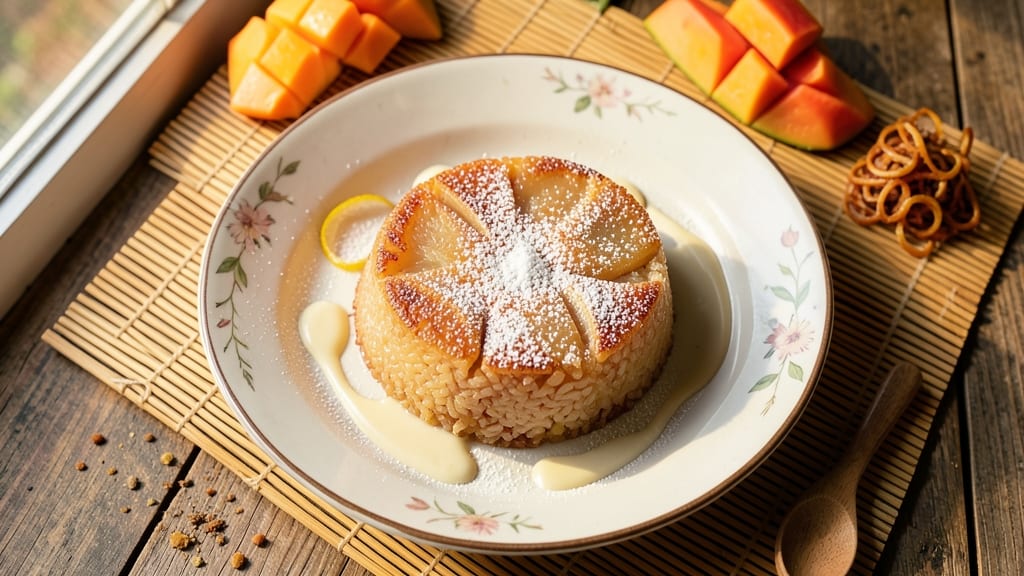
This Asian rice cake recipe with ideas transforms simple ingredients into crispy-fried delights with a satisfying crunch and endless filling possibilities. The secret lies in the perfect balance of glutinous rice flour and tapioca starch, creating a golden, shatteringly crisp exterior that contrasts beautifully with tender fillings.
Whether you're craving sweet red bean paste or savory pork and scallion, these versatile cakes deliver restaurant-quality texture at home.
The process begins with mixing the rice flour batter to achieve the ideal consistency—thin enough to fry evenly but thick enough to hold its shape. After shaping the cakes into neat rectangles or rounds, the magic happens during the frying stage, where high heat transforms them into crispy, caramelized bites.
This technique ensures every piece delivers that satisfying crunch while maintaining a soft center.
What makes these rice cakes truly special is their adaptability. Stuff them with traditional fillings like sweet azuki bean paste or modern twists like spicy kimchi and cream cheese. The crispy exterior pairs perfectly with dipping sauces ranging from tangy soy-based condiments to sweet plum or chili pastes.
Each bite offers a harmonious blend of textures and flavors that will leave you reaching for seconds.
Perfect for appetizers, snacks, or even a light main course, these Asian rice cakes bring a touch of authenticity to any meal. The recipe scales easily, making it ideal for gatherings or meal prep.
With just a few simple ingredients and basic techniques, you'll create crispy-fried masterpieces that taste like they came from a bustling street market stall.
Ingredients for asian rice cake recipe ideas
Transforming humble ingredients into crispy-fried Asian rice cakes with endless filling possibilities.
| Ingredient | Amount | Notes |
|---|---|---|
| Glutinous Rice Flour 🌾 | 1 ½ cups | High-quality for crispy texture |
| Tapioca Starch 🌾 | ½ cup | Ensures crispy exterior |
| Granulated Sugar 🍚 | ¼ cup | Balances sweetness in batter |
| Large Eggs 🥚 | 2 whole | Binds batter components |
| Water 💧 | ¾ cup | Adjust for batter consistency |
| Vegetable Oil 🫒 | 3 cups | High smoke point for frying |
| Sweet Red Bean Paste 🍡 | 1 cup | Traditional filling option |
| Spicy Kimchi 🥬 | 1 cup | Modern savory filling |
| Cream Cheese 🧀 | 4 oz | For creamy filling variation |
| Soy Sauce 🥢 | ¼ cup | For dipping sauce |
| Sesame Oil 🌿 | 1 tbsp | Enhances flavor profile |
| Salt 🧂 | ½ tsp | Diamond Crystal preferred |
| Ground Black Pepper 🌶️ | ¼ tsp | Freshly ground preferred |
| Garlic Cloves 🧄 | 3 cloves | Minced for filling variations |
The glutinous rice flour and tapioca starch combination is non-negotiable for that signature crispy texture. Bob's Red Mill or Asian grocery stores carry the best quality—look for vibrant white flour with no yellowing. The sweet red bean paste should be smooth and glossy; Japanese or Korean markets often have superior versions compared to Western supermarkets. For the kimchi, opt for the spicy, fermented kind—Hana brand is a reliable choice. The cream cheese should be full-fat for proper texture when mixed with other fillings.
No sweet red bean paste? Substitute with mashed sweet potatoes or peanut butter for a modern twist. Short on kimchi? Spicy sriracha mixed with cream cheese delivers similar heat and creaminess. The sesame oil can be swapped for toasted sesame seeds if you prefer a nutty crunch over aroma. For the frying oil, vegetable or canola oil works best due to their high smoke points—Crisco is a budget-friendly alternative. The garlic can be pre-minced to save time, but fresh is always preferred for that aromatic punch.
Store the dry batter ingredients in airtight containers for up to 3 months in a cool, dark place. The fillings keep best in the fridge for 1 week when properly sealed. For maximum crispiness, fry the cakes fresh and serve immediately, but they reheat beautifully in a 350°F oven for 5-7 minutes. Portion the frying oil into a deep skillet for even cooking—never reuse oil for multiple batches without refreshing. These cakes freeze well for 2 months if wrapped tightly in plastic wrap and foil.
Why You'll Love This Recipe
- Five-Ingredient Magic: I swear by this combo—just flour, starch, sugar, eggs, and water. No fancy pantry staples, no last-minute grocery runs. The batter comes together in minutes, and honestly? That’s half the battle won.
- Sweet-Creamy Crunch: The outside gets that golden, slightly crispy snap while the inside stays pillowy soft—like biting into a cloud dusted with sugar. Between us, it’s the kind of texture that makes you pause mid-bite, just to savor it.
- Party in a Pan: These are my go-to for potlucks, lunchboxes, or when I need a dessert that won’t flop. Toast them, drizzle with honey, or stuff with red bean paste—suddenly, you’ve got something special without the stress.
- Leftovers? More Like Zero Wastes: Make a batch, and they’ll disappear faster than you can say “second helping.” Store them in the fridge for days, reheat with a quick pan-sear, and—here’s the kicker—freeze half for lazy mornings. Budget-friendly? Absolutely.
Step-by-step instructions for crispy-fried Asian rice cakes
Master the art of creating delicate, golden-brown rice cakes with these precise techniques.
Prepare the Batter for Perfect Texture
In a large mixing bowl, combine the 1.5 cups glutinous rice flour and 0.5 cup tapioca starch. Whisk gently to eliminate any lumps, then gradually add the 0.25 cup granulated sugar, 2 whole large eggs, and 0.75 cup water. Mix until smooth and homogeneous—this ensures a uniform texture throughout the batter.
I like to use a silicone spatula for this step, folding the mixture gently to incorporate air without overmixing. The batter should be thick but pourable, similar to heavy cream. If it feels too stiff, add 1-2 teaspoons water at a time until it reaches the ideal consistency. Let it rest for 10 minutes at room temperature before using—this allows the starches to fully hydrate and prevents cracking during frying.
Create the Filling Variations
For the sweet option, spread 1 cup sweet red bean paste evenly across a parchment-lined baking sheet, forming a 4-inch square. For the savory version, mix 1 cup spicy kimchi with 4 oz cream cheese and 3 minced garlic cloves, then spread similarly. Both fillings should be ¼-inch thick—this ensures even distribution when wrapped.
The red bean paste should be smooth and spreadable, while the kimchi mixture should hold its shape when pressed. If the kimchi mixture is too loose, chill it for 15 minutes before shaping. Keep both fillings covered until ready to use to prevent drying.
Assemble and Shape the Rice Cakes
Working quickly, dip a 4-inch square of plastic wrap into the batter, coating it lightly. Place a filling square in the center, then fold the wrap diagonally to encase it completely. Press gently to remove air bubbles and form a tight package. Repeat until all filling is used.
This wrapping technique is crucial for maintaining shape during frying. I press down firmly with my fingers to create a compact, rectangular package. If the batter feels too sticky, wet your hands slightly to prevent sticking. Keep assembled packages on a wire rack to prevent sticking.
Fry to Crispy Perfection
Heat 3 cups vegetable oil in a deep skillet over medium-high heat until it reaches 350°F—use a thermometer for accuracy. Carefully add 1-2 wrapped packages at a time, frying for 2-3 minutes per side until golden brown and crispy. Remove with a slotted spoon and drain on a wire rack lined with paper towels.
Don't overcrowd the pan—this lowers oil temperature and creates greasy cakes. You'll know they're done when the plastic wrap peels away cleanly, revealing a uniformly crisp exterior. The oil should be shimmering but not smoking—adjust heat as needed to maintain 350°F throughout frying.
Prepare the Dipping Sauce
In a small bowl, whisk together 0.25 cup soy sauce, 1 tbsp sesame oil, 0.5 tsp salt, and 0.25 tsp ground black pepper. This simple sauce enhances the crispy texture and balances the fillings. For extra depth, add 1 teaspoon honey to the sweet version or 1 teaspoon gochujang to the savory version.
Let the sauce sit for 5 minutes before serving to allow flavors to meld. Serve immediately with the crispy rice cakes while they're still warm and crunchy. The contrast between the crispy exterior and soft filling makes each bite satisfying.
Pro Tips For Making Asian Rice Cake Recipe Ideas
- STEAM AT 180°F: I learned this the hard way—steaming these cakes at a lower temp (160°F) makes them gummy. Use a thermometer and hold steady at 180°F for even cooking. The top should be dry to the touch when done, not sticky.
- SIFT THE FLOURS FIRST: Glutinous rice flour loves clumping like a stubborn guest. Sift it with the tapioca starch together before mixing—this cuts out lumps and guarantees a smoother batter. No sifter? Press through a fine-mesh strainer with a spoon.
- DON’T OVERMIX THE BATTER: After adding the eggs, stir just until combined—overmixing introduces air, which makes the cakes dense instead of light. A few streaks of egg are fine; don’t turn it into a meringue. Slap the bowl a few times to pop bubbles if needed.
- USE COLD WATER FOR EGGS: Whisk the eggs with ice water (about ¼ cup) before folding into the dry mix. The cold slows the sugar from caramelizing too fast during steaming, keeping the texture tender. I used to skip this—now my cakes stay moist for days.
Creative variations of this asian rice cake recipe ideas
Sweet Mochi Twist
Transform your rice cakes into Japanese mochi-style treats by replacing the sweet red bean paste with 2 cups mashed mochi rice mixed with ¼ cup matcha powder and 1 tbsp honey. Roll the mixture into balls, wrap them in the batter, and fry as usual.
The result? A chewy, vibrant green rice cake with a delicate matcha flavor that pairs perfectly with white chocolate drizzle. For extra indulgence, add freeze-dried strawberries between layers for a fruity surprise. 💛
Savory Pork & Scallion
Swap the kimchi filling for 1 lb ground pork cooked with 3 tbsp soy sauce, 1 tbsp sesame oil, 4 scallions, and ½ tsp five-spice powder. Spread this mixture onto the batter-wrapped plastic, then roll into tight cylinders before frying.
The fragrant pork filling creates a rich, umami-packed bite that’s perfect with a spicy chili oil dipping sauce. This variation is a crowd-pleaser at gatherings—everyone loves the crispy shell and juicy center.
Vegan Black Sesame
For a plant-based option, blend 1 cup black sesame paste with ½ cup maple syrup and 1 tsp vanilla extract until smooth. Spread this filling onto the plastic wrap, then proceed with the batter and frying steps.
The nutty, toasty sesame flavor shines through the crispy exterior, and the deep black color makes these cakes visually stunning. Serve with a tahini-lemon dip (mix ¼ cup tahini, 2 tbsp lemon juice, and 1 tsp honey) for a refreshing contrast. ✨
Spicy Tuna Crunch
Elevate your rice cakes with a Japanese-inspired filling of 1 can (5 oz) spicy tuna mixed with 2 tbsp mayonnaise, 1 tsp sriracha, and 1 tbsp chopped cilantro. Spread this mixture onto the plastic wrap, then wrap and fry as directed.
The bold, spicy tuna flavor cuts through the crispy shell beautifully. Garnish with toasted sesame seeds and serve with a yuzu kosho sauce (mix 2 tbsp soy sauce, 1 tsp yuzu kosho, and 1 tsp honey) for a zesty, umami-packed bite. 🌶️
Modern Peanut Butter
Create a Western-Asian fusion by filling your rice cakes with ½ cup creamy peanut butter mixed with 2 tbsp honey and 1 tsp cinnamon. Spread the mixture onto the plastic wrap, then wrap and fry. The sweet, nutty filling pairs surprisingly well with the crispy shell.
For extra flair, drizzle with melted dark chocolate and crushed peanuts after frying. This version is a hit with kids and adults alike—addictively crunchy and satisfying.
Nutrition facts
Frequently asked questions
Can I bake these rice cakes instead of frying?
Yes! For a lighter version, brush the wrapped packages with oil and bake at 375°F for 12-15 minutes until golden. The texture will be softer, but still delicious. Use a wire rack to prevent sticking and flip halfway for even browning.
What's the secret to keeping the filling from leaking?
Press the filling tightly into the center of the plastic wrap before sealing completely. Use ¼-inch thick fillings and ensure the batter fully encases them. Chill the assembled packages for 15 minutes before frying to help set the batter. Overfilling is the #1 cause of leaks!
How do I store leftover rice cakes?
Cool completely, then place in an airtight container with parchment paper between layers. They stay crispy for 2 days at room temperature, or freeze for 1 month. Reheat in a 350°F oven for 5 minutes to restore crispiness. Never microwave—it makes them soggy!
Can I make these gluten-free?
Replace the glutinous rice flour with 1.5 cups gluten-free rice flour and add ¼ cup cornstarch for structure. The tapioca starch can stay the same. Note the texture will be slightly less crispy, but still delicious. Test with a small batch first.
What's the best way to make them extra crispy?
Use freshly fried oil at 350°F and fry in small batches. The key is double-frying: fry once until golden, cool slightly, then fry again for 30 seconds per side. Keep oil temperature consistent and avoid overcrowding the pan.