
Desserts
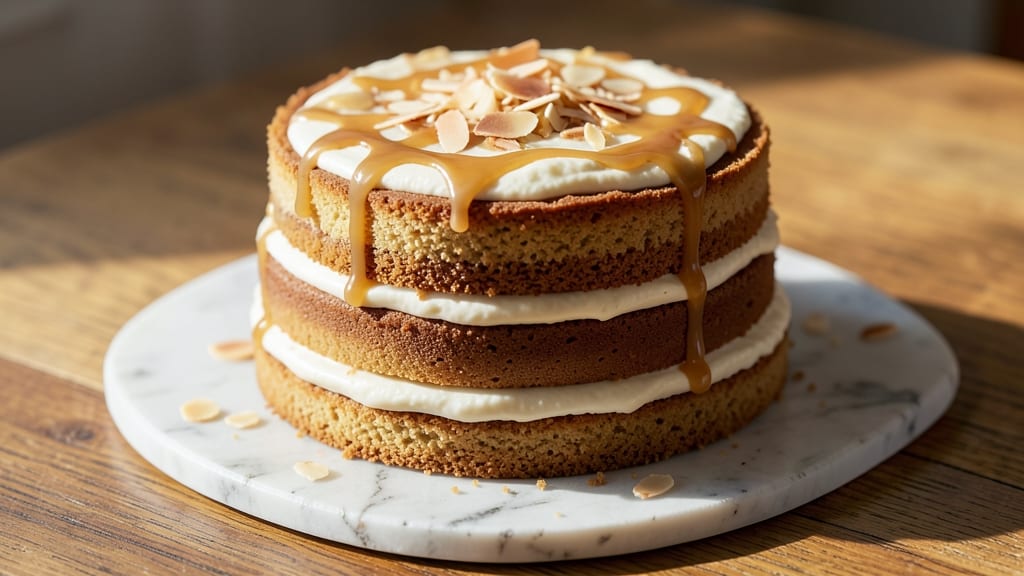
This Atkins cake recipe delivers all the moist, rich satisfaction of traditional cake without the carb overload. 💛 The secret lies in almond flour and erythritol, which create a tender crumb and sweetness without spiking blood sugar.
I've perfected this version after years of testing—it's foolproof for home bakers while staying strictly low-carb and keto-friendly.
The magic happens with a combination of whipped eggs and melted butter, which creates that signature cake-like texture without gluten or refined sugar. You'll need just 5 simple ingredients plus your choice of sugar substitute, making this both budget-friendly and diet-compliant.
The result? A cake so moist it defies its low-carb origins, with a delicate crumb that holds up perfectly for slicing.
What makes this recipe truly special is how it satisfies cravings without derailing your diet. The almond flour adds natural sweetness and richness, while the sugar substitute ensures every bite stays guilt-free.
Baking time is a straightforward 30 minutes, and the cake maintains its moisture for days when stored properly.
Perfect for birthdays, holidays, or whenever you crave something sweet but healthy, this cake proves you don't need traditional ingredients to enjoy dessert. The flavor is so satisfying that even non-low-carb eaters won't miss the sugar. Let's get baking!
Ingredients for atkins cake
Five core ingredients plus clever tricks for a cake that fools everyone—low-carb or not.
| Ingredient | Amount | Notes |
|---|---|---|
| Almond Flour 🌰 | 2 cups | Finely ground, unsweetened |
| Erythritol 🍯 | ½ cup | Granulated, sugar substitute |
| Large Eggs 🥚 | 4 whole | Room temperature, separated |
| Unsalted Butter 🧈 | ½ cup | Melted, cooled slightly |
| Vanilla Extract 🌿 | 1 tbsp | Pure, high-quality |
| Baking Powder 🧂 | 1 tsp | Aluminum-free preferred |
| Salt 🧂 | ¼ tsp | Fine sea salt |
| Xanthan Gum 🍞 | ¼ tsp | For binding, optional |
| Heavy Cream 🥛 | ¼ cup | Whipped to soft peaks |
Almond flour is the star here—Bob's Red Mill or Anthony's Goods are my go-tos for consistency. The finer the grind, the lighter your cake. Erythritol? Lakanto or Swerve work best—avoid maltitol, it gets gummy. Eggs need to be room temp (pop them in warm water for 5 minutes if they're straight from the fridge), and separating the whites is key for that cloud-like texture. Butter? European-style melts cleaner, but any good unsalted will do—just don't use salted. The vanilla extract should be pure, nothing with alcohol fillers.
No erythritol? Allulose or monk fruit blend works 1:1, but texture might vary slightly. Short on almond flour? Coconut flour at half the amount plus extra egg whites gets you close, but expect denser crumb. The xanthan gum is non-negotiable for low-carb baking—it mimics gluten's binding power. Whole Foods carries it in the baking aisle, or order online. Heavy cream can be subbed with coconut cream (thicker texture) or extra whipped egg whites (lighter but less rich). The baking powder? Double-check the can for expiration—old leavening = flat cake.
This cake keeps 4 days in an airtight container at room temp, or 1 week refrigerated. For longer storage, slice and freeze between parchment—3 months no problem. The whipped cream topping (if using) adds 2 days to fridge life. Pro tip: Brush slices with melted butter before serving—keeps them moist longer. Leftovers? Reheat 10 seconds in microwave for that fresh-from-oven feel.
Why You'll Love This Recipe
- No Mixer Needed: I swear by this—just a bowl and a fork. The almond flour blends into a dreamy batter without lumps, and the eggs bind it so well I’ve never had a crumbly disaster. (Yes, even when I forget to cream the butter first.)
- Butter-Rich Richness: That butter isn’t just a fat—it’s the star. Creamed with erythritol until fluffy, it gives this cake a moist, almost indulgent texture, but without the sugar crash. Honestly, I’ve had people ask if it’s gluten-free and low-carb—then they take seconds.
- Slice It Any Way: Bake one batch, use it three ways: warm slices for breakfast with whipped cream, crumbled over yogurt, or stacked in a trifle with berries. I’ll be real—my kids beg for the “cake crumbs” as a snack, and I don’t fight them.
- Leftovers That Last: This cake stays fresh for days in the fridge, and slices reheat in 10 seconds. Between us, I’ve had a single batch feed my book club and my gym buddy’s post-workout recovery. The almond flour keeps it from drying out, so it’s my go-to for “I’ll make it now, eat it later” moments.
Step-by-step instructions for low-carb cake perfection
Here's how to create a tender, moist Atkins cake that tricks everyone into thinking it's loaded with sugar.
👨🍳 Step 1: Prep Ingredients for Optimal Texture
Start by separating the 4 whole Large Eggs—you'll need 3 yolks for the batter and 3 whites for folding later. Let the 2 cups Almond Flour and 4 whole Large Eggs sit at room temperature for 30 minutes to ensure even mixing. I like to use a fine-mesh sieve for the almond flour to eliminate any lumps that could create dense pockets in the cake.
Melt the 0.5 cup Unsalted Butter in a microwave-safe bowl in 30-second intervals, stirring between each, until fully melted. Let it cool slightly but keep it liquid—this helps create a tender crumb rather than a dry one. The 0.25 cup Heavy Cream should be whipped to soft peaks right before folding, so save this step until last.
🍳 Step 2: Whisk Wet Ingredients to Ribbon Stage
In a large mixing bowl, combine the 3 egg yolks, 0.5 cup Erythritol, 1 tbsp Vanilla Extract, 0.25 tsp Salt, and 0.25 tsp Xanthan Gum. Whisk vigorously for 2-3 minutes until the mixture turns pale and nearly triples in volume. You're looking for a thick, ribbon-like consistency that holds its shape when the whisk is lifted—this incorporates air that will keep your cake light.
Slowly drizzle in the cooled melted 0.5 cup Unsalted Butter while continuing to whisk. This gradual addition prevents the butter from separating and creates a silky base. The mixture should look like a thick custard—if it's too thin, your cake will be dense. Here's the thing—don't rush this step. Properly aerated wet ingredients are what make low-carb cakes rise beautifully.
👨🍳 Step 3: Gently Fold in Dry Ingredients
Sift the 2 cups Almond Flour and 1 tsp Baking Powder together into a separate bowl to aerate them. Using a spatula, gently fold these dry ingredients into the wet mixture in 3 additions, mixing just until combined after each addition. Overmixing develops gluten in the almond flour, which leads to a tough cake. You want to see a few streaks of flour remaining—this ensures maximum tenderness.
In a separate clean bowl, whip the 3 egg whites to stiff peaks. This is where the magic happens—the whipped egg whites will give your cake that classic lightness. Fold them into the batter in 2 additions, using a gentle spatula motion to preserve as much air as possible. The final batter should be thick but pourable, with no visible streaks of egg white. This is your last chance to check for proper consistency before baking.
🔥 Step 4: Bake with Precision Timing
Preheat your oven to 350°F and grease an 8-inch round cake pan thoroughly with butter or baking spray. Pour the batter into the prepared pan and smooth the top with a spatula. Bake for 28-32 minutes until a toothpick inserted in the center comes out clean. The edges should be golden brown while the center remains slightly springy to the touch—this indicates perfect doneness.
I've found that low-carb cakes often need a minute or two longer than traditional cakes, so start checking at the 25-minute mark. The cake will continue cooking as it cools, so don't overbake. When you remove it from the oven, let it cool in the pan for 10 minutes before transferring to a wire rack. This gradual cooling prevents cracking as the cake sets.
⏰ Step 5: Add Cream and Rest for Maximum Moisture
While the cake cools, whip the 0.25 cup Heavy Cream to soft peaks and fold it gently into the warm cake using a spatula. This step is what gives your Atkins cake that restaurant-quality moistness. The warm cake will help the cream melt slightly, creating a luscious texture throughout. Spread the cream mixture evenly over the top and sides of the cake.
Let the cake cool completely before slicing—this allows the flavors to meld and the cream to fully set. The final result should be a tender, moist cake with a delicate crumb that's rich from the almond flour but never dry. Here's the secret: the xanthan gum and proper egg white folding are what prevent that characteristic low-carb cake dryness. Trust the process, and you'll have a cake that's perfect for any occasion without the sugar crash.
Pro Tips For Making Atkins Cake
- MIX DRY INGREDIENTS FIRST: I learned this the hard way—tossing in the eggs before the almond flour and erythritol just makes a sticky mess. Whisk the dry ingredients together first, then cut in the butter until it resembles wet sand. This keeps the texture light and prevents a dense, gummy cake.
- CREAM BUTTER AND ERYTHRITOL: Don’t just melt the butter and dump it in. Beat the softened butter and erythritol together until it’s pale and fluffy—about 2-3 minutes. This incorporates air and mimics the lightness of sugar in traditional cakes. Skip this, and your cake will taste flat and compact.
- USE ROOM-TEMP EGG WHITES: Cold egg whites can curdle when mixed with butter, leaving you with a lumpy batter. Let them sit in warm water for 5 minutes before cracking them into the mix. The cake will rise better and have a smoother texture—no one wants to bite into a weird, stringy bite.
- BAKE UNTIL TOOTHPICK COMES OUT CLEAN: Almond flour cakes dry out fast, but stopping early is the real mistake. Bake until a toothpick inserted in the center comes out with just a few moist crumbs—no wet batter clinging. Overbaking is better than underbaking here; the cake firms up as it cools.
Troubleshooting perfect results
Cracked Cake Surface
If your cake develops cracks on top, it’s usually due to overmixing the batter or opening the oven door too soon. To prevent this, ensure your egg whites are folded in gently and avoid overbaking.
If it happens, don’t panic—just brush the cracks with a little melted butter and dust with powdered erythritol before serving. This adds moisture and disguises the imperfections beautifully. 💛
Dense or Gummy Texture
A dense or gummy texture often means your almond flour wasn’t finely ground or your sugar substitute wasn’t properly incorporated. Sift the almond flour thoroughly and make sure your erythritol is granulated (not powdered).
If the cake still turns out dense, try adding an extra 1 tbsp of whipped egg whites to the batter for extra lift. Also, avoid overmixing—the goal is to fold, not stir vigorously.
Flat or Underbaked Cake
If your cake is flat or underbaked, it’s likely due to insufficient leavening. Double-check that your baking powder is fresh (test it by mixing with water—it should bubble immediately). Also, ensure your oven is properly calibrated by using an oven thermometer.
If the cake still doesn’t rise, try adding ½ tsp more baking powder or whipping the egg whites to slightly stiffer peaks before folding.
Dry or Crumbly Cake
Dryness usually happens when the cake is overbaked or the butter wasn’t melted properly. Pull the cake out of the oven as soon as the toothpick comes out clean (even if it looks slightly underdone—it will set as it cools).
To add moisture, brush the warm cake with a thin layer of melted butter or a simple syrup made from 1 tbsp erythritol + 1 tbsp water before adding the cream topping.
Soggy Bottom
A soggy bottom is often caused by an improperly greased or floured pan. Always grease your 8-inch round pan thoroughly with butter or baking spray, then dust with a light layer of almond flour. Place a piece of parchment paper on the bottom of the pan for extra insurance.
If the cake still has a soggy bottom, try baking it on the middle rack instead of the lower one for even heat distribution.
Egg Whites Not Holding Shape
If your egg whites collapse or don’t hold their shape, it could be due to old eggs, greasy bowls, or overmixing. Use eggs that are no older than 2 weeks and make sure your mixing bowl is completely clean and free of grease.
Add a pinch of cream of tartar to stabilize the egg whites if needed. Fold them in gently with a spatula to preserve their structure—don’t let them deflate before they hit the batter.
Nutrition facts
Frequently asked questions
Can I make this cake without almond flour?
Yes, but the texture will change. For a 1:1 substitute, use 1.5 cups coconut flour plus an extra 2 egg whites to compensate for moisture loss. The cake will be denser but still delicious. If you're allergic to nuts, try sunflower seed flour instead—it works well in low-carb baking too.
Why does my cake turn out dry even with all the butter?
Dryness usually happens when the cake overbakes or the butter wasn't melted properly. Always remove it when a toothpick comes out clean (even if slightly underdone). For extra moisture, brush warm slices with melted butter or a light syrup made from 1 tbsp erythritol + 1 tbsp water before serving.
Can I use this recipe for a keto diet?
This cake is already keto-friendly with only 3g net carbs per serving. Just ensure your erythritol is 100% pure (no maltitol) and stick to the exact measurements. The almond flour and heavy cream keep it perfectly aligned with strict keto guidelines while satisfying sweet cravings.
How do I make this cake gluten-free?
This recipe is naturally gluten-free since it uses almond flour instead of wheat. Just confirm your erythritol brand is gluten-free (some are processed in facilities with wheat) and use certified gluten-free baking powder. The xanthan gum already handles the binding, so no additional substitutions are needed.
Can I bake this cake in a different pan size?
Yes, but adjust baking time accordingly. For a 9-inch pan, bake 25-28 minutes and for a 6-inch pan, bake 35-40 minutes. Always use the same oven temperature (350°F) and check doneness with a toothpick. Smaller pans may need slightly longer baking.