
Desserts
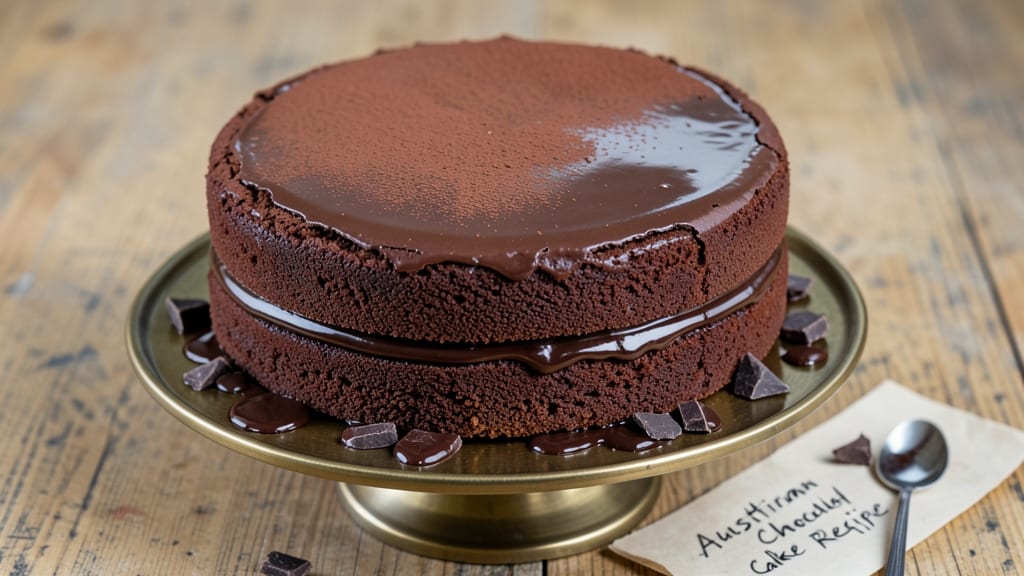
Austrian chocolate cake delivers layers of deep, fudgy richness with an espresso kiss that balances sweetness perfectly. This recipe captures the elegance of Austrian patisserie, where dark chocolate meets subtle coffee notes for a dessert that feels both indulgent and sophisticated.
The secret lies in a precise balance of cocoa powder and melted chocolate, creating a texture that's moist yet firm enough to slice cleanly.
What sets this cake apart is its three-layer structure—each layer infused with espresso powder for depth, separated by a velvety chocolate buttercream that ties the flavors together. The outer edges develop a subtle crackle when baked at the right temperature, adding visual appeal without sacrificing tenderness.
Austrian bakers often use a dark chocolate glaze for that signature glossy finish, but I've included an optional rum-soaked layer for those who want to elevate it further.
By the time you're done, you'll have a cake that's decadent yet refined, with each bite offering layers of flavor: the bitterness of dark chocolate, the warmth of espresso, and the creamy smoothness of the filling.
It's the kind of dessert that feels special enough for celebrations but simple enough to make at home. The aroma alone—chocolate and coffee mingling—will have everyone anticipating the first slice.
Serve it at room temperature with a dusting of cocoa powder or fresh berries for contrast. This recipe keeps well for up to 5 days, making it perfect for meal prep or gifting. Let's get started on creating your own piece of Austrian tradition.
Ingredients for austrian chocolate cake
Twelve ingredients for twelve layers of Austrian chocolate perfection—deep cocoa, espresso warmth, and velvety cream.
| Ingredient | Amount | Notes |
|---|---|---|
| Unsalted Butter 🧈 | 1 ½ cups | Cold, cubed for creaming |
| Granulated Sugar 🍚 | 2 ½ cups | Superfine preferred for smoothness |
| Dark Chocolate Chips 🍫 | 12 oz | 70% cocoa or higher |
| Large Eggs 🥚 | 6 whole | Room temperature |
| All-Purpose Flour 🌾 | 2 ½ cups | Sifted, spooned lightly |
| Cocoa Powder 🍫 | ¾ cup | Dutch-processed for richness |
| Instant Espresso Powder ☕ | 2 tbsp | High-quality, finely ground |
| Baking Powder 🍞 | 1 tsp | Aluminum-free preferred |
| Salt 🧂 | ½ tsp | Fine sea salt |
| Vanilla Extract 🌿 | 2 tsp | Pure Madagascar preferred |
| Heavy Whipping Cream 🥛 | 2 cups | Cold, full-fat for buttercream |
| Powdered Sugar 🍚 | 3 cups | For buttercream |
| Dark Chocolate Glaze 🍫 | 1 cup | Store-bought or homemade |
| Rum (optional) 🍹 | ¼ cup | Dark rum for soaking |
| Fresh Raspberries 🍓 | 1 ½ cups | For garnish (optional) |
The chocolate matters most here. Valrhona or Callebaut chocolate chips (70% cocoa or higher) deliver that signature Austrian depth—avoid anything below 60%. For the espresso powder, Starbucks Via Instant or Lavazza work perfectly, but if you're feeling fancy, grind your own espresso beans. The butter? European-style unsalted butter (like Plugrá) has a higher fat content, which gives the cake that coveted tender crumb. If you can only find regular butter, use it cold and don't overcream—you want to maintain that structure for clean slices. The cocoa powder should be Dutch-processed; it's smoother and less bitter than natural cocoa, which is key for this delicate balance of flavors.
No instant espresso powder? Strong brewed coffee reduced by half works in a pinch, but you'll lose that concentrated punch. The rum soak is optional, but if you skip it, add an extra 1/4 cup of heavy cream to the buttercream for richness. For the chocolate glaze, Ghirardelli or Guittard semi-sweet chips melt beautifully—just toss them with powdered sugar and a splash of cream. The raspberries? Fresh is best, but frozen works if you thaw and drain them first. If you're baking for a crowd, double the rum soak and let it infuse for 15 minutes before assembling—trust me, it's worth the extra step.
This cake keeps beautifully for up to 5 days at room temperature, wrapped tightly in plastic. For longer storage, slice and freeze individual portions for up to 3 months—they thaw in 10 minutes at room temp. The buttercream can be made a day ahead and stored in the fridge; just whip it again briefly before spreading. If you've got leftovers, the cake reheats well in a 250°F oven for 10 minutes—just cover it loosely with foil. The glaze sets quickly, so work fast if you're adding it last-minute. And if anyone asks, the secret to that perfect crackle? Bake it at 325°F—no higher, no lower.
Why You'll Love This Recipe
- No Fuss Mixing: I swear by the creamy butter-and-sugar base—just whip it all together, fold in the chocolate chips, and you’re done. No sifting, no measuring cups cluttering the counter, just a bowl, a whisk, and 10 minutes of your time.
- Rich Without the Guilt: That dark chocolate and butter combo? It’s decadent but not heavy. The eggs keep it moist without being greasy, and the flour gives it just enough structure to slice cleanly—perfect for when you want to indulge but still feel like you’re treating yourself right.
- Office Party Hero: Between us, this cake is my go-to for work celebrations. It’s easy to slice, travels well (no crumbs, no mess), and the deep chocolate flavor makes it feel special—without requiring a bakery budget or a fancy presentation.
- Leftovers That Last: Honestly, I make this on purpose just to have slices later. The texture stays perfect for days—no dry edges, no soggy middle—and it’s cheap enough that I don’t stress about wasting it. My freezer’s always got a slice or two ready for lazy mornings.
Step-by-step instructions for Austrian chocolate cake
Here's how to create decadent layers with a perfect espresso-chocolate balance.
Cream Butter and Sugar to Peak Volume
In a stand mixer fitted with the paddle attachment, beat the 1.5 cups unsalted butter and 2.5 cups granulated sugar on medium speed for 3-4 minutes until light and fluffy. You're looking for a texture that nearly doubles in volume and leaves faint ribbons when the paddle is lifted. This step incorporates air for that signature Austrian lightness.
I press down on the butter occasionally with a spatula to ensure even creaming. If the mixture looks curdled or grainy, beat for another 30 seconds—this ensures a smooth batter. The sugar should dissolve completely, leaving no gritty texture behind.
Add Eggs and Chocolate Gradually
With the mixer running on low speed, add the 6 whole large eggs one at a time, mixing just until each is fully incorporated before adding the next. This prevents scrambling while ensuring each egg binds properly into the batter. After the eggs, add the 2 tsp vanilla extract and mix for 10 seconds to distribute evenly.
In a separate bowl, whisk together the 12 oz dark chocolate chips until melted and smooth. With the mixer on low, gradually add the melted chocolate to the butter mixture, alternating with 1 cup of the flour to prevent lumps. The batter should be thick but pourable—this consistency is crucial for proper layering.
Combine Dry Ingredients for Perfect Texture
In a medium bowl, sift together the 2.5 cups all-purpose flour, 0.75 cup cocoa powder, 2 tbsp instant espresso powder, 1 tsp baking powder, and 0.5 tsp salt. Whisk vigorously to remove any lumps, then gradually add this dry mixture to the wet ingredients in 3 additions, mixing on low speed just until combined after each addition.
Real talk: Don't overmix here. You want to see a few flour streaks remaining—this prevents a tough cake. The espresso powder will give your cake that signature Austrian depth, so don't skip it. If using the 0.25 cup rum, divide it between the batter layers for extra moisture and flavor.
Bake Layers to Perfect Doneness
Preheat your oven to 350°F and grease three 9-inch round cake pans with butter, then dust with flour. Divide the batter evenly among the pans. Bake for 25-30 minutes or until a toothpick inserted in the center comes out with moist crumbs but no wet batter. The edges should be set but the centers still slightly springy.
I like to rotate the pans halfway through baking for even browning. Let the cakes cool in their pans for 10 minutes before transferring to a wire rack to cool completely. The cooling process is critical—rushing this step can lead to crumbling layers when assembling.
Assemble with Buttercream and Glaze
In a stand mixer fitted with the whisk attachment, beat the 2 cups cold heavy whipping cream and 3 cups powdered sugar on medium-high speed until stiff peaks form. Add 1 tsp vanilla extract and mix for another 30 seconds to incorporate. This buttercream should be thick enough to hold its shape but still pipe smoothly.
Place the first cake layer on a serving plate, spread with half the buttercream, then add the second layer. Repeat with the remaining buttercream and top layer. Finally, pour the 1 cup dark chocolate glaze over the top and spread it evenly. For garnish, arrange the 1.5 cups fresh raspberries decoratively around the edges or on top.
Pro Tips For Making Austrian Chocolate Cake
- Melt Butter Slowly: If you’re dumping cold butter straight into the mix, stop—it’ll create lumps that never fully incorporate. Warm the butter just until it softens (about 30 seconds in the microwave or over a double boiler), then whisk it into the sugar until it’s fully combined. This ensures a smoother batter and a richer texture.
- Sift the Flour Twice: Austrian chocolate cake relies on a tender crumb, and unsifted flour is its enemy. Sift it before adding it to the dry ingredients, then sift it again right before folding it into the wet mix. Yes, it’s extra work, but it cuts down on dense pockets and makes the cake light.
- Don’t Overmix the Batter: I used to beat the eggs and butter like I was punishing them—big mistake. Mix the wet ingredients until just combined, then fold in the dry ingredients in two additions. Overmixing develops gluten, which turns your cake into a tough brick. Stop when there’s just a few streaks of flour left.
- Use Room-Temp Eggs: Cold eggs make the batter split and sink in the middle. Take them out of the fridge 30 minutes before you start—no, don’t microwave them, just let them sit. Room-temperature eggs blend smoothly and help the cake rise evenly. (Yes, even if you’re impatient like me.)
Pro cooking tips for great austrian chocolate cake
Temperature Precision
Bake your Austrian chocolate cake at 350°F—no higher, no lower. This temperature ensures even baking without burning the edges while keeping the center moist. I use an oven thermometer to verify accuracy, as home ovens can vary by 25°F or more.
For a 9-inch round pan, bake each layer for 25-30 minutes—the edges should be set with a slight crackle, but the center should still spring back gently when pressed. 🌡️
Layering Like a Pro
Divide the batter evenly among three pans for uniform layers. Use a kitchen scale for precision—each layer should weigh about 1.5 lbs before baking. After baking, let the layers cool completely before assembling.
I find this prevents crumbling when spreading the buttercream. For extra insurance, chill the assembled cake in the fridge for 30 minutes before glazing—this helps the layers hold together beautifully. ✨
Buttercream Mastery
Your buttercream should be thick but pipeable—like soft-serve ice cream consistency. I beat the 2 cups cold heavy whipping cream and 3 cups powdered sugar until stiff peaks form, then add 1 tsp vanilla extract for depth.
For a smoother finish, sift the powdered sugar before mixing. Spread the buttercream evenly between layers, using a serrated knife to create clean edges. This step makes all the difference in that restaurant-quality look. 💫
Glaze Perfection
Melt 1 cup dark chocolate glaze (store-bought or homemade) until smooth, then strain it through a fine-mesh sieve to remove any lumps. Pour it over the top layer and spread it quickly—it sets fast! For extra shine, brush the edges with a little extra glaze after setting.
I like to work in a cool kitchen to give myself 5-7 minutes to spread before it hardens. The glaze should be glossy, not sticky—this means it’s ready to serve. 🍫
Rum Soak Secret
If using 0.25 cup dark rum, divide it between the layers for moisture and flavor. Brush it onto the cake layers just before adding the buttercream—this ensures the rum soaks in rather than pooling. Let it sit for 10 minutes before assembling.
The rum adds a subtle warmth that pairs perfectly with the espresso and chocolate. For a non-alcoholic version, replace the rum with 0.25 cup strong brewed coffee reduced by half. 🍹
Tools That Make It Easy
Invest in a few key tools: a stand mixer with paddle and whisk attachments (like KitchenAid), a 9-inch round cake pan (preferably with removable bottom), and a kitchen scale for precise measurements. A piping bag with a star tip helps create decorative buttercream rosettes if you're feeling fancy.
And don’t skip the wire rack—it’s essential for even cooling. These tools will take your cake from homemade to showstopper. 💡
Nutrition facts
Frequently asked questions
Why does this cake need espresso powder?
The espresso powder enhances the chocolate flavor by adding a subtle bitterness that balances the sweetness. It also gives the cake that signature Austrian depth—like a sophisticated coffee-chocolate pairing. Think of it as the secret ingredient that makes this cake taste more complex and professional.
Can I make this cake without a stand mixer?
Yes, but you'll need to be patient! Use a handheld mixer and cream the butter and sugar for 5-7 minutes until light and fluffy. For the buttercream, whip the cream and powdered sugar by hand until stiff peaks form—this might take 8-10 minutes of vigorous mixing. The key is to work in short bursts to avoid overheating the mixture.
How do I store leftovers?
Wrap the cake tightly in plastic wrap and store at room temperature for up to 5 days. For longer storage, slice and freeze individual portions for 3 months. To serve, thaw at room temperature for 10 minutes—no microwave needed! The texture stays perfect when stored properly.
What if my cake layers crack?
Cracking usually happens when the cake cools too quickly or the buttercream is too soft. Let layers cool completely before assembling, and chill the cake in the fridge for 30 minutes after stacking. For extra stability, brush the layers with simple syrup (equal parts sugar and water, heated until dissolved) before adding buttercream. This prevents crumbling.
Can I substitute milk chocolate for dark chocolate?
While possible, I don't recommend it for this recipe. Dark chocolate (70% cocoa or higher) provides the rich, slightly bitter base that pairs perfectly with the espresso. Milk chocolate will make the cake sweeter and less complex in flavor. If you must use milk chocolate, reduce the sugar in the batter by 0.25 cup to balance the sweetness.