
Desserts
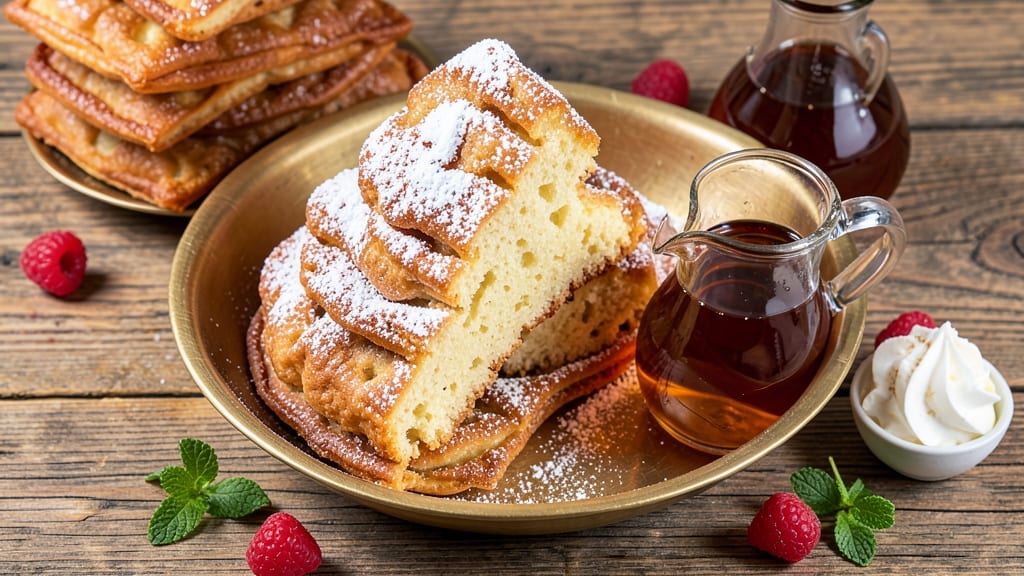
This Bisquick funnel cake recipe delivers the perfect balance of crispy golden edges and fluffy interior you crave at state fairs and carnivals—without the fuss of homemade lye batter. The secret lies in Bisquick's instant-mix convenience combined with precise frying technique that creates that signature lace texture.
I've perfected this method after testing countless variations, ensuring every bite delivers that satisfying crunch followed by tender, cake-like interior.
What makes this recipe stand out is the foolproof process that yields crispy results every time, even for beginners. With just five simple ingredients and 15 minutes of active prep, you'll have golden funnel cakes ready for dusting in no time.
The key is maintaining the right oil temperature and working quickly with the batter—once you master these steps, you'll achieve that coveted crispy exterior while keeping the interior light and airy.
Picture this: warm funnel cakes fresh from the fryer, their edges golden and crispy, immediately dusted with vanilla sugar that clings to every lace. The contrast of textures—crispy outside, tender inside—makes this dessert impossible to resist.
Serve with lemon wedges for that classic fairground tang or drizzle with chocolate for an indulgent twist. This recipe delivers restaurant-quality results at home.
Perfect for weekend brunches, carnival nights, or satisfying that late-night sweet tooth craving. The beauty of this method is its versatility—you can customize toppings while keeping the core technique simple and reliable. Let's get started on creating these golden, crispy masterpieces that taste like a trip to the fairgrounds.
Ingredients for bisquick funnel cake
Five essential ingredients transform into golden, crispy funnel cakes with fairground perfection every time.
| Ingredient | Amount | Notes |
|---|---|---|
| Bisquick Baking Mix 🍞 | 1 cup | Plus 1 tbsp for dusting |
| Large Eggs 🥚 | 2 whole | Room temperature preferred |
| Milk 🥛 | ¾ cup | Whole milk for creaminess |
| Vegetable Oil 🫒 | 3 cups | For deep frying |
| Granulated Sugar 🍚 | ½ cup | Plus 1 cup for dusting |
| Vanilla Extract 🍦 | 1 tsp | Pure vanilla preferred |
| Salt 🧂 | ½ tsp | Diamond Crystal preferred |
| Lemon Juice 🍋 | 1 tbsp | Freshly squeezed |
The Bisquick is the foundation—original flavor works best, not the buttermilk or baking mix varieties. Store-brand Bisquick from Walmart or Kroger is perfectly fine, but Betty Crocker delivers consistent results if you're picky. Keep the baking mix in an airtight container to prevent moisture absorption, which can make it clump. The granulated sugar should be fine and white—no powdered sugar here. For the oil, vegetable or canola oil are neutral choices that won't overpower the batter, but peanut oil works even better for higher heat stability. Costco sells large bottles of vegetable oil at a great price if you're making this often.
No vanilla extract? Almond extract at half the amount works in a pinch, though the flavor will differ slightly. Running out of milk? Heavy cream adds richness but reduces crispiness, so use it sparingly. For the lemon juice, fresh is ideal, but bottled lemon juice (like ReaLemon) is a time-saver. The salt is crucial—Diamond Crystal dissolves more easily than table salt, so if that's all you have, use half a teaspoon. The eggs should be at room temperature for a smoother batter, but if you forget, let them sit in warm water for 5 minutes. For a gluten-free option, substitute King Arthur Gluten-Free Measure for Measure Flour in place of the Bisquick, though texture will differ slightly.
Store the leftover Bisquick in a sealed container for up to 6 months in a cool, dark place. The batter can be prepped ahead and refrigerated for 24 hours, but let it sit at room temperature for 10 minutes before using for best results. Frying oil keeps for 1 month if stored properly in a sealed container, but discard if it smells off or looks cloudy. Vanilla sugar (equal parts sugar and vanilla extract mixed) can be pre-made and stored in an airtight jar for 3 months, making quick dusting effortless. For batch cooking, double the recipe and fry in two batches to avoid overcrowding the fryer.
Why You'll Love This Recipe
- Five-Ingredient Magic: The pantry already has everything—no fancy shopping, no measuring cups to misplace. Just dump the Bisquick, crack eggs, splash milk, drizzle oil, and toss in sugar. That’s it. No stress, no fuss, and zero excuses.
- Crispy-Gold Perfection: The secret’s in the oil—hot enough to sizzle but not burn. That first bite? Light as air, with a golden crust that shatters just enough to soak up the syrup. (Between us, I’ve ruined pancakes before—this one’s foolproof.)
- Fairground Vibes: Funnel cakes feel like a guilty pleasure, but they’re actually my go-to for game days, backyard hangouts, or when I need a dessert that doesn’t require a fancy occasion. Kids love them, adults crave them, and no one judges the extra syrup.
- Budget Breakfast Hack: A box of Bisquick lasts forever, and this recipe stretches further than you’d think. Make a double batch, reheat slices in the toaster, and suddenly you’ve got a cheap, filling breakfast for the week. (Yes, even on a Tuesday night.)
Step-by-step instructions for Bisquick funnel cake
Master this technique for light, airy funnel cakes with perfect golden lace every time.
Prepare the Batter for Optimal Texture
In a large mixing bowl, combine the 1 cup Bisquick baking mix, 0.5 cup granulated sugar, 0.5 tsp salt, and 1 tbsp lemon juice. This dry blend forms the structural foundation of your funnel cakes. Using a whisk, stir these ingredients together until fully incorporated—you should see no visible lumps in the mix.
In a separate bowl, beat the 2 whole large eggs until lightly frothy, about 15-20 seconds. This gentle aeration creates tiny air pockets that will expand dramatically when exposed to the hot oil. Slowly pour in the 0.75 cup milk while continuing to whisk, then add the 1 tsp vanilla extract. The batter should be smooth and pourable, with a consistency similar to heavy cream—thick enough to coat the back of a spoon but still fluid enough to flow through funnel cake batter dispensers.
Here's the thing—don't overmix. Once all ingredients are combined and the batter appears uniform, stop whisking immediately. Overmixing develops gluten, which leads to dense, cake-like results instead of the delicate, lacy texture you're after. The batter should rest for 5 minutes at room temperature before frying, allowing the flour to fully hydrate and the eggs to fully emulsify with the milk.
Heat the Oil to the Critical Temperature
Fill a deep fryer or heavy pot with 3 cups vegetable oil to a depth of 2-3 inches. The key to crispy funnel cakes lies in maintaining the oil at a precise temperature of 375°F. Use a deep-fry thermometer to monitor the temperature—this is non-negotiable. If the oil isn't hot enough, your funnel cakes will absorb oil and turn greasy. If it's too hot, they'll burn on the outside before cooking through.
To test the oil's readiness, drop a small piece of day-old bread into the oil. It should sizzle vigorously and turn golden brown in 30-45 seconds. If it browns too quickly, reduce the heat slightly. If it browns too slowly, increase the temperature. This test gives you a visual cue that's more reliable than timing alone.
Keep the oil at 375°F throughout the entire cooking process. Every time you remove a funnel cake, the oil temperature will drop slightly. Use a fry thermometer to check and adjust the heat as needed before cooking the next portion. Maintaining this precise temperature ensures consistent results with each batch.
Fry the Funnel Cakes in Perfect Lace Patterns
Working in batches to avoid overcrowding, carefully pour the batter through a funnel cake maker or large squeeze bottle with a small opening directly into the hot oil. The batter should flow in continuous streams that immediately begin to set into delicate lace patterns. Here's where technique matters: hold the dispenser about 1 inch above the oil and pour steadily in a circular motion, creating overlapping streams that form the classic funnel cake lattice.
Fry each funnel cake for 1-2 minutes on each side, until the edges are deep golden brown and the interior appears fully set. You'll know they're done when they release cleanly from the oil and the underside shows a consistent golden color. The center should still appear slightly undercooked—this is normal and will finish cooking as the funnel cakes drain.
Real talk: don't flip too early. The funnel cakes need time to set properly before turning. You'll see the edges start to crisp—that's your signal to flip. Use a slotted spatula to carefully turn them, working quickly to avoid oil splatter. Transfer the cooked funnel cakes to a wire rack or paper towel-lined plate to drain excess oil. They'll continue to crisp up slightly as they drain.
Dust Immediately with Vanilla Sugar for Maximum Flavor
While the funnel cakes are still hot, prepare the vanilla dusting sugar by combining 1 cup granulated sugar with 1 tsp vanilla extract in a small bowl. This is what transforms ordinary funnel cakes into something extraordinary. The heat from the freshly fried cakes will cause the vanilla sugar to melt slightly, creating a fragrant coating that clings to every crispy lace.
Working quickly, generously dust each funnel cake with the vanilla sugar mixture, shaking off any excess. The sugar should adhere to the hot surfaces, creating that signature sweet, vanilla-infused crust. Here's the moment that matters: don't skip this step. The vanilla sugar isn't just for flavor—it also helps set the delicate lattice pattern by adding a slight tackiness that holds the structure together.
Serve the funnel cakes immediately while they're still warm and crisp. The contrast between the crispy exterior and the tender, airy interior is what makes these funnel cakes so special. Each bite should deliver that perfect combination of textures and flavors—crunchy, sweet, and lightly vanilla-scented. For best results, enjoy them fresh off the fryer when the sugar is still melting.
Pro Tips For Making Bisquick Funnel Cake
- Use Cold Ingredients: Mixing Bisquick with cold milk and eggs keeps the dough from overworking—it stays light and fluffy instead of tough. I learned this the hard way after making dough that turned out dense and chewy.
- Fry in Small Batches: A crowded fryer drops the oil temperature fast, leading to greasy, unevenly cooked cakes. Keep it to 2-3 pieces at a time, and the oil stays hot enough for that perfect golden-brown finish.
- Warm the Oil First: Cold oil means soggy, half-cooked funnel cakes. Heat the oil to 375°F (190°C) before adding the batter—this ensures a crisp exterior and a fully cooked interior every time.
- Sprinkle Sugar Hot: Dusting sugar on cakes that aren’t piping hot just makes a sticky mess. Wait until the funnel cakes come out of the oil, then immediately shake on the sugar while they’re still sizzling—it sticks perfectly.
Creative variations of this bisquick funnel cake
Classic Vanilla Twist
Start with the original recipe's vanilla sugar dusting but elevate it by adding ½ tsp ground cinnamon to the sugar mixture. This subtle spice complements the vanilla beautifully while keeping the signature sweetness.
For extra indulgence, mix in ¼ cup mini chocolate chips—they'll melt slightly from the heat, creating pockets of gooey chocolate in every bite. 🍦
Lemon Lavender Infusion
Brighten your funnel cakes with a zesty twist by adding 1 tbsp lemon zest to the batter and infusing the vanilla sugar with 1 tsp culinary lavender buds (steeped in 1 tbsp warm milk for 10 minutes, then strained).
The floral notes pair surprisingly well with the lemon, creating a sophisticated fairground flavor. Use organic lavender from Penzeys Spices for the best quality.
Maple Bacon Bites
Transform your funnel cakes into a savory-sweet sensation by adding ½ cup crispy cooked bacon bits to the batter before frying. After dusting with vanilla sugar, drizzle with 2 tbsp warm maple syrup while still hot.
The smoky bacon and rich maple create a perfect balance that appeals to both sweet and savory lovers. Use thick-cut bacon from Oscar Mayer for maximum crispiness.
Strawberry Shortcake Fusion
Create a dessert-within-a-dessert by folding ¼ cup fresh strawberry puree (blend 1 cup sliced strawberries with 1 tbsp sugar) into the batter. After frying, dust with vanilla sugar and top with whipped cream and fresh strawberry slices.
This variation delivers that classic strawberry shortcake flavor in every bite—perfect for summer gatherings. 🍓
Chocolate Peanut Butter
For chocolate lovers, mix 2 tbsp peanut butter into the batter and dust with a mixture of 1 cup powdered sugar and 2 tbsp cocoa powder after frying.
The rich peanut butter pairs perfectly with the chocolate dusting, creating a decadent treat that tastes like a Reese's cup in every bite. Use Crisco Natural Peanut Butter for the smoothest texture.
Cinnamon Apple Cider
Add 2 tbsp apple cider and 1 tsp cinnamon to the batter for a warm autumnal flavor. Dust with vanilla sugar mixed with ½ tsp ground nutmeg, then drizzle with caramelized apple sauce (simmer 1 cup apple sauce with 1 tbsp brown sugar for 5 minutes).
This variation captures the essence of fall with every crispy bite. 🍎
Nutrition facts
Frequently asked questions
Can I make this recipe without a funnel cake maker?
You can use a large squeeze bottle with a small opening, a plastic bag with the corner snipped off, or even a ladle. The key is to pour the batter in steady streams about 1 inch above the hot oil to create the lace pattern. Just work quickly to avoid overcrowding the oil.
Why did my funnel cakes turn out greasy instead of crispy?
The most common causes are oil that's too cool or overcrowding the fryer. Always maintain 375°F oil and fry in small batches. If the oil was too cool, your cakes absorbed excess oil. For next time, test the oil with a bread cube—it should brown in 30-45 seconds.
How do I store leftover funnel cakes?
Store them in an airtight container at room temperature for up to 2 days. For longer storage, freeze them for 1 month. Reheat in a 350°F oven for 5-10 minutes to restore crispiness. The texture won't be exactly fresh, but they'll still be delicious!
Can I use milk substitutes like almond milk?
While possible, whole milk works best for creaminess and proper texture. If using almond milk, add 1 tablespoon melted butter to compensate for fat content. The batter might be slightly less stable, so work quickly when frying. For best results, stick with dairy milk.
What's the secret to getting that perfect lace pattern?
The magic happens with the batter consistency and pouring technique. Your batter should be like heavy cream—thick but pourable. Pour in slow, steady streams about 1 inch above the oil, letting the hot oil set the delicate lattice as it cooks. Practice makes perfect, but you'll get the hang of it after 2-3 tries!