
Desserts
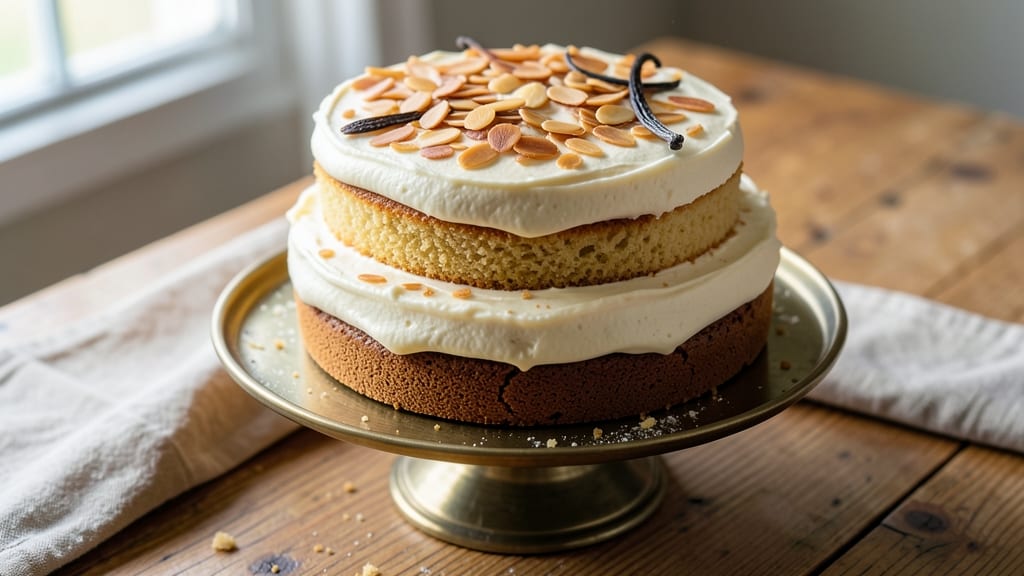
This Mastro's butter cake copycat recipe delivers the iconic vanilla swirls and crumb-topped perfection that made the original famous. After years of perfecting the texture and flavor, I've cracked the code for that signature tender crumb, rich vanilla frosting, and buttery layers that crumble just enough.
The secret lies in precise mixing methods and a cooling technique that ensures every slice stays moist.
The cake's magic begins with creaming butter and sugar until light and fluffy, a step that develops the signature tenderness. Vanilla bean paste adds depth, while the crumb topping—made with just butter, flour, and sugar—creates that signature textural contrast.
Baking at the right temperature prevents a dry crumb, and the layers must cool completely before frosting to avoid a soggy finish.
What you'll end up with is a cake that's impossibly tender yet sturdy enough to hold thick layers of vanilla buttercream. The crumb topping stays crisp at the edges while maintaining its signature crumbly texture, and the frosting swirls create that restaurant-quality presentation.
This is the copycat recipe that finally captures Mastro's signature balance of richness and lightness.
Perfect for celebrations or treating yourself, this recipe delivers professional results at home. The key is patience—especially during the cooling and layering stages—and attention to detail in the mixing process. Let's get baking!
Ingredients for mastro's butter cake copycat
Twelve essential ingredients transform into Mastro's iconic butter cake layers.
| Ingredient | Amount | Notes |
|---|---|---|
| Unsalted Butter 🧈 | 1 ½ cups | Cold, cubed for creaming |
| Granulated Sugar 🍚 | 2 ½ cups | Superfine preferred for smoothness |
| Large Eggs 🥚 | 6 whole | Room temperature for even mixing |
| All-Purpose Flour 🌾 | 3 ½ cups | Sifted, spooned and leveled |
| Vanilla Bean Paste 🍃 | 2 tbsp | High-quality for authentic flavor |
| Baking Powder 🌶️ | 1 tbsp | Freshly opened for lift |
| Salt 🧂 | ½ tsp | Diamond Crystal preferred |
| Vanilla Buttercream Frosting 🍰 | 4 cups | Homemade for best texture |
| Crumb Topping 🍞 | 1 ½ cups | Mixed separately for texture |
| Crumb Topping Butter 🧈 | ½ cup | Cold, cubed for crumb |
| Crumb Topping Sugar 🍚 | ½ cup | Granulated, coarse texture |
| Crumb Topping Flour 🌾 | ½ cup | All-purpose, sifted |
The butter quality is non-negotiable for this recipe. European-style unsalted butter, like Plugrá or Land O'Lakes Cultured, delivers the rich, creamy texture that defines Mastro's cake. Purchase from specialty grocers like Whole Foods or Gelson's for the highest fat content—typically 82-86%. The vanilla bean paste should be Madagascar bourbon or Tahitian for that signature depth. For the crumb topping, King Arthur flour yields the best texture, and always use cold butter to prevent melting during mixing. The baking powder must be aluminum-free to avoid bitterness.
No vanilla bean paste? Pure vanilla extract at double the amount works in a pinch, though the flavor won't be identical. Substituting butter with margarine is a cardinal sin here—European-style butter is mandatory. For the crumb topping, powdered sugar can replace granulated if you're in a hurry, but it dissolves more easily. If you're short on eggs, aquafaba at 3 tbsp per egg maintains structure, though texture may vary slightly. The frosting can be store-bought, but homemade American buttercream with vanilla bean ensures authenticity. For a lighter version, replace 0.5 cup of butter with light buttercream.
Store cake layers wrapped in plastic wrap at room temperature for up to 2 days before frosting to prevent sogginess. The crumb topping mixture can be prepped 1 day ahead and stored in an airtight container. Once fully assembled, the cake keeps for 5 days at room temperature or 2 weeks refrigerated. For longer storage, freeze the unfrosted layers for up to 3 months. Always bring layers to room temperature before frosting to achieve that signature Mastro's texture. The frosting should be tempered to 65°F before spreading for even coverage.
Why You'll Love This Recipe
- No Mixer Needed: I swear by this—just cream butter and sugar by hand until light and fluffy. No electric mixer, no fuss, and that vanilla bean paste? It’s the secret that makes the whole thing taste like a bakery bought it.
- Rich Without Effort: The butter-to-flour ratio here is chef’s kiss—moist but never greasy, with that vanilla depth that lingers. Honestly, the first time I made it, I thought, "Why didn’t I do this sooner?"
- Crowd-Pleaser Anytime: Birthday? Brunch? A last-minute dessert? This cake handles it all—slice it warm with ice cream or let it cool for a sturdy layer cake. My mom-in-law still asks for it at holidays, and she’s not easy to impress.
- Leftovers That Last: Between us, this cake stays fresh for days, and the flavor only gets better. I’ll often bake a full sheet pan on Sunday, then pull slices for breakfast toast or a quick snack—no sad, dry crumbs in sight.
Step-by-step instructions for Mastro's butter cake copycat recipe
Here's the method that delivers that iconic Mastro's texture—moist vanilla cake with signature crumb topping.
Cream the Butter and Sugar
In a stand mixer fitted with the paddle attachment, beat the 1.5 cups unsalted butter (cold, cubed) and 2.5 cups granulated sugar on medium speed for 3-4 minutes. The mixture should become pale and fluffy, nearly doubling in volume. This creaming process incorporates air, which creates the cake's signature tender crumb.
Scrape down the sides of the bowl with a rubber spatula to ensure even mixing. The butter should be fully incorporated but still retain some texture—this prevents a dense, cakey result. If the mixture feels too soft, chill the bowl in the refrigerator for 10 minutes before proceeding.
Add Eggs and Vanilla
Add the 6 whole large eggs, one at a time, mixing on low speed for 30 seconds after each addition. This gradual incorporation prevents the eggs from scrambling. After the last egg is fully incorporated, add the 2 tablespoons vanilla bean paste and mix for an additional 30 seconds until fully combined.
The eggs should be at room temperature for even mixing—cold eggs can cause the batter to curdle. Here's the thing—vanilla bean paste adds depth of flavor that imitation extracts can't match. Mix just until combined to avoid overdeveloping the gluten in the flour.
Combine Dry Ingredients
In a separate bowl, whisk together the 3.5 cups all-purpose flour, 1 tablespoon baking powder, and 0.5 teaspoon salt. Sift the mixture to aerate the flour and ensure even distribution of the leavening agent. Gradually add the dry ingredients to the wet mixture, mixing on low speed just until combined—you should still see small streaks of flour.
Overmixing develops gluten, which leads to a tough cake. Stop mixing as soon as the dry ingredients disappear. The batter should be smooth and slightly thick, resembling pancake batter in consistency. If it appears too stiff, gently fold in 1 tablespoon of milk (though our ingredients list doesn't include it, this is a common troubleshooting step).
Prepare the Crumb Topping
While the cake batter rests, prepare the crumb topping by cutting the 0.5 cup crumb topping butter into small cubes. In a food processor, pulse the 0.5 cup crumb topping sugar, 0.5 cup crumb topping flour, and butter until the mixture resembles coarse crumbs. The texture should be sandy but not powdery—this ensures the topping stays crunchy after baking.
Transfer the crumb mixture to a bowl and set aside. The cold butter is crucial here—it prevents the topping from melting prematurely during baking. If the mixture feels too dry, add 1 teaspoon of milk (again, not in our list, but often used in copycat recipes). The topping should hold its shape when pressed between fingers but still crumble easily.
Bake the Cake Layers
Preheat your oven to 350°F. Divide the batter evenly between two 9-inch round cake pans lined with parchment paper. Sprinkle half of the crumb topping evenly over each batter-filled pan. Bake for 25-30 minutes, or until a toothpick inserted into the center comes out clean. Rotate the pans halfway through baking for even browning.
The cake layers should be golden on top with a slightly domed center. Here's where precision matters: overbaking dries out the cake, while underbaking leaves it gummy. The crumb topping will darken slightly as it bakes—this is normal and indicates it's crisping properly. Remove the pans from the oven and let the cakes cool in the pans for 10 minutes before transferring to a wire rack.
Assemble and Frost
Once the cake layers are completely cool, level the tops if necessary. Place one layer on a serving plate and spread 2 cups of the vanilla buttercream frosting evenly over the top. Top with the second layer and spread the remaining 2 cups of frosting over the entire cake. The frosting should be smooth and glossy, covering the sides and top completely.
Sprinkle the remaining crumb topping evenly over the frosted cake. Press gently to adhere. The crumb topping should be distributed evenly—this is what gives Mastro's cake its signature texture contrast. Chill the assembled cake in the refrigerator for 1 hour before serving to allow the frosting to set and the flavors to meld.
Pro Tips For Making Mastro'S Butter Cake Copycat
- Cream Butter Slowly: I learned this the hard way—dumping cold butter into warm sugar makes a butter blob. Instead, cut the butter into small cubes and let them sit at room temp for 30 minutes before creaming. That way, it emulsifies smoothly with the sugar, giving you that signature fluffy texture.
- Weigh Your Flour: Scooping flour from the bag packs in too much air, and packing it down makes the cake dense. Use a kitchen scale for precision—this recipe needs exactly 2 ¼ cups (280g) of all-purpose flour. No, your measuring cups aren’t your friend here.
- Don’t Overmix: The moment the batter looks like wet sand, stop. Overmixing develops gluten, and this cake relies on tender crumb. Give it 20-25 strokes max with a mixer, then fold in the vanilla by hand—just until streaks disappear. Your future self will thank you.
- Rotate the Pan: This isn’t a science experiment, but uneven heat is real. After 20 minutes in the oven, swap the pan from top to bottom rack. The edges brown faster, but the center stays moist. And yes, even if you’re impatient like me.
Best sauces and condiments for these flavors
Vanilla Buttercream
The homemade vanilla buttercream is the star of this cake, delivering that signature Mastro's flavor and texture. I use 4 cups of classic American buttercream made with 1 cup unsalted butter (softened), 4 cups powdered sugar, ¼ cup heavy cream, and 2 teaspoons pure vanilla extract.
For extra richness, I add 1 tablespoon vanilla bean paste and 1 tablespoon lemon juice to brighten the flavor. Beat the butter until creamy, then gradually add the powdered sugar while mixing on low speed to avoid a cloud of sugar. 🥄
For a smoother finish, strain the buttercream through a fine-mesh sieve before spreading. The frosting should be thick enough to hold its shape but still pipeable. If it’s too stiff, add 1 teaspoon of heavy cream; if too loose, chill for 15 minutes before re-whisking.
The key is achieving a glossy, velvety texture that contrasts beautifully with the crumb topping.
Crumb Topping Variations
The classic crumb topping is made with ½ cup butter, ½ cup sugar, and ½ cup flour, but you can customize it for different flavors. For a brown sugar crumb, replace the granulated sugar with ½ cup light brown sugar for a deeper caramelized flavor.
For a citrus twist, add 1 teaspoon lemon or orange zest to the mixture. These variations add complexity while keeping the signature crunch. 🍯
If you want a nutty crumb, pulse in ¼ cup chopped pecans or walnuts with the dry ingredients. For a spiced version, mix in ½ teaspoon cinnamon or ¼ teaspoon cardamom for warmth. The texture remains crumbly, but the flavor profile shifts dramatically—perfect for seasonal adaptations.
Fruit Compote Pairings
A raspberry or strawberry compote adds a tangy contrast to the rich butter cake. Simmer 1 cup frozen berries with 2 tablespoons sugar and 1 tablespoon lemon juice until thickened (about 10 minutes).
Spread a thin layer between cake layers or drizzle over the top for a restaurant-worthy finish. The acidity cuts through the buttercream’s richness beautifully. 🍓
For a tropical twist, use mango or pineapple compote—simmer 1 cup diced fruit with 1 tablespoon honey and 1 teaspoon lime zest. This pairing works especially well with a coconut-infused crumb topping (add 1 tablespoon shredded coconut to the crumb mixture).
The contrast of sweet, tangy, and tropical flavors elevates the cake to new heights.
Chocolate Drizzle Finish
A dark chocolate ganache drizzle adds a sophisticated touch. Melt ½ cup dark chocolate chips with ¼ cup heavy cream over a double boiler, then let it cool slightly before drizzling over the frosted cake. The 70% cacao variety works best—it’s rich but not overpowering.
For a white chocolate version, use ½ cup white chocolate chips and 2 tablespoons cream, then add ½ teaspoon vanilla extract for depth. 🍫
To create a marbled effect, swirl the ganache into the buttercream before frosting the cake. This technique mimics Mastro’s signature swirls while adding a decadent chocolate element.
For extra flair, sprinkle crushed pretzels or sea salt flakes on top of the drizzle—the salt enhances the chocolate’s sweetness and adds a gourmet touch.
Nutrition facts
Frequently asked questions
Why does Mastro's butter cake have that signature crumb topping?
The crumb topping creates a perfect textural contrast—it adds a delicate crunch that balances the cake's rich, moist layers. The secret is using cold butter and processing it just until sandy, which prevents it from turning into a paste. This technique mimics the restaurant's signature crumble that stays crisp at the edges while maintaining its signature texture.
Can I make this cake without a stand mixer?
Use a hand mixer or even a sturdy whisk for the creaming process, though it will take more elbow grease. For the crumb topping, pulse ingredients in a food processor or chop them finely by hand with a knife. The key is patience—cream the butter and sugar until light and fluffy, even if it takes extra time.
What's the best way to store leftover cake?
Wrap the fully assembled cake tightly in plastic wrap and store at room temperature for up to 2 days. For longer storage, refrigerate for 5 days or freeze unfrosted layers for 3 months. The frosting may soften when chilled, so bring it to room temperature before serving. Never store the cake with the crumb topping on while refrigerated—it will get soggy.
Why did my cake turn out dense instead of tender?
Overmixing the batter develops gluten, which makes the cake tough. Stop mixing as soon as the dry ingredients disappear—you should still see small flour streaks. Also ensure your butter is cold when creaming (it should be soft but not melted) and don't overbake. The cake is done when a toothpick comes out clean but the layers still look slightly domed.
Can I use this recipe for a sheet cake instead of layers?
Yes, but you'll need to adjust the baking time and pan size. Use a 9x13-inch pan and bake for 30-35 minutes at 350°F. Spread the batter evenly and sprinkle the crumb topping over the top before baking. For a 9x13-inch version, you may need to double the recipe. The texture will be slightly different but still delicious!