
Desserts
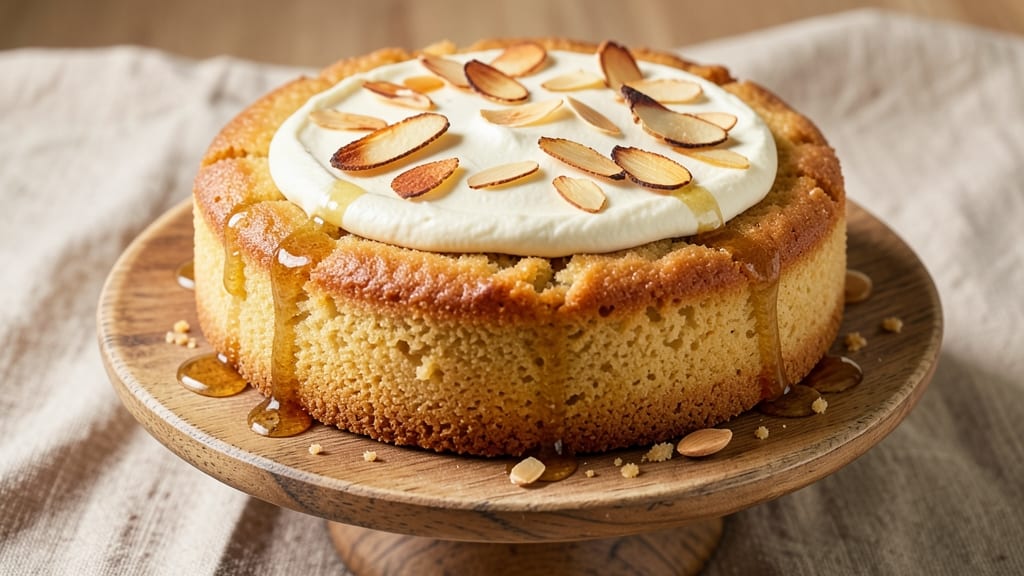
This tastefully simple almond pound cake copycat recipe lets you recreate that same luxurious, moist, vanilla-kissed bakery cake at home—easily and effortlessly. The secret lies in precise ingredient ratios and a gentle baking technique that ensures tender crumb and rich almond flavor in every slice.
After years of perfecting my copycat version, I've simplified the process while maintaining that signature texture and depth.
The recipe relies on five key elements that make all the difference: finely ground almond flour for authentic flavor, buttermilk for moisture, and a touch of vanilla bean paste for that professional-level infusion.
Unlike many copycat recipes, this version skips unnecessary steps, making it accessible for home bakers while still delivering restaurant-quality results.
What you'll end up with is a three-layer cake with tender, moist crumb and delicate almond flavor in every bite. The layers separate cleanly, making it perfect for stacking with whipped cream or fresh berries. The vanilla infusion adds a subtle complexity that elevates this beyond basic pound cake.
This recipe works equally well for special occasions or everyday treats—just adjust the size of your pan. The instructions are straightforward, with clear timing and temperature guidance to ensure success every time. Let's get baking!
Ingredients for tastefully simple almond pound cake copycat
Twelve essential ingredients transform into bakery-quality almond pound cake layers.
| Ingredient | Amount | Notes |
|---|---|---|
| Almond Flour 🥜 | 3 cups | Finely ground, unsifted for texture |
| All-Purpose Flour 🌾 | 1 cup | Sifted for even distribution |
| Granulated Sugar 🍚 | 2 cups | Superfine preferred for smoothness |
| Unsalted Butter 🧈 | 1 ½ cups | Cold, cubed for creaming |
| Large Eggs 🥚 | 4 whole | Room temperature for blending |
| Buttermilk 🥛 | 1 cup | Full-fat for moisture retention |
| Vanilla Bean Paste 🌿 | 2 tsp | High-quality for authentic infusion |
| Baking Powder 🍞 | 1 ½ tsp | Aluminum-free for tender crumb |
| Salt 🧂 | ½ tsp | Fine sea salt preferred |
| Almond Extract 🌸 | 1 tsp | Pure almond flavor concentrate |
| Rum Extract 🍹 | ½ tsp | Optional for depth of flavor |
| Almond Slices 🥜 | ½ cup | Toasted for garnish and crunch |
| Powdered Sugar 🍚 | ½ cup | For dusting layers |
The almond flour is non-negotiable—Bob's Red Mill or King Arthur brands yield the finest texture. For the butter, Plugrá or Land O'Lakes unsalted sticks work best when cold, but never use salted. The vanilla bean paste should contain actual vanilla beans—Madagascar Bourbon paste delivers the richest infusion. Superfine sugar dissolves more smoothly, but if you lack it, pulse regular granulated sugar in a food processor for 30 seconds. Eggs must be room temperature for proper emulsification; let them sit in warm water for 10 minutes if rushed.
Substitutions require precision: almond milk can replace buttermilk at a 1:1 ratio, though texture may slightly suffer. For vanilla bean paste, high-quality pure vanilla extract works but lacks depth—reduce to 1 teaspoon. Rum extract can be omitted entirely, but the almond extract is essential for authentic flavor. If you can't find almond slices, toasted sliced almonds suffice, though texture differs. The baking powder must be fresh; test by mixing 1 teaspoon with 2 tablespoons hot water—it should foam immediately. Pre-sifted flour blends save time, but sifting at home ensures no lumps disrupt the delicate crumb.
Store baked layers airtight at room temperature for 3 days or freeze for 3 months. Wrap each layer individually in plastic wrap, then place between parchment paper to prevent sticking. For assembly, dust layers with powdered sugar between applications of whipped cream. The cake reheats beautifully—wrap a slice in foil and warm in a 300°F oven for 5 minutes. When serving, garnish with toasted almond slices to enhance both visual appeal and texture contrast.
Why You'll Love This Recipe
- No Mixer Needed: I swear by this recipe when my stand mixer’s on strike—just fold the almond flour and butter until it’s almost crumbly, then let the eggs pull it together like magic. The secret’s in the gentle hand-mixing; no one’s judging if your arms get tired first.
- Buttery Almond Magic: That butter-to-sugar ratio? It’s what makes this cake taste like a hug. The almond flour gives it a tender crumb, while the eggs keep it rich without being heavy—like a cross between a classic pound cake and a marzipan dream.
- Leftovers That Last: I’ve had this cake for breakfast (sliced with jam), dessert (dusted with powdered sugar), and even brunch (paired with fruit compote). It stays moist for days, so bake one batch and forget about it—until you remember how good it is.
- Budget-Friendly Luxury: Here’s what sold me—almond flour can be pricey, but this recipe uses just enough to make it special without breaking the bank. The rest is basic pantry stuff: sugar, butter, eggs. Fancy enough for company, simple enough for Tuesday.
Step-by-step instructions for almond pound cake
Here's the method for achieving that signature moist texture and delicate almond flavor layer by layer.
Cream Butter and Sugars to Lighten the Base
In a stand mixer fitted with the paddle attachment, beat the 1.5 cups unsalted butter and 2 cups granulated sugar on medium speed for 4-5 minutes until the mixture becomes pale and fluffy. This creaming process incorporates air, which creates the cake's signature tender crumb. I press down on the butter occasionally to ensure it's fully emulsified with the sugar.
Here's the thing—don't rush this step. You're looking for a texture that's nearly doubled in volume and leaves clean streaks on the bowl when you lift the paddle. The butter should be completely smooth with no visible graininess. This ensures your cake will rise properly and have that signature lightness throughout.
Incorporate Eggs and Flavor Extracts
Add the 4 whole large eggs, one at a time, mixing on low speed after each addition until fully incorporated. Then add the 1 tsp almond extract, 0.5 tsp rum extract, and 2 tsp vanilla bean paste, mixing just until combined. The extracts infuse immediately, so don't overmix—just enough to distribute evenly.
I always use room temperature eggs for this recipe. Cold eggs can create pockets of water in the batter that lead to dense cake. The vanilla bean paste provides that authentic depth of flavor that separates this from basic vanilla cakes. Here's where the almond character really starts developing—don't skip this infusion step.
Combine Dry Ingredients and Almond Flour
In a separate bowl, whisk together the 1 cup all-purpose flour, 1.5 tsp baking powder, and 0.5 tsp salt. Sift this mixture directly into the wet ingredients while mixing on low speed. Add the 3 cups almond flour and mix just until combined—you should still see some flour streaks. Overmixing develops gluten and makes the cake tough.
The almond flour is the star here, but it's also the trickiest ingredient. I've found that using unsifted almond flour gives the best texture—it creates those beautiful marbled layers while maintaining moisture. Add the 1 cup buttermilk and mix until just incorporated. The batter should be thick but pourable, similar to a well-made pound cake batter.
Layer and Bake for Even Rising
Preheat your oven to 350°F. Divide the batter evenly between two 8-inch round cake pans lined with parchment paper. I use a kitchen scale for precision here—each pan should receive exactly half of the batter. Dust the tops generously with 0.5 cup powdered sugar for that signature dusting.
Bake for 25-30 minutes until a toothpick inserted in the center comes out clean. The cake should be golden brown on top with slightly domed sides. Here's the critical part: rotate the pans halfway through baking (after 15 minutes) for even rising. The almond flour can make cakes rise unevenly, so this rotation ensures both layers develop properly.
Cool and Assemble with Almond Slices
Remove the cakes from the oven and let them cool in the pans for 10 minutes, then transfer to a wire rack to cool completely. While they cool, toast the 0.5 cup almond slices in a dry skillet over medium heat for 2-3 minutes until golden brown. Watch them closely—they burn quickly.
Once completely cool, place one layer on a serving plate and spread with a thin layer of vanilla glaze if desired (using any reserved batter mixed with powdered sugar). Top with the second layer and decorate with the toasted almond slices. The slices should be arranged in a decorative pattern around the edges for that professional touch. Serve at room temperature for the best texture.
Pro Tips For Making Tastefully Simple Almond Pound Cake Copycat
- Whisk Eggs Until Ribbon Stage: Stop cracking them into the bowl—whisk the eggs first until they form a thick ribbon when you lift the whisk. This ensures even air incorporation, which prevents a dense crumb. I learned this the hard way after a batch turned out like a brick.
- Toast Almond Flour First: Spread the almond flour on a baking sheet and toast it for 5–7 minutes at 350°F before mixing. This deepens the nutty flavor and removes any raw taste—something I skipped for years until I tasted the difference.
- Don’t Overmix the Dough: Mix just until the dry ingredients disappear—overworking the batter introduces too much air, which can cause the cake to sink. Fold gently with a spatula, like tucking in a blanket, not stirring like soup.
- Use Room-Temp Butter: Let the butter sit out for 30–45 minutes before creaming—cold butter traps air poorly, leading to a cake that collapses. I used to melt it (bad idea) or use it straight from the fridge (also bad). Room temp is the goldilocks zone.
Essential equipment for tastefully simple almond pound cake copycat
Stand Mixer Essentials
The heart of this recipe is your stand mixer—I recommend a KitchenAid Artisan Series with a paddle attachment for the creaming step. The paddle's flat design ensures proper aeration of the butter and sugar mixture, creating that signature light texture.
Avoid hand mixers here; they can't incorporate enough air for the tender crumb we're aiming for. 💛
Precision Measuring Tools
For accurate results, invest in a digital kitchen scale (like the OXO Good Grips) and quart-sized measuring cups. The almond flour's density varies significantly between brands, so weighing it ensures consistent texture.
I also use a microplane to grate my own vanilla bean for the paste—it makes a noticeable difference in flavor depth compared to store-bought extracts.
Quality Cake Pans
Use 8-inch round cake pans with 2-inch high sides—I prefer Wilton Perfect Results pans with nonstick coating. These pans distribute heat evenly, preventing uneven rising that can occur with almond flour.
Line the bottoms with parchment paper to ensure clean release and prevent sticking. The pans should be at room temperature before baking for consistent results.
Temperature Control Tools
A thermometer (like the Thermoworks Thermapen) is essential for monitoring both your oven temperature and the internal temperature of your cake. The almond flour can cause uneven baking, so I check the center temperature—it should reach 205-210°F before removing from the oven.
An oven thermometer ensures your oven isn't running hot or cold, which can drastically affect bake times.
Almond Flour Processing
For the best texture, I process my own almond flour using a high-powered blender (like the NutriBullet) or food processor (like the Cuisinart DFP-14BCNY). Store-bought almond flour often contains too much moisture or uneven particle size.
Process 2 cups whole almonds for 3-4 minutes until completely fine—this creates that signature marbled texture in the cake layers.
Baking Accessories
Don't overlook these smaller tools: a kitchen torch for browning almond slices, a wire cooling rack (like OXO Good Grips), and parchment paper for easy release. I also keep powdered sugar sifters on hand to create that professional dusting between layers.
A spatula with a flexible edge (like OXO Good Grips) helps transfer delicate cake layers without crumbling.
Nutrition facts
Frequently asked questions
Can I make this almond pound cake in a different pan size?
For an 8-inch round pan, this recipe makes two perfect layers. For a 9-inch pan, reduce baking time by 2-3 minutes (check at 23-25 minutes). For a 6-inch pan, increase baking time by 3-5 minutes and use 1/2 the batter per pan. Always adjust oven temperature by 25°F lower if using dark metal pans.
Why does my almond pound cake taste bland?
Bland flavor usually means under-infused extracts or old ingredients. Always use fresh vanilla bean paste (not imitation) and pure almond extract. Toast your almond slices until golden brown—they add critical depth when garnished. For extra richness, fold in 1 tablespoon almond butter with the wet ingredients.
How do I store baked layers for later assembly?
Wrap each layer tightly in plastic wrap, then place between parchment paper in an airtight container. Store at room temperature for 3 days or freeze for 3 months. Thaw overnight in the fridge before assembling. Never refrigerate unwrapped layers—they'll dry out. The powdered sugar dusting helps preserve moisture between layers.
Can I substitute almond flour with regular flour?
Not recommended for authentic texture, but you can try a 1:1 substitution with these adjustments: reduce buttermilk by 2 tablespoons and add 1 extra egg yolk for moisture. The cake will lose its signature marbled look and nutty depth. For best results, use almond flour—it's what gives this cake its professional quality.
What's the secret to perfectly even layers?
Precision is key! Use a kitchen scale for exact measurements and divide batter evenly between pans. Rotate pans halfway through baking (after 15 minutes) for even rising. Let cakes cool completely before assembling—this prevents crumbling. The powdered sugar dusting also helps stabilize layers during stacking.