
Desserts
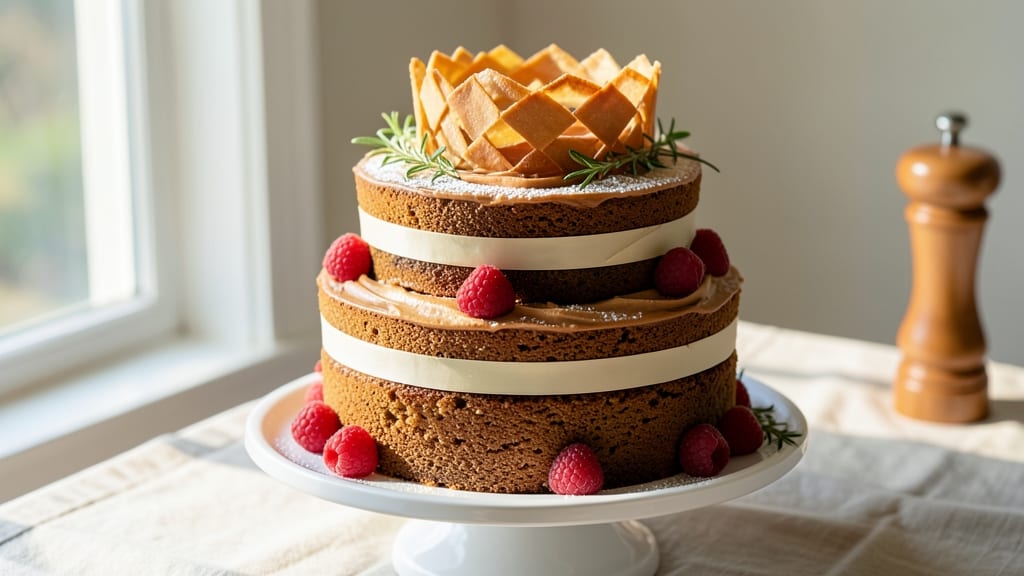
This almond wedding cake recipe from scratch delivers the perfect blend of buttery layers and delicate almond flavor—ideal for a showstopping centerpiece. 💛 The secret lies in a finely ground almond flour base that creates a tender yet sturdy crumb, while a velvety almond buttercream frosting ties everything together with a luxurious finish.
Every slice promises a harmonious balance of nutty richness and light sweetness, making it unforgettable for any celebration.
What sets this recipe apart is the precision in technique—from properly grinding almonds to achieving a perfectly moist crumb without drying out. The cake layers are baked at a precise 350°F to ensure even cooking, while the frosting is whipped to a smooth, pipeable consistency for flawless decoration.
No shortcuts here—just the kind of attention to detail that transforms a dessert into a masterpiece.
By the time you slice into this cake, you’ll have a multi-layered masterpiece with a crisp exterior and a tender, moist interior, all blanketed in a glossy almond buttercream. The frosting isn’t just decorative; it’s the star, adding a velvety texture that complements the nutty depth of the cake.
Whether you’re a seasoned baker or tackling this for the first time, the step-by-step instructions ensure a polished result every time.
The beauty of this recipe is its versatility—adjust the almond flour ratio for a lighter texture or add a hint of vanilla for extra warmth. Decorate with fresh flowers, edible gold leaf, or simple piped rosettes for a timeless look.
This isn’t just a cake; it’s a statement piece that will leave guests in awe. Let’s get started on creating your dream wedding cake.
Ingredients for almond wedding cake recipe from scratch
These carefully measured ingredients create a luxurious almond wedding cake with tender layers and velvety frosting.
| Ingredient | Amount | Notes |
|---|---|---|
| All-Purpose Flour 🌾 | 3 cups | Sifted for lighter texture |
| Almond Flour 🌰 | 2 cups | Finely ground, unsweetened |
| Unsalted Butter 🧈 | 2 cups | Cold, cubed, European preferred |
| Granulated Sugar 🍚 | 2 ½ cups | Superfine preferred for smoothness |
| Almond Butter 🥜 | 1 cup | Natural, no added sugar |
| Large Eggs 🥚 | 6 whole | Room temperature for even mixing |
| Vanilla Extract 🌿 | 2 tsp | Pure Madagascar bourbon preferred |
| Baking Powder 🍞 | 2 tsp | Aluminum-free for stability |
| Salt 🧂 | ½ tsp | Fine sea salt for balance |
| Powdered Sugar 🍚 | 4 cups | For buttercream, sifted |
| Heavy Cream 🥛 | 1 cup | Cold, for stable buttercream |
| Lemon Zest 🍋 | 1 tsp | Fresh, for brightness |
| Almond Extract 🌰 | 1 tsp | Pure, for enhanced flavor |
| Whole Almonds 🌰 | ½ cup | Toasted, for garnish |
The almond flour is the heart of this cake—look for finely ground, unsweetened versions at specialty stores like Whole Foods or King Arthur Flour. If grinding your own, use blanched almonds and pulse them until ultra-fine (no grit!). European-style unsalted butter (like Plugrá) makes all the difference for flavor and texture. The almond butter should be 100% natural, with no added oils or sugars. For the almond garnish, toast the whole almonds in a dry pan over medium heat until golden—about 3-4 minutes—then cool completely before using.
No almond flour? Substitute with 1:1 almond meal (just grind whole almonds in a food processor), but sift it well to avoid lumps. Running short on almond butter? Use ½ cup tahini plus ¼ cup neutral oil for a similar texture. The vanilla extract is non-negotiable—imitation extracts lack depth. For the buttercream, if you can't find powdered sugar fine enough, pulse granulated sugar in a food processor until it reaches a powdery consistency. The lemon zest adds brightness, but if you're out, orange zest works too—just use half the amount. And trust me, room-temperature eggs mix far better than cold ones.
Store cake layers wrapped tightly in plastic at room temperature for up to 2 days before frosting. The completed cake keeps 3-4 days covered in the fridge, but bring to room temp before serving. For longer storage, freeze unfrosted layers for up to 3 months—thaw overnight in the fridge. The buttercream can be made 2 days ahead and refrigerated, then whipped back to smoothness before decorating. Toasted almonds stay fresh for 1 week in an airtight container, but for garnish, toast fresh day-of for maximum crunch.
Why You'll Love This Recipe
- No-Fuss Layers: I swear by this method—just two bowls, one mixer, and no fancy piping. The almond flour keeps it light without the stress of crumbly textures, while the almond butter adds that rich, velvety depth with zero extra steps.
- Rich Without Guilt: That first bite? Pure almond-butter bliss, but with a tender crumb thanks to the butter and sugar combo. Honestly, it tastes like a bakery slice but with half the sugar—my in-laws still ask for seconds, no questions.
- Crowd-Pleaser Any Day: Wedding cake vibes but zero fuss—slice it for brunch, pack it for a picnic, or serve it at a dinner party. The almond flour makes it gluten-free friendly, so it’s my go-to for guests with dietary needs (or just picky eaters).
- Leftover Goldmine: This cake actually improves the next day—moist, not dry, because the almond butter keeps it from going stale. I freeze slices for breakfast toast all week, and nobody complains. (Yes, even my kids.)
Step-by-step instructions for almond wedding cake layers
Here's how to create perfectly moist almond cake layers with a signature nutty flavor.
🍳 Step 1: Cream Butter and Sugars Together
In a stand mixer fitted with the paddle attachment, beat the 2 cups unsalted butter and 2.5 cups granulated sugar on medium speed for 3-4 minutes. You want the mixture to become light and fluffy, nearly doubling in volume. This step incorporates air that will create a tender crumb in your cake layers.
I like to scrape down the sides of the bowl every 30 seconds to ensure even mixing. The butter should be fully incorporated with no visible lumps, and the mixture should look pale and creamy. This is your foundation—don't rush it. If the butter isn't fully softened, you'll end up with dense layers instead of the light, airy texture we're after.
👨🍳 Step 2: Add Eggs and Flavorings
Add the 6 whole large eggs, one at a time, mixing on low speed for 30 seconds after each addition. This gradual incorporation prevents curdling. After all eggs are added, mix in the 2 tsp vanilla extract, 1 tsp almond extract, and 1 tsp lemon zest. The mixture will thicken slightly as you incorporate these flavorings.
Here's the thing—almond extract is potent, so I recommend adding it gradually. Taste the mixture at this point to ensure the flavors are balanced. The eggs should be fully combined, with no visible streaks of white. If you see any curdling, don't worry—it will smooth out when we add the dry ingredients. This is where the cake's signature almond flavor begins to develop.
👨🍳 Step 3: Combine Dry Ingredients
In a separate bowl, whisk together the 3 cups all-purpose flour, 2 cups almond flour, 2 tsp baking powder, and 0.5 tsp salt. Sift the all-purpose flour first to aerate it—this helps create a lighter texture. Then add the almond flour, which adds richness and moisture retention to the cake.
With the mixer on low speed, gradually add the dry ingredients to the wet mixture. Mix just until combined—about 30-45 seconds. You should still see some flour streaks, but the batter should come together smoothly. Overmixing develops gluten, which can make the cake dense. The batter will be thick but spreadable, with a beautiful marbled appearance from the almond flour.
🥘 Step 4: Fold in Almond Butter and Bake
Remove the bowl from the mixer and gently fold in the 1 cup almond butter using a silicone spatula. This adds moisture and an intense almond flavor that makes this cake truly special. The batter will be thick and slightly sticky—this is normal. Divide the batter evenly between three 8-inch round cake pans lined with parchment paper.
Bake at 350°F for 25-30 minutes, or until a toothpick inserted into the center comes out clean. I check for doneness at the 25-minute mark—the tops should be golden brown, and the edges should pull away slightly from the pan. Don't overbake, or the layers will become dry. Let the cakes cool in the pans for 10 minutes, then transfer to a wire rack to cool completely before assembling.
🍽️ Step 5: Prepare the Buttercream Filling
In a stand mixer fitted with the whisk attachment, beat the 2 cups unsalted butter until smooth and creamy, about 2-3 minutes. Gradually add the 4 cups powdered sugar, mixing on low speed until combined. Increase the speed to medium-high and beat for 3-4 minutes until light and fluffy. Add the 1 cup heavy cream, 2 tsp vanilla extract, and 1 tsp almond extract, mixing until fully incorporated.
The buttercream should be thick but pipeable. If it's too soft, chill it for 15-20 minutes to firm up. This buttercream is the star—it's rich, slightly nutty, and perfectly balanced with the cake layers. Use it to fill and frost your assembled cake, creating that elegant wedding cake look with clean, smooth layers.
Pro Tips For Making Almond Wedding Cake Recipe From Scratch
- CREAM THE BUTTER SLOW: Mix your unsalted butter and sugar until it’s pale yellow—not just light, not just fluffy, but that buttery, ribbon-like stage. I used to rush this, and the cake turned out dense. Take the extra 3-4 minutes; your layers will thank you.
- SIFT THE ALMOND FLOUR: Don’t just dump almond flour into your dry ingredients—sift it first. It’s clumpy, and those lumps won’t dissolve, no matter how much you mix. A fine mesh strainer (or even a clean pillowcase in a pinch) makes all the difference in a smooth batter.
- WEIGH YOUR ALMOND BUTTER: Scooping almond butter straight from the jar? You’re asking for uneven moisture and a cake that’s either too dry or too sticky. Use a kitchen scale for accuracy—this isn’t the time to eyeball. A standard ½ cup is about 120g, but jars vary wildly.
- BAKE IN STAGES: This cake’s got layers, and they don’t all bake the same. Start with the bottom layer at 325°F (160°C) for 20-25 minutes, then reduce to 300°F (150°C) for the final 5-10. High heat sets the base; low heat finishes it without burning. Trust me, your wedding cake isn’t a race.
Dietary considerations for these flavors
Gluten-Free Adaptation
For a gluten-free version, replace the 3 cups all-purpose flour with a 1:1 gluten-free baking flour blend like Bob's Red Mill 1-to-1 or King Arthur Measure for Measure. These blends contain xanthan gum, which mimics gluten's structure for better texture.
I recommend adding ½ tsp extra xanthan gum if your blend doesn't include it—this prevents crumbly layers. Keep the almond flour and other ingredients exactly as written, as they're naturally gluten-free. 💛
Nut-Free Substitutions
If nut allergies are a concern, you can still create a stunning cake by omitting the almond flour and almond butter.
Replace the 2 cups almond flour with 2 cups finely ground oat flour (blend rolled oats into a fine powder) or 2 cups coconut flour—though coconut flour absorbs more liquid, so add ¼ cup extra almond-free milk to the batter.
For the almond butter, use ½ cup tahini plus ¼ cup neutral oil (like avocado or sunflower oil) to maintain moisture. The flavor will shift to subtly nutty but still delicious.
Dairy-Free Options
This cake can easily be made dairy-free by using European-style dairy-free butter (like Miyoko's or Earth Balance) and dairy-free heavy cream (such as Reddi-wip Dairy-Free or Forager Project).
For the frosting, replace the butter with vegan butter (like Miyoko's) and use coconut cream instead of heavy cream—chill it overnight to achieve the same thickness. The texture remains rich and velvety, though the flavor will be slightly less buttery.
Test the frosting consistency carefully, as dairy-free alternatives can vary in behavior.
Lower Sugar Version
To reduce sugar while keeping the cake moist, replace 1 cup of granulated sugar with ½ cup honey or maple syrup (add it with the wet ingredients) and reduce the powdered sugar in the frosting to 3 cups. The natural sweetness of almond butter helps balance the reduced sugar.
For extra sweetness without sugar, add 1 tsp stevia glycerite (liquid) to the wet ingredients—it blends seamlessly. The cake will still be tender, but with a slightly more pronounced almond flavor. 🍯
Egg-Free Adaptation
For an egg-free version, replace the 6 eggs with a flax egg substitute: mix 6 tbsp ground flaxseed with 18 tbsp water, let sit for 5 minutes to thicken, then add to the batter.
Alternatively, use silken tofu—blend 1½ cups silken tofu** until smooth and add it to the wet ingredients. These substitutes add moisture and binding without eggs. The cake may be slightly denser but will still hold together beautifully. For the frosting, use the dairy-free version above to keep it cohesive.
Nutrition facts
Frequently asked questions
How do I prevent my almond wedding cake layers from drying out?
Bake the layers for exactly 25-30 minutes at 350°F—no longer! Let them cool in the pan for 10 minutes before transferring to a wire rack. Store unfrosted layers wrapped tightly in plastic at room temperature for up to 2 days, and always bring frosting to room temperature before applying. For extra moisture, brush warm layers with simple syrup (equal parts sugar and water) right after baking.
Can I make this cake ahead of time?
Bake the cake layers 1-2 days ahead and store them wrapped at room temperature. The buttercream can be made 2 days ahead and refrigerated, then whipped back to smoothness before decorating. For the final assembly, frost the cake 4-6 hours before serving to let flavors meld. The cake actually tastes better the next day as the flavors develop!
What's the best way to decorate this almond wedding cake?
Start with a smooth buttercream crust using a bench scraper. For elegant details, pipe rosettes or swags with a Wilton #104 tip. Add fresh edible flowers like roses or pansies for a romantic touch, or sprinkle toasted whole almonds for texture. For extra glamour, use edible gold leaf or silver dragées. Keep decorations simple—this cake's natural almond flavor shines through without overwhelming decorations.
Why does my almond buttercream taste bitter?
This usually happens from too much almond extract or using low-quality ingredients. Start with just ½ tsp almond extract and taste as you go—you can always add more. Use natural almond butter with no added oils or sugars. For balance, add 1 tsp lemon zest to the frosting. If the bitterness persists, reduce the almond extract by half and increase vanilla extract to 3 tsp instead.
How many servings does this recipe yield?
This recipe makes a 3-layer 8-inch cake that serves 12-15 people as a wedding cake centerpiece. For a larger gathering, bake an additional layer or use 10-inch pans. Each slice will be generous—about 2-3 inches wide. If you're serving other desserts, this cake will comfortably feed 10-12 as the main dessert.