
Desserts
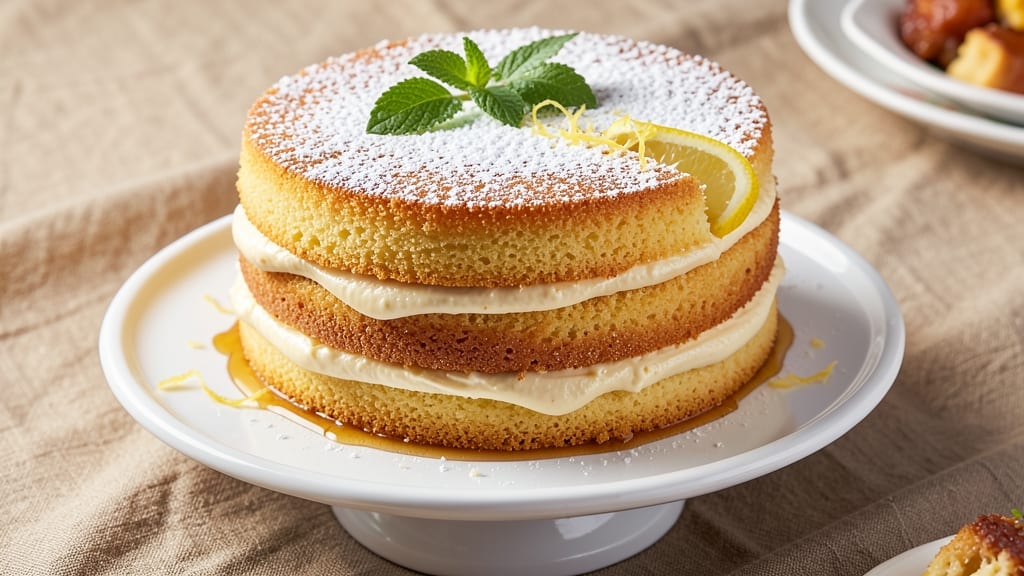
This American sponge cake recipe delivers the signature light-as-air texture that makes it a baking classic. 💛 The secret lies in proper folding technique and precise ingredient ratios that create a tender crumb without heaviness. I've perfected this version to achieve that signature vanilla infusion that makes every slice irresistible.
What sets this recipe apart is its foolproof method that yields consistently tender layers with just the right amount of structure. The cake bakes up with a delicate golden crust and a moist interior that stays fresh for days.
Unlike dense cakes, this sponge cake is designed to be light enough for multiple layers while still holding its shape.
Perfect for celebration cakes or simple afternoon treats, this recipe produces a cake that's versatile enough for frosting or serving plain with fresh berries. The vanilla infusion creates subtle aromatic notes that elevate every bite without overpowering the delicate cake base.
With just a few simple ingredients and basic baking techniques, you'll achieve restaurant-quality results that look impressive yet are easy to master. Let's get started on creating this timeless dessert that's perfect for any occasion.
Ingredients for american sponge cake
Nine simple ingredients transform into a cloud-light cake with signature vanilla aroma and tender crumb.
| Ingredient | Amount | Notes |
|---|---|---|
| All-Purpose Flour 🌾 | 2 ¼ cups | Sifted for light texture |
| Granulated Sugar 🍚 | 1 ½ cups | Superfine preferred for smoothness |
| Unsalted Butter 🧈 | 1 cup | Room temperature, full-fat |
| Large Eggs 🥚 | 6 whole | Room temperature, separated |
| Pure Vanilla Extract 🌿 | 1 tbsp | Bourbon-infused for depth |
| Baking Powder 🧂 | 1 tsp | Aluminum-free preferred |
| Salt 🧂 | ¼ tsp | Fine sea salt |
| Whole Milk 🥛 | ½ cup | Room temperature |
| Lemon Zest 🍋 | 1 tsp | Freshly grated |
| Lemon Juice 🍋 | 1 tbsp | Freshly squeezed |
The flour and sugar are your foundation here. King Arthur or Gold Medal flours work best for their protein balance—avoid self-rising unless you omit the baking powder. For sugar, superfine dissolves faster, but regular granulated works if pulsed in a food processor. The butter needs to be room temperature but not melted—press a finger into it; it should leave a slight indent. I always use Plugrá butter for its high fat content, but any good European-style butter works. Eggs should be separated for maximum volume—use room temperature eggs to prevent curdling when folding.
No vanilla extract? Vanilla bean paste or scraped seeds work beautifully—just reduce the amount by half. The lemon zest and juice brighten the cake without overpowering; if you're sensitive to citrus, reduce to half a teaspoon zest and 1 teaspoon juice. For a dairy-free version, substitute the milk with unsweetened almond milk, though the texture will be slightly denser. The baking powder is crucial—don't substitute baking soda unless you add acid (like cream of tartar). For extra insurance, I sift all dry ingredients together before mixing, ensuring no lumps in the batter.
Store the cake in an airtight container with a slice of bread to maintain moisture—it keeps beautifully for 3-4 days at room temperature. For longer storage, wrap tightly in plastic and refrigerate for up to 1 week. Freeze layers individually for 3 months—thaw overnight in the fridge before assembling. The vanilla infusion deepens over time, so the cake often tastes better the next day. Always bring the cake to room temperature before serving for the best texture.
Why You'll Love This Recipe
- No Mixer Needed: I swear by this—just a bowl, a whisk, and 10 minutes of elbow grease. That creamy butter-egg combo does all the heavy lifting while I’m still scraping the last of last night’s dinner off the plates.
- Vanilla Butter Bliss: The moment you taste that first forkful—warm, tender crumb with just a whisper of vanilla cutting through the sweetness—you’ll understand. It’s the kind of simple dessert that makes you pause mid-bite and think, "Wait, is this too good to be true?"
- Layering Champion: Breakfast? Check. Dessert? Done. Sandwich filling? Absolutely. I’ve used this cake for everything from French toast to trifle layers, and it never lets me down. The secret’s in the eggs—they keep it light enough to adapt.
- Budget Baking Win: Five ingredients, none of them fancy. That butter and sugar ratio stretches farther than store-bought, and leftovers? They last a week in the fridge (if they survive that long). Honestly, it’s the kind of recipe that makes me feel like a baking genius without breaking the bank.
Step-by-step instructions for American sponge cake
This method delivers a cloud-like texture with perfect vanilla infusion—every fold and whisk matters.
🍳 Step 1: Whisk Eggs and Sugar to Ribbon Stage
In a heatproof bowl over a double boiler (or microwave-safe bowl in 30-second bursts), whisk the 6 whole Large Eggs and 1.5 cups Granulated Sugar over medium-low heat until the mixture reaches 160°F on an instant-read thermometer. You'll see it thicken and pale significantly—this is critical for volume.
I like to use my hand to test the temperature before checking with a thermometer. When the mixture feels warm but not hot to the touch, it's ready. Whisk constantly to prevent curdling. The eggs should triple in volume and form soft peaks when the whisk is lifted—this is the "ribbon stage" that creates that signature lightness.
👨🍳 Step 2: Fold in Butter and Flavorings
Remove the egg mixture from heat and let it cool slightly for 2 minutes. Add the 1 cup Unsalted Butter (cut into small cubes) and gently fold it in using a rubber spatula. Work in 3 additions, mixing just until fully incorporated after each addition—overmixing deflates the eggs.
Next, stir in the 1 tbsp Pure Vanilla Extract, 1 tsp Lemon Zest, and 1 tbsp Lemon Juice. The lemon adds subtle brightness that balances the richness. I find that folding these in at this stage ensures even distribution without breaking down the egg structure we worked so hard to create.
👨🍳 Step 3: Sift and Fold Dry Ingredients
In a separate bowl, sift together the 2.25 cups All-Purpose Flour, 1 tsp Baking Powder, and 0.25 tsp Salt. This prevents lumps and ensures even leavening. With a rubber spatula, gently fold one-third of the dry mixture into the egg mixture, then fold in half of the remaining dry ingredients.
Finally, add the 0.5 cup Whole Milk and fold it in gently. The milk helps hydrate the flour without adding too much weight. After each fold, the batter should look slightly thicker but still light and airy. If it looks too dense, you've overmixed—this is your last chance to salvage the texture.
🔥 Step 4: Bake in Prepared Pans
Preheat your oven to 350°F. Grease two 9-inch round cake pans and line the bottoms with parchment paper. Divide the batter evenly between the pans and smooth the tops with a spatula. Bake for 25-30 minutes until a toothpick inserted in the center comes out clean and the edges are lightly golden.
I like to tap the pans gently on the counter after 20 minutes to check for doneness. The cake should spring back slightly when pressed. Overbaking dries out the sponge—this is a delicate balance. Remove from oven immediately when done and let cool in pans for 10 minutes before transferring to a wire rack.
Pro Tips For Making American Sponge Cake
- Weigh Your Butter: I learned this the hard way—measuring butter by volume (that "pack it down" cup method) gives wildly inconsistent results. For American sponge cake, use a kitchen scale: 227g (1 cup) of cold butter makes all the difference in texture. Warm butter? Skip it—this isn’t a quick bread.
- Separate Eggs at Room Temp: Cold eggs from the fridge will make your batter lumpy and dense. Crack them into a bowl 30 minutes before starting, let yolks and whites warm slightly. If you’re in a rush, run the eggs under warm water for 2 minutes—your cake’s rise depends on this.
- Don’t Overmix the Batter: I used to beat the flour mixture until it looked smooth, but that’s how you end up with a tough, chewy cake. Mix just until the flour disappears—about 15 strokes with a spatula. Overmixing develops gluten, and this recipe relies on delicate structure.
- Bake Until Center Springs Back: The cake’s done when a toothpick comes out clean and the center springs back when pressed gently. If you pull it too soon, the middle will stay gummy. I’ve ruined batches by eyeballing it—trust the spring test, not the timer.
Flavor customization for this recipe
Citrus Twist Variations
Swap the lemon for orange zest (use 1 tsp) and 1 tbsp orange juice for a bright, sweet-tart flavor profile. I find Navel or Valencia oranges work best—their natural sweetness complements the vanilla beautifully.
For an extra zesty kick, add ½ tsp grated lime zest along with the lemon. 🍊
Spiced Vanilla Infusions
Enhance the vanilla with warm spices like ½ tsp ground cinnamon or ¼ tsp cardamom folded into the dry ingredients. For a more exotic touch, add ¼ tsp freshly grated nutmeg to the egg mixture before folding. These spices deepen the vanilla aroma without overpowering the delicate cake texture.
Chocolate-Dipped Layers
For a decadent twist, reserve ¼ cup of the batter before folding in dry ingredients. Melt ½ cup dark chocolate (I use 70% Ghirardelli) with 2 tbsp butter and drizzle between cake layers. The contrast of light sponge with rich chocolate creates a luxurious texture. 🍫
Almond or Coconut Swaps
Replace ½ cup of the all-purpose flour with almond flour for a nutty depth or coconut flour for a tropical vibe. Both require adjusting the milk—use ¼ cup more almond milk for almond flour or ½ cup more coconut milk for coconut flour to maintain moisture.
These variations add unique textures while keeping the signature lightness.
Fruit-Infused Variations
Add ½ cup mashed raspberries or blueberries to the batter after folding in the dry ingredients. The fruit adds natural sweetness and vibrant color while maintaining the cake's tender crumb. For a more intense flavor, reduce the sugar to 1.25 cups—the fruit's acidity balances the sweetness perfectly. 🍓
Cream Cheese Swirl Option
Mix 4 oz softened cream cheese with 2 tbsp powdered sugar and 1 tbsp vanilla extract after baking. Spread between layers or pipe swirls on top before frosting. The tangy cream cheese cuts through the cake's sweetness, creating a sophisticated flavor combination that elevates any occasion. 🧀
Nutrition facts
Frequently asked questions
Why does American sponge cake need to be folded instead of mixed?
Folding preserves the air incorporated during the egg-sugar stage, which creates that signature light-as-air texture. Overmixing collapses the bubbles, resulting in a dense cake. The gentle folding technique maintains the delicate structure while evenly distributing the dry ingredients.
Can I make this cake without a double boiler?
Yes! Use a microwave-safe bowl with 30-second bursts on high power, whisking vigorously between each interval. The mixture should reach 160°F when it triples in volume and forms soft peaks. Just monitor closely to avoid overheating.
How do I test if my eggs are at ribbon stage?
When you lift the whisk, the egg mixture should form soft, ribbon-like trails that hold their shape for a few seconds. You can also test by running your finger through the mixture—if it leaves a clear path that holds for 2-3 seconds, it's ready.
What if my cake sinks in the middle?
This usually happens from overbaking or opening the oven too soon. Remove the cake immediately when a toothpick comes out clean (usually 25-30 minutes). For next time, tap the pan gently on the counter after 20 minutes—if it springs back, it's done!
Can I use this recipe for a sheet cake instead of round pans?
Spread the batter evenly in a 9x13-inch pan lined with parchment paper. Bake at 350°F for 20-25 minutes, checking for doneness with a toothpick. The texture will be slightly denser but still light and tender.