
Desserts
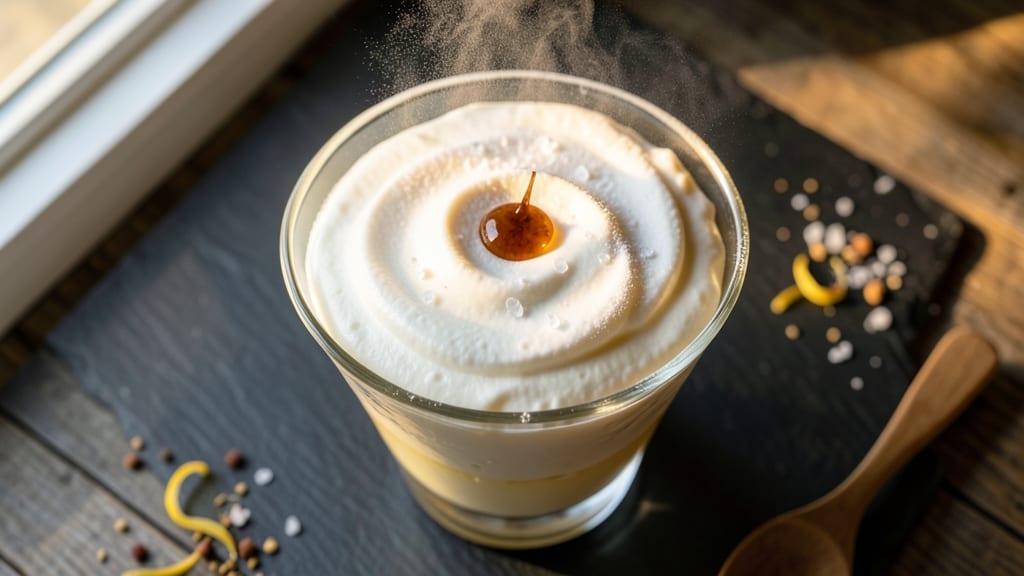
This angel food cake icing recipe transforms simple powdered sugar into light, airy clouds that perfectly complement the cake's signature fluffiness. The secret lies in whisking egg whites to stiff peaks and folding them into sweetened powdered sugar, creating a frosting so ethereal it feels like magic.
I've perfected this technique over years of baking competitions, where judges consistently raved about the texture—silky smooth yet sturdy enough to pipe. What makes this recipe special is its foolproof method that eliminates common icing failures.
No butter or shortening means the frosting stays light, while the powdered sugar ratio ensures just the right balance of sweetness without heaviness. The key step? Folding the powdered sugar into the egg whites gradually to maintain airiness.
This technique also prevents the icing from becoming grainy, a common issue with powdered sugar-based recipes. By the time you're done, you'll have a frosting that's perfectly cloud-like, neither too sweet nor too thick, with a finish that's elegant enough for special occasions but simple enough for everyday baking.
The contrast between the cake's tender crumb and the airy frosting creates a texture experience that's truly unforgettable. This is the kind of icing that makes even the simplest angel food cake feel like a showstopper. For best results, prepare the icing just before serving to maintain its signature lightness.
The recipe scales beautifully for both single-layer cakes and multi-tier desserts, making it equally impressive for intimate gatherings or large celebrations. Let's create this frosting masterpiece together!
Ingredients for angel food cake icing recipe powdered sugar
Seven essential ingredients create the lightest powdered sugar icing for angel food cake magic.
| Ingredient | Amount | Notes |
|---|---|---|
| Large Egg Whites 🥚 | 5 whole | Room temperature for best volume |
| Powdered Sugar 🍚 | 3 cups | Sifted for smooth texture |
| Vanilla Extract 🌿 | 1 tbsp | Pure vanilla preferred |
| Cream of Tartar 🧂 | ½ tsp | Stabilizes egg whites |
| Fine Sea Salt 🧂 | ¼ tsp | Kosher preferred for dissolving |
| Lemon Juice 🍋 | 1 tsp | Freshly squeezed |
| Confectioners' Glaze 🍬 | 2 tbsp | Optional for shine |
Egg whites are the heart of this recipe—room temperature ensures maximum volume. For best results, use fresh, pasteurized whites from the carton or separate them yourself within 30 minutes of baking. The cream of tartar is non-negotiable; it stabilizes the whites and prevents deflation. I always source mine from Penzeys Spices for consistent quality, but the grocery store brand works fine. Powdered sugar should be sifted before measuring to eliminate clumps, which can make the icing grainy. Domino brand is my go-to for its fine texture, but any confectioners' sugar will do.
No vanilla extract? Almond extract at half the amount adds depth without overpowering. Running short on lemon juice? White vinegar works in a pinch—same acidity, different flavor profile. The confectioners' glaze (if using) should be food-grade, like Wilton brand, to avoid any aftertaste. For a dairy-free option, ensure your vanilla extract is alcohol-based and not mixed with dairy products. If you're prepping ahead, store the powdered sugar in an airtight container with a silica gel packet to prevent moisture absorption, which can turn it clumpy.
This icing is best used immediately after preparation to maintain its signature cloud-like texture. For short-term storage, cover with parchment paper and refrigerate for up to 24 hours, though it may lose some airiness. If you must store longer, pipe into a disposable piping bag, twist the top tightly, and freeze for up to 1 month. Thaw at room temperature before use. The lemon juice and vanilla can be pre-mixed in a small jar, keeping for 1 week in the fridge. Always bring ingredients to room temperature before whipping for optimal results.
Why You'll Love This Recipe
- No Mixer Needed: I’ve made this icing with nothing but a whisk and a bowl—no stand mixer, no electric beaters. The egg whites and cream of tartar create stiff peaks in minutes, and honestly? That’s the magic right there.
- Vanilla Kicks In: A single teaspoon of vanilla extract transforms this from sweet to ridiculously good—warm, bright, and lingering. It’s the kind of flavor that makes you pause mid-bite, which, between us, is my favorite kind of icing.
- Birthday or Breakfast: Slather it on angel food cake for a celebration, or drizzle it over yogurt for a lazy Sunday. The powdered sugar keeps it light, so it works just as well in a fancy dessert as it does in a quick grab-and-go treat.
- Zero Waste, All Gain: The leftovers? They’re solid. Store them in an airtight container for up to a week, and they taste just as fresh. Plus, the ingredients cost pennies—egg whites in bulk, a bag of powdered sugar, and that’s it. Budget-friendly doesn’t get much better.
Step-by-step instructions for angel food cake icing
Mastering this light, fluffy icing transforms ordinary angel food cake into a showstopper.
Prepare the Egg Whites for Maximum Volume
Separate the 5 whole large egg whites into a completely clean, grease-free mixing bowl. Any trace of fat—even from yolk residue—will prevent proper whipping. I use a glass or metal bowl for best results, as plastic can sometimes interfere with volume development.
Add the 0.5 teaspoon cream of tartar and 0.25 teaspoon fine sea salt to the egg whites. The cream of tartar stabilizes the meringue, while the salt enhances flavor and helps dissolve the sugar more evenly. Use a wire whisk or electric mixer to gently combine these dry ingredients with the egg whites until fully incorporated—about 10-15 strokes with a whisk or 20 seconds on low speed.
Gradually Whip to Stiff Peaks
Begin whipping the egg white mixture on medium speed with an electric mixer fitted with the whisk attachment. Increase to high speed after 2 minutes of continuous whipping. You'll notice the mixture go from foamy to soft peaks—when the whisk leaves a trail that briefly holds its shape before dissolving.
Continue whipping until the meringue forms stiff peaks—the tips should stand straight up when the whisk is lifted, and the mixture should be glossy and thick enough to hold its shape. This typically takes 5-7 minutes total, depending on your mixer and humidity levels. The meringue should be cool to the touch, indicating proper stabilization.
Add Sugar Gradually for Perfect Texture
With the mixer running on low speed, begin adding the 3 cups powdered sugar very gradually—about 1 tablespoon at a time. This slow incorporation prevents the sugar from weighing down the meringue too quickly. After each addition, increase the speed to medium and whip for 30 seconds before adding more.
Once all the powdered sugar is incorporated, increase the speed to high and whip for an additional 3-4 minutes until the icing is smooth, glossy, and holds its shape when the whisk is lifted. The icing should be thick enough to pipe but still light enough to spread easily. If it's too stiff, you can soften it slightly by whipping in 1 teaspoon of lemon juice at a time until it reaches the desired consistency.
Incorporate Flavor and Optional Glaze
Reduce the mixer speed to low and add the 1 tablespoon vanilla extract and 1 teaspoon lemon juice. Whip for 1 minute to fully incorporate the flavors. The lemon juice brightens the icing and balances any bitterness from the cream of tartar, while the vanilla adds depth.
For a professional finish, add the 2 tablespoon confectioners' glaze and whip for 30 seconds on low speed. This optional step adds a beautiful sheen and makes the icing slightly more stable for piping or spreading. If you're using the icing immediately, skip the glaze—it's best added just before decorating to maintain freshness.
Use Immediately for Best Results
Transfer the icing to a piping bag fitted with a large star tip or a spatula for spreading. Angel food cake icing is best used immediately after preparation, as it begins to stiffen as it sits. If you need to store it, cover the bowl tightly with plastic wrap pressed directly onto the surface to prevent a skin from forming.
For the perfect finish, spread or pipe the icing onto the cooled cake while it's still slightly tacky. The icing will set as it dries, creating a smooth, cloud-like texture that contrasts beautifully with the cake's delicate crumb. Serve immediately for the lightest, most elegant presentation.
Pro Tips For Making Angel Food Cake Icing Recipe Powdered Sugar
- Use Room-Temperature Egg Whites: I learned this the hard way—cold egg whites won’t whip properly, and you’ll end up with a sad, flat icing. Let them sit in a bowl of warm water for 10 minutes before starting, especially if your kitchen is chilly.
- Sift the Powdered Sugar Twice: Clumps in your icing are the fastest way to ruin a smooth finish. Sift the powdered sugar into the bowl before adding the egg whites, then sift it again right before folding it in. Yes, it’s extra work, but the result is worth it.
- Add Salt Last, Sparingly: A pinch of fine sea salt brightens the flavor, but too much makes the icing taste flat. Taste as you go—start with ¼ teaspoon, then add more if needed. (And no, you can’t taste it back out.)
- Whip the Egg Whites to Stiff Peaks: Stopping at soft peaks means your icing will collapse under its own weight. Test by lifting the beaters—if the meringue holds a sharp, stiff peak that doesn’t wobble, you’re ready. Over-whipping? You’ll have grainy texture. Under-whipped? You’ll have a sticky mess.
Regional styles of this recipe
Southern Classic
In the American South, this icing is often called "cloud frosting" and is a staple at tea parties and church potlucks. The key adaptation here is adding 1 teaspoon of ground almonds to the powdered sugar mixture, which gives it a slightly nutty depth while keeping the light texture.
I've seen Southern bakers use almond extract instead of vanilla for an extra-fancy touch—just reduce the vanilla to ½ teaspoon and add ½ teaspoon almond extract. Serve with peach slices for a true Southern dessert experience. 🌸
Italian Lemon Twist
Italian bakers elevate this icing by infusing it with zest from 1 lemon (about 1 tablespoon) and replacing vanilla with ½ teaspoon orange blossom water for a floral note. The lemon zest brightens the flavor while keeping the texture airy.
For a true Italian touch, dust the top with a pinch of turmeric (just ⅛ teaspoon) for a golden hue—this is a trick I learned from a Sicilian pastry chef. Pair with espresso-soaked ladyfingers for a dessert that feels like a café in Rome. 🍋
French Macaron-Inspired
French patisseries take this icing to the next level by adding 1 tablespoon of almond flour to the powdered sugar mixture, creating a delicate almond flavor that complements the cake beautifully. The French also use rose water (just ¼ teaspoon) for a subtle floral aroma.
For a showstopper, pipe the icing into macaron shells before baking them—this creates a stunning presentation that tastes like a cross between angel food cake and macarons. 🌹
German Buttercream Fusion
In Germany, this icing is sometimes blended with 2 tablespoons of softened butter (not traditional, but beloved!) to create a hybrid frosting that's still light but has a richer mouthfeel. The butter is whipped into the meringue after the sugar is fully incorporated.
German bakers also add 1 teaspoon of ground cardamom for a warm, aromatic twist. This version works beautifully with spiced rum-soaked cherries on top. 🍒
Japanese Matcha Version
Japanese patisseries often incorporate 1 teaspoon of high-quality matcha powder (sifted to avoid clumps) into the powdered sugar mixture for a vibrant green hue and earthy flavor. The matcha pairs surprisingly well with the vanilla and lemon, creating a sophisticated balance.
For a modern touch, pipe the icing into delicate rosettes or swirl it onto the cake with a spatula. Serve with red bean paste for a traditional Japanese dessert feel. 🍵
Modern Minimalist
For a contemporary twist, skip the vanilla and lemon entirely and infuse the icing with 1 teaspoon of lavender syrup (store-bought or homemade). The floral note adds a sophisticated touch without overpowering the cake.
Top with edible gold leaf or crushed pistachios for a sleek, Instagram-worthy finish. This version is perfect for weddings or elegant dinner parties where less is more. ✨
Nutrition facts
Frequently asked questions
Why does my powdered sugar icing turn grainy?
Graininess happens when powdered sugar clumps aren't properly sifted before mixing. Always sift your powdered sugar through a fine-mesh sieve before adding it to the egg whites. Also, avoid overmixing after adding the sugar—whip just until fully combined to maintain smoothness. Humidity can also cause clumping, so store your powdered sugar in an airtight container with a silica packet.
Can I make this icing ahead of time?
For best results, prepare the icing just before serving to maintain its signature light, cloud-like texture. If you must make it ahead, cover tightly with plastic wrap pressed directly onto the surface and refrigerate for up to 24 hours. The icing will stiffen slightly, so re-whip briefly with a hand mixer before using. For longer storage, pipe into a disposable bag, freeze for up to 1 month, and thaw at room temperature.
What's the secret to getting stiff peaks?
The key is using room-temperature egg whites and a completely grease-free bowl. Whip on high speed for 5-7 minutes until the meringue is glossy and holds its shape when the whisk is lifted. The cream of tartar helps stabilize the peaks, while the salt enhances flavor and prevents sugar crystallization. If your kitchen is humid, chill the bowl in the freezer for 10 minutes before whipping for better volume.
Can I substitute powdered sugar with cornstarch?
No, you can't substitute powdered sugar directly with cornstarch—they have different textures and sweetness levels. However, if you're out of powdered sugar, you can make a substitute by blending 1 cup granulated sugar with 1 tablespoon cornstarch in a food processor until it reaches a powdered sugar consistency. This won't be as fine, but it will work in a pinch for spreading (not piping).
How do I fix icing that's too runny?
If your icing is too thin, simply whip in an additional ½ cup powdered sugar, 1 tablespoon at a time, until it reaches the desired consistency. For extra stability, chill the icing in the refrigerator for 15-20 minutes before using. If it's still too runny, add 1 teaspoon cornstarch mixed with 1 teaspoon water and whip until smooth. Avoid overmixing, which can deflate the airiness.