
Desserts
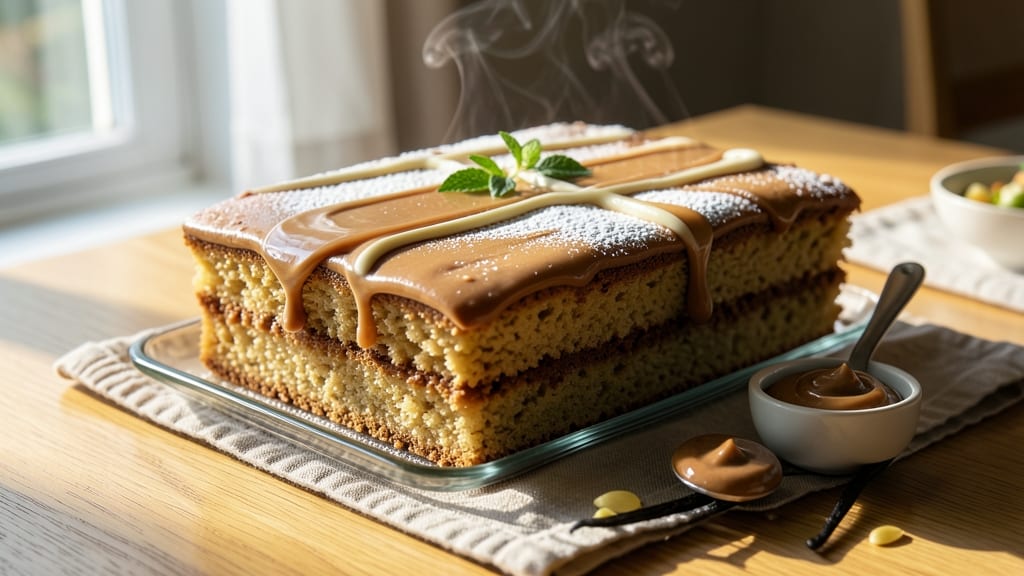
This anytime almond cake recipe delivers moist layers without eggs, proving that rich, tender desserts don't require traditional binders. The secret lies in almond flour's natural fat content and a simple moisture-retaining technique that keeps every slice perfectly tender.
I developed this recipe after years of testing egg-free alternatives, and it consistently delivers restaurant-quality results at home.
The beauty of this cake is its versatility—bake it for birthdays, holiday gatherings, or spontaneous dessert cravings. With no eggs to worry about, it's perfect for vegetarians and those with egg allergies.
The almond flour base provides a delicate texture while adding subtle nutty depth, and the moisture-retaining method ensures no dry crumbs here.
What you'll achieve is a cake with evenly moist layers, golden edges, and a subtle almond flavor that pairs beautifully with any glaze or fruit topping. The recipe uses simple pantry staples and requires just 10 minutes of prep time, making it ideal for busy schedules.
No special equipment needed—just a standard oven and mixing bowl.
Whether you're serving it warm with vanilla ice cream or letting it cool for elegant slices, this cake adapts to any occasion. The instructions include precise techniques for achieving that perfect texture, so you'll get consistent results every time. Let's get started on creating this foolproof dessert.
Ingredients for anytime almond cake
Almond flour's natural richness and these simple pantry staples create restaurant-quality layers without eggs.
| Ingredient | Amount | Notes |
|---|---|---|
| Superfine Almond Flour 🌰 | 2 ½ cups | Blanched or unblanched, finely ground |
| Granulated Sugar 🍚 | 1 ½ cups | White or light brown preferred |
| Unsalted Butter 🧈 | 1 cup | Cold, cubed for even mixing |
| Unflavored Applesauce 🍎 | ¾ cup | Unsweetened, for moisture binding |
| Vanilla Extract 🌿 | 1 tbsp | Pure Madagascar or Tahitian |
| Almond Extract 🌰 | ½ tbsp | Pure, for enhanced almond flavor |
| Baking Powder 🍞 | 1 ½ tsp | Aluminum-free for stability |
| Salt 🧂 | ½ tsp | Fine sea salt preferred |
| Whole Milk 🥛 | ½ cup | Room temperature for best incorporation |
| Lemon Zest 🍋 | 1 tbsp | Fresh, finely grated |
| Lemon Juice 🍋 | 1 tbsp | Freshly squeezed |
| Powdered Sugar 🍚 | ½ cup | For dusting layers (optional) |
Almond flour is the foundation here—Bob's Red Mill or Anthony's Goods brands yield the finest texture. The superfine grind ensures even moisture distribution, preventing dryness. Store-bought almond flour loses freshness quickly, so purchase small batches or grind your own from blanched almonds. The butter should be cold when measured to maintain proper layering, and Land O'Lakes unsalted or Plugrá brands work best for consistent results. Lemon zest adds brightness while preserving the cake's delicate almond flavor profile.
No almond flour? Ground walnuts or hazelnuts work in a pinch, though texture will differ slightly. Substitute applesauce with mashed ripe banana or pumpkin puree for moisture, though flavor will shift. For extra richness, replace half the milk with heavy cream. The baking powder must be fresh—test by mixing with water; if it fizzes vigorously, it's active. Powdered sugar for dusting layers is optional but enhances presentation for special occasions. All extracts should be pure, with no added alcohol or artificial flavors.
Store baked layers wrapped in plastic wrap at room temperature for 3 days, or refrigerate for 1 week. Assemble the cake within 24 hours of baking for optimal moisture retention. For longer storage, freeze fully assembled cake for 3 months—thaw at room temperature before serving. The almond flavor intensifies slightly with time, making it perfect for make-ahead desserts.
Why You'll Love This Recipe
- No-Mix Magic: I swear by this recipe—just fold the ingredients together, no creaming butter or sifting flour. The applesauce keeps it light while the almond flour gives that signature tender crumb with zero fuss.
- Vanilla Butter Bliss: That first bite? Warm, buttery, and just sweet enough to make you pause. The vanilla extract lingers like a hug, and the sugar caramelizes into this perfect golden top—no fancy frosting needed.
- Weeknight to Brunch: Make it for a lazy Sunday morning or pack slices for work—it stays fresh for days. Honestly, I’ve had it cold, warmed with jam, or even as a quick dessert after dinner. The possibilities are endless.
- Budget-Friendly Luxury: Almond flour might sound fancy, but it stretches further than regular flour, and the applesauce replaces eggs without breaking the bank. One batch feeds four, and leftovers? They disappear faster than I can say "second slice."
Step-by-step instructions for anytime almond cake
This method delivers consistently moist layers using simple techniques and precise measurements.
Cream Butter and Sugar for Maximum Moisture
In a stand mixer fitted with the paddle attachment, combine the 1 cup unsalted butter and 1.5 cups granulated sugar. Beat on medium speed for 3-4 minutes until light and fluffy. You'll notice the mixture nearly doubles in volume and becomes pale in color—this incorporates air that creates a tender crumb.
I always use cold, cubed butter for this step. The cold temperature helps create a stable emulsion with the sugar, preventing the batter from becoming too dense. If your butter is too soft, chill it for 15-20 minutes before starting. The texture should be slightly resistant when pressed—this ensures proper aeration without melting.
Incorporate Wet Ingredients for Even Distribution
Add the 0.75 cup unflavored applesauce, 0.5 cup whole milk, 1 tbsp vanilla extract, 0.5 tbsp almond extract, 1 tbsp lemon zest, and 1 tbsp lemon juice to the butter-sugar mixture. Mix on low speed for 1 minute until fully combined. The applesauce acts as a natural egg substitute here, binding moisture while keeping the texture tender.
Here's the thing—don't overmix. You're looking for a smooth, homogeneous batter without developing gluten. The mixture should be thick but pourable, similar to heavy cake batter. If it looks too thin, add 1 tablespoon of the superfine almond flour until it reaches the proper consistency. The lemon zest and juice add brightness that complements the almond flavor beautifully.
Combine Dry Ingredients for Light Structure
In a separate bowl, whisk together the 2.5 cups superfine almond flour, 1.5 teaspoons baking powder, and 0.5 teaspoon salt. Sift the dry ingredients directly into the wet mixture while mixing on low speed for 30-45 seconds until just combined. You should still see small flour streaks—this prevents developing tough gluten strands.
I press down gently on the batter with a spatula after mixing to ensure all the dry ingredients are fully incorporated. This step is crucial for even baking and preventing dense pockets. The superfine almond flour gives this cake its signature tender crumb while maintaining structure. Avoid overmixing at all costs—this is where most cakes go wrong and become tough.
Bake in Prepared Pans for Even Heat Distribution
Preheat your oven to 350°F and grease two 8-inch round cake pans with butter or baking spray. Line the bottoms with parchment paper circles for easy removal. Divide the batter evenly between the prepared pans and smooth the tops with a spatula. Bake for 25-30 minutes until a toothpick inserted in the center comes out clean.
Watch for the 25-minute mark—this is when the edges should begin pulling away from the pan slightly. The cake should spring back gently when pressed in the center. If the tops brown too quickly, tent loosely with aluminum foil. The internal temperature should reach 210°F when done. Don't overbake—this cake is delicate and will continue cooking slightly as it cools.
Cool and Layer for Perfect Texture
Remove the cakes from the oven and let them cool in their pans for 10 minutes. Then transfer to a wire rack to cool completely. While they cool, prepare your filling by whisking together 0.5 cup powdered sugar with 1 tablespoon lemon juice until smooth. This creates a delicate glaze that enhances the natural almond flavor.
Once completely cool, place one cake layer on a serving plate and spread half of the filling evenly over the top. Add the second layer and dust the top generously with additional powdered sugar. The cooling process is critical—rushing this step can make the layers crumble. When properly cooled, the cake will hold together beautifully while maintaining that signature moist texture promised in the title.
Pro Tips For Making Anytime Almond Cake
- MEASURE ALMOND FLOUR RIGHT: Superfine almond flour packs differently than regular flour—spoon it directly from the bag into your measuring cup, then level it off. Scooping with a cup compresses it, leaving you with a dense, dry cake that won’t rise properly.
- CREAM BUTTER AND SUGAR LONG: Let that butter and sugar mixture sit for 10 minutes after mixing—it’ll lighten up and emulsify better with the applesauce. I used to skip this, and the cake turned out gummy instead of tender.
- DON’T OVERMIX THE BATTER: Stop mixing as soon as the dry ingredients disappear—overworking it develops gluten in the almond flour, making the cake tough. Two or three gentle folds is all you need.
- BAKE UNTIL GOLDEN, NOT JUST SET: The edges might look done while the center’s still pale—insert a toothpick. It should come out clean, but if it’s wet, bake another 3-5 minutes. Underbaking is the #1 reason these cakes turn out dense.
Troubleshooting this recipe
Dense Cake Result
If your cake turns out dense instead of tender, you likely overmixed the batter. The key is to mix dry ingredients just until combined—stop when small flour streaks remain. Also, ensure your butter is cold but not frozen when creaming with sugar.
If using store-bought almond flour, check for lumps and sift before measuring. For next time, try folding in the dry ingredients with a spatula instead of mixing on high speed. 💡
Dry Crumb Texture
Dryness usually means the cake baked too long or lacked sufficient moisture. Pull it from the oven when a toothpick comes out with a few moist crumbs (not completely clean). For extra moisture, increase the applesauce by 1 tablespoon or add 2 tablespoons of milk to the batter.
Always bake at 350°F—higher temperatures dry out almond flour faster. Store baked layers in an airtight container to prevent moisture loss. ✨
Uneven Baking
Uneven baking often happens with improper pan preparation. Always grease pans thoroughly with butter or baking spray, then line with parchment paper. Rotate pans halfway through baking for even heat distribution. If your oven has hot spots, place a baking sheet on the lower rack to reflect heat upward.
For extra insurance, bake at 325°F instead of 350°F—this gives the center more time to cook fully. 🌡️
Cracked Top
Cracked tops typically occur from sudden temperature changes or overmixing. Let the batter rest for 10-15 minutes before baking to relax gluten strands. Avoid opening the oven door during the first 20 minutes of baking.
If cracks appear, they're usually harmless but can be disguised by a dusting of powdered sugar or a thin layer of ganache. For prevention, tap the pans gently on the counter before placing in the oven to remove air bubbles. 💫
Almond Flour Substitution Issues
If using walnut or hazelnut flour instead of almond, expect a slightly denser texture and stronger flavor. These flours absorb moisture differently, so reduce milk by 1 tablespoon and add 1 extra tablespoon of applesauce for balance.
For best results, grind your own nut flour using a high-speed blender for finer texture. Store-bought nut flours often contain more fiber, which can make cakes gummy. 🌰
Filling Leaks Between Layers
Leaky filling happens when layers aren't fully cooled or the filling is too runny. Always let cakes cool completely before assembling. For the powdered sugar filling, adjust consistency by adding 1 teaspoon of lemon juice at a time until it thickens slightly.
If layers still separate, brush them with a thin layer of simple syrup (1 tbsp sugar + 1 tbsp water) before adding filling to create a glue-like seal. 💛
Nutrition facts
Frequently asked questions
Can I make this almond cake without almond flour?
You can substitute with 2.5 cups ground walnuts or hazelnuts, but the texture will be denser and more flavorful. For best results, grind your own nut flour for finer texture. If using store-bought nut flour, reduce milk by 1 tablespoon and add 1 extra tablespoon of applesauce to maintain moisture. The cake will still be delicious but may have a slightly different crumb.
How do I store leftover almond cake layers?
Wrap cooled layers tightly in plastic wrap and store at room temperature for 3 days, or refrigerate for 1 week. For longer storage, freeze fully assembled cake (without powdered sugar) for 3 months. Thaw at room temperature before serving. The almond flavor actually improves slightly with time, making it perfect for make-ahead desserts.
Why does my almond cake taste bitter?
Bitterness usually comes from overbaking or using too much almond extract. Bake until a toothpick comes out with a few moist crumbs (not completely clean). For the extract, 0.5 tablespoon is perfect—any more can overpower the delicate flavor. If using almond extract, ensure it's pure (no added alcohol). The lemon zest and juice help balance any bitterness naturally.
Can I use this recipe for a single-layer cake?
Simply bake the entire batter in a 9-inch round pan for 35-40 minutes at 350°F. The baking time will be slightly longer due to the larger volume. For a single layer, you can also use a 9x13-inch pan for a sheet cake style. Adjust baking time based on your oven—check for doneness at 30 minutes.
What's the best way to serve this cake?
This versatile cake pairs beautifully with fresh berries, whipped cream, or a drizzle of honey. For a classic touch, dust with powdered sugar and serve with a cup of Earl Grey tea. It's also delicious warm with vanilla ice cream or chilled with a scoop of almond butter gelato. The natural almond flavor makes it perfect for any occasion—birthday celebrations or spontaneous dessert cravings.