
Desserts
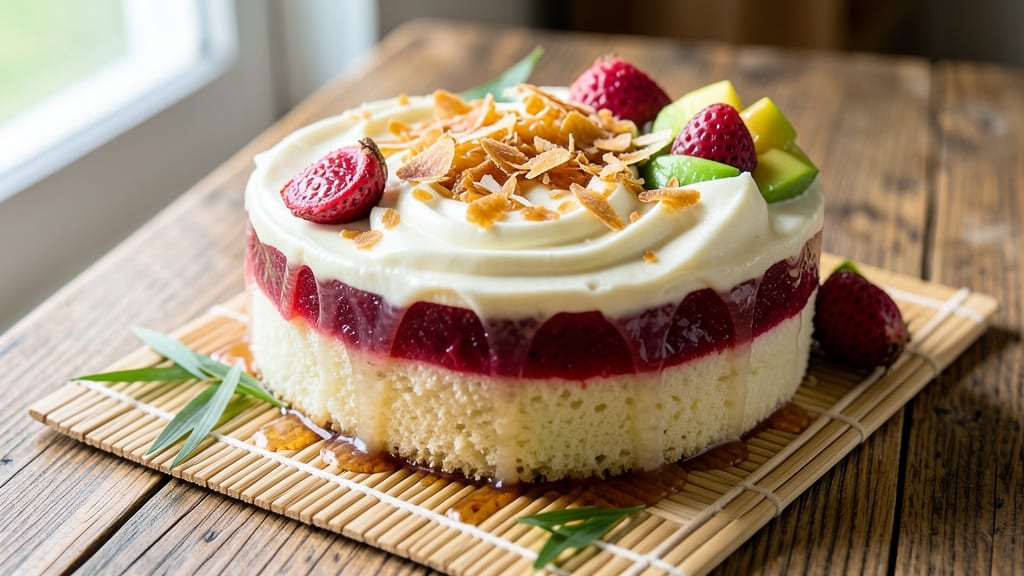
This Asian fresh fruit cake brings tropical flavors and aromatic spices to your dessert table, blending layers of juicy mango, pineapple, and coconut with a spiced rum soak for depth. 🌺 The secret lies in balancing tender crumb with vibrant fruit, creating a cake that's light yet rich—perfect for celebrations or a special treat.
Home bakers will appreciate the straightforward approach using standard tools, while the cultural twist makes it stand out from traditional fruitcakes.
The recipe starts with a simple yet flavorful batter, infused with pandan extract for that signature Asian aroma and a touch of coconut milk for moisture. Fresh fruit is layered between spiced rum-soaked batter sheets, ensuring each bite delivers bursts of tropical sweetness.
Baking at a steady 350°F guarantees an even rise, while the final glaze adds a glossy finish that makes it look as impressive as it tastes.
What sets this cake apart is the harmony of textures—soft, moist layers contrasted by the natural juiciness of the fruit and the subtle warmth of the rum. The pandan flavor adds an exotic touch without overpowering, making it approachable for all palates.
Whether served at a gathering or enjoyed solo, this cake delivers restaurant-quality results with minimal fuss.
Adapt it further by swapping fruits for lychee or dragon fruit, or adjusting the rum soak to suit dietary preferences. The recipe scales easily for larger crowds, and leftovers keep well for up to a week. Here’s how to bring this tropical masterpiece to life in your kitchen.
Ingredients for asian fresh fruit cake
Tropical fruit, aromatic pandan, and spiced rum create this vibrant cake's signature layers.
| Ingredient | Amount | Notes |
|---|---|---|
| All-Purpose Flour 🌾 | 3 cups | Sifted for light texture |
| Granulated Sugar 🍚 | 1 ½ cups | White or light brown |
| Unsalted Butter 🧈 | 1 cup | Room temperature, full-fat |
| Large Eggs 🥚 | 4 whole | Room temperature, beaten |
| Coconut Milk 🥥 | ½ cup | Full-fat for richness |
| Pandan Extract 🌿 | 1 tsp | Pure, not paste |
| Vanilla Extract 🌸 | 1 tbsp | Pure vanilla preferred |
| Ripe Mangoes 🥭 | 2 medium | Peeled, diced, 2 cups total |
| Fresh Pineapple 🍍 | 1 ½ cups | Diced, no core, fresh |
| Shredded Coconut 🥥 | 1 cup | Sweetened, unsweetened works |
| Spiced Rum 🍹 | ½ cup | Dark rum preferred |
| Baking Powder 🧂 | 2 tsp | Aluminum-free preferred |
| Salt 🧂 | ½ tsp | Fine sea salt |
| Powdered Sugar 🍚 | 1 cup | For glaze, sifted |
| Lemon Juice 🍋 | 2 tbsp | Freshly squeezed |
The pandan extract is non-negotiable for that authentic Asian aroma—Gourmet Garden or Amazon are reliable sources. For the fruit, Costco save time, but fresh is always better. The coconut milk should be full-fat; Thai Kitchen brand works perfectly. Spiced rum? Bacardi or Captain Morgan are crowd-pleasers, but any dark rum will do. Look for ripe but firm fruit—overripe mangoes turn mushy when baked.
No pandan? Vanilla bean paste at double the amount adds depth, though it won't replicate the exact flavor. Swap pineapple for lychee or dragon fruit if you prefer. The rum soak can be adjusted—reduce to 0.25 cup for a milder version or add 1 tsp cinnamon for warmth. For the coconut, unsweetened works fine if you're watching sugar. The batter needs to be room temperature—microwave butter 30 seconds if it's cold. Pre-sift the flour to avoid lumps.
This cake keeps beautifully for 5-6 days at room temperature, wrapped tightly. For longer storage, freeze the unfrosted layers for up to 3 months. Reheat slices in a 200°F oven for 5 minutes to restore moisture. The glaze sets quickly, so assemble the cake just before serving—trust me, the presentation matters. Make extra batter for mini cupcakes; they disappear fast.
Why You'll Love This Recipe
- No Mixer Needed: The batter comes together with just a whisk—no stand mixer, no fuss. I swear, the coconut milk keeps it light without requiring any special tools, and the butter-egg combo makes it fluffier than you’d expect from such simple steps.
- Sweet-Tart Magic: That balance of granulated sugar and fresh fruit (even if you skip the fancy ones) makes every bite irresistible. Honestly, the coconut milk adds this subtle creaminess that turns it from cake to something special—like a dessert that doesn’t feel heavy.
- Weeknight or Celebration: Same recipe works for a quick breakfast toast or a showstopper for lunch. Between us, I’ve served it at potlucks and as a lazy Sunday snack—no one bats an eye. The flour and sugar base is forgiving, so it adapts to whatever fruit you grab.
- Leftovers That Don’t Suck: This cake actually improves the next day. I’ll be real: most cakes dry out, but the coconut milk keeps it moist, and the butter crust stays crisp. Slice it up for breakfast, pack it for work, or just eat the whole thing—no judgment here.
Step-by-step instructions for Asian fresh fruit cake
Layer by layer, this cake builds tropical flavor and perfect texture.
👨🍳 Step 1: Prepare the Fruit Mixture
Peel and dice the 2 medium ripe mangoes into ½-inch cubes—you should end up with about 2 cups total. Dice the 1.5 cups fresh pineapple similarly, removing any core. Transfer both fruits to a mixing bowl and toss gently with 2 tbsp lemon juice and 0.5 cup spiced rum. Let this marinate for 15 minutes while you prepare the batter.
The acid from the lemon juice prevents browning and brightens the fruit flavors, while the rum adds depth. You'll know it's ready when the fruit releases its juices and smells aromatic. This step is critical for balancing the sweetness and adding that signature tropical character.
👨🍳 Step 2: Mix the Batter for Light Layers
In a large mixing bowl, cream together the 1 cup unsalted butter and 1.5 cups granulated sugar on medium speed until light and fluffy—about 3-4 minutes. The mixture should nearly double in volume and become pale. Add the 4 whole large eggs, one at a time, mixing well after each addition until fully incorporated.
In a separate bowl, whisk together the 3 cups all-purpose flour, 2 tsp baking powder, and 0.5 tsp salt. Sift this dry mixture into the butter-egg mixture in three additions, alternating with the 0.5 cup coconut milk and mixing on low speed just until combined. Overmixing develops gluten, which can make the cake dense. Stop when the batter is smooth but still slightly lumpy.
🥘 Step 3: Layer and Assemble the Cake
Preheat your oven to 350°F and grease a 9-inch round cake pan or line it with parchment paper. Pour half of the batter into the prepared pan, spreading it evenly. Using a spoon, distribute half of the marinated fruit mixture evenly over the batter layer. Sprinkle half of the 1 cup shredded coconut over the fruit.
Repeat with the remaining batter, fruit, and coconut. The layers should be even—this ensures consistent baking and texture. Gently press down on the top layer to create a smooth surface. Bake for 45-50 minutes or until a toothpick inserted in the center comes out clean. The cake should be golden and spring back when touched lightly.
⏰ Step 4: Add Flavor Extracts and Glaze
While the cake is still warm, pierce the top with a skewer in a crosshatch pattern. In a small bowl, combine 1 tsp pandan extract and 1 tbsp vanilla extract with 2 tbsp warm water. Slowly pour this mixture over the cake, letting it soak into the layers. This step infuses the cake with its signature floral, vanilla-pandan aroma.
For the glaze, whisk together 1 cup powdered sugar with 2 tbsp lemon juice until smooth. Drizzle this over the top of the cake while it's still warm. The glaze will set as it cools, creating a glossy finish. Let the cake cool completely in the pan before transferring it to a wire rack.
Pro Tips For Making Asian Fresh Fruit Cake
- Whisk Eggs Warm: Take your eggs out of the fridge 10 minutes before using—room temperature eggs incorporate better into the butter and sugar, giving you a smoother batter. I used to ignore this, and my cakes always ended up with tiny pockets of unmixed egg, making the texture uneven.
- Cream Butter Slowly: Beat the butter and sugar together on medium speed until light and fluffy—about 3-4 minutes. Pushing it to high speed too soon just melts the butter into a greasy mess instead of airy ribbons. I learned this after my first cake turned out dense and greasy.
- Don’t Overmix the Batter: Once you add the flour, mix just until combined—lumpy is fine. Overmixing develops the gluten and makes the cake tough. I’ve ruined cakes this way, and the difference between a tender crumb and a chewy one is shocking.
- Use Full-Fat Coconut Milk: The canned stuff works best—it adds richness and moisture the light versions can’t match. If you’re in a pinch, mix powdered milk with water, but the texture won’t be as luscious. I tried the shortcut once, and the cake was dry by day two.
Common mistakes when making this dish
Overmixing the Batter
I’ve seen this happen more than once—overmixing the batter after adding the flour turns your light, airy cake into a dense brick. The moment you incorporate the dry ingredients, switch to low speed and mix just until combined.
Overmixing develops gluten, which creates a tough, chewy texture instead of the tender crumb we want. 🌾 Stop when the batter is smooth but still has a few small lumps.
Skipping the Rum Soak
The spiced rum isn’t just for flavor—it’s the secret to balancing the sweetness of the fruit and adding depth. If you skip it or use too little, your cake will taste flat. Let the fruit marinate for the full 15 minutes so the rum infuses properly.
Pro tip: Use Captain Morgan Original for classic flavor, but any dark rum works. For a non-alcoholic version, swap in apple juice and add ½ tsp cinnamon.
Uneven Fruit Distribution
Lumpy fruit layers lead to uneven baking and dry spots. Spread the fruit mixture evenly over the batter using the back of a spoon—don’t just dump it in the center.
Press down gently to create a smooth surface before adding the next layer. This ensures every bite has that perfect mix of cake, fruit, and coconut. 🍍
Ignoring Room Temperature Ingredients
Cold butter or eggs can cause the batter to separate or fail to rise properly. Let your butter sit at room temperature for 1-2 hours before mixing, and take eggs out of the fridge 30 minutes ahead of time.
If you’re in a hurry, microwave the butter in 20-second bursts until just soft—never melt it completely. This small step makes a huge difference in texture.
Overbaking or Underbaking
An overbaked cake dries out, while an underbaked one stays gummy. Test doneness with a toothpick—it should come out clean with just a few moist crumbs. Bake until the edges are golden and the center springs back when touched lightly.
If your oven runs hot, reduce the temperature to 325°F and add 5-10 minutes to the baking time. A cake thermometer set to 200°F is your best friend for precision.
Rushing the Cooling Process
Transferring the cake to a wire rack too soon causes it to collapse or develop a soggy bottom. Let the cake cool in the pan for 15-20 minutes before removing it. This allows the layers to set and prevents the glaze from sliding off.
Patience here ensures your cake holds its shape and stays moist. Trust me, the wait is worth it for that perfect slice. 💫
Nutrition facts
Frequently asked questions
Can I make this cake without alcohol?
Replace the 0.5 cup spiced rum with 0.5 cup apple juice or orange juice for a non-alcoholic version. Add ½ tsp cinnamon to enhance the tropical flavor. The fruit will still marinate beautifully, though the depth of flavor may be slightly different. For extra richness, add 1 tbsp coconut cream to the juice mixture.
How do I store leftovers?
Wrap the cake tightly in plastic wrap or store it in an airtight container at room temperature for up to 5-6 days. For longer storage, freeze the unfrosted layers for up to 3 months. To serve, thaw overnight in the fridge and reheat slices in a 200°F oven for 5 minutes to restore moisture. The glaze may soften slightly after freezing, but it sets again once cooled.
What fruits can I substitute?
This cake works beautifully with other tropical fruits! Swap mango and pineapple for lychee, dragon fruit, or passion fruit. For a citrus twist, use mandarin oranges or kiwi. Just ensure the fruit is ripe and diced to a similar size (½-inch cubes) to maintain even baking. Adjust the lemon juice to 1 tbsp per fruit cup to prevent browning.
Why does my cake taste dry?
Dryness usually comes from overbaking or using too much flour. Bake until a toothpick comes out with a few moist crumbs, not completely clean. For extra moisture, brush the warm cake with 2 tbsp coconut milk while cooling. If using whole wheat flour, reduce by 0.25 cup and add 2 tbsp yogurt to the batter to retain moisture.
Can I make this cake in a different pan size?
Yes! For an 8-inch pan, reduce baking time by 5-10 minutes and check for doneness early. For a 10-inch pan, increase baking time by 10-15 minutes and spread the batter thinner. Adjust the fruit layer accordingly—use 1 cup total fruit for 8-inch and 3 cups for 10-inch pans. Always grease or line the pan to prevent sticking.