
Desserts
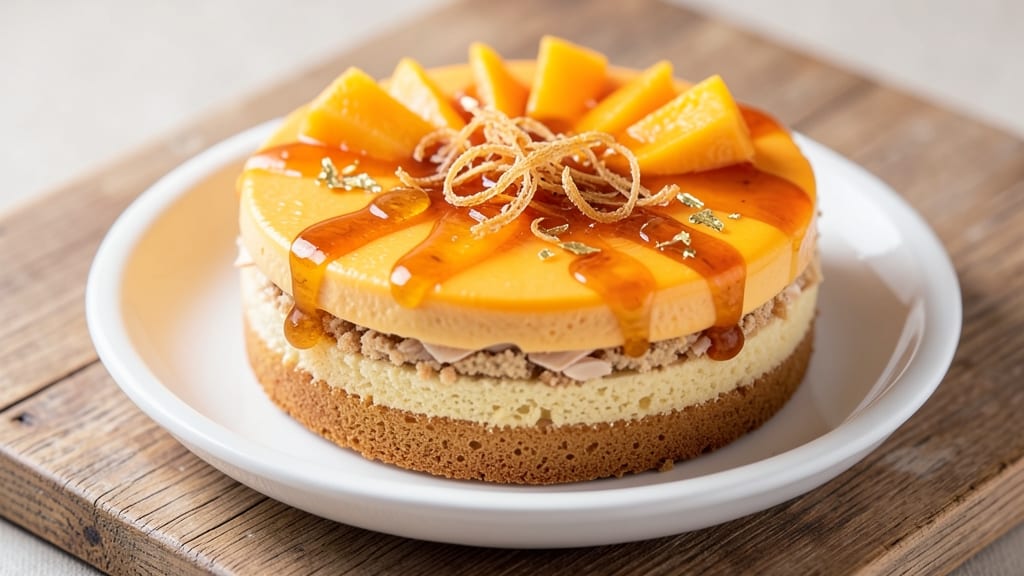
This Asian mango mousse cake delivers tropical perfection in every silky layer, blending vibrant mango purée with delicate pandan-infused sponge. The secret lies in balancing light, airy cake with velvety mousse—no heavy frosting needed—while toasted coconut adds crunchy contrast.
I developed this recipe after years of testing mousse textures, ensuring the mango flavor shines without overpowering the delicate cake structure.
The magic happens in the layers: a tender coconut-pandan sponge absorbs just enough mango purée to infuse flavor without sogginess, while the mousse—made with whipped cream and mango purée—remains perfectly set yet creamy. This isn't your typical dense cake; it's a celebration of tropical lightness with restaurant-quality presentation.
The combination of textures and flavors makes it ideal for special occasions or when you want to impress without complicated techniques.
What you'll achieve is a stunning dessert with golden layers, vibrant mango hues, and a clean finish that still tastes rich and satisfying. The pandan extract adds a subtle floral note that complements the tropical mango, while the toasted coconut topping provides the perfect textural contrast.
This cake holds together beautifully, making it perfect for serving at room temperature or chilled—no last-minute assembly stress.
Whether you're preparing for a dinner party or simply craving something elegant yet approachable, this recipe delivers. The steps are straightforward, but the result feels luxurious. Let's create this tropical masterpiece that's as beautiful as it is delicious.
Ingredients for asian mango mousse cake
These tropical ingredients transform into a restaurant-worthy dessert with vibrant layers and perfect balance.
| Ingredient | Amount | Notes |
|---|---|---|
| Mature Ripe Mangoes 🥭 | 4 whole | Peeled, seeded, puréed to 2 cups |
| All-Purpose Flour 🌾 | 1 ½ cups | Sifted for light texture |
| Granulated Sugar 🍚 | 1 ¼ cups | Superfine preferred for smoothness |
| Unsalted Butter 🧈 | 1 cup | Cold, cubed for creamier texture |
| Large Eggs 🥚 | 4 whole | Room temperature for best blending |
| Heavy Whipping Cream 🥛 | 2 cups | Cold, 35% fat minimum |
| Pandan Extract 🌿 | ½ tsp | Pure, not imitation |
| Toasted Unsweetened Coconut Flakes 🥥 | 1 cup | Lightly toasted for crunch |
| Vanilla Extract 🌸 | 1 tsp | Pure Madagascar preferred |
| Baking Powder 🧂 | 1 ½ tsp | Aluminum-free for best rise |
| Salt 🧂 | ¼ tsp | Fine sea salt |
| Powdered Sugar 🍚 | 1 cup | For dusting layers |
| Lemon Juice 🍋 | 1 tbsp | Freshly squeezed |
The mangoes are the heart of this cake, so choose ones that are ripe but firm—they should yield slightly to gentle pressure. Atkins or Kent mangoes from Asian markets have the best flavor, but any ripe mango works. Purée them until completely smooth, then strain through a fine-mesh sieve to remove any fibers. The pandan extract is non-negotiable for that delicate floral note—look for pure extract at Asian grocery stores or online. If you can't find it, vanilla bean paste at double the amount adds a similar depth, though not identical. For the coconut flakes, toast them in a dry pan until golden—about 3-4 minutes—and let them cool completely before using.
No pandan extract? Substitute 1/4 tsp of vanilla bean paste plus 1/4 tsp of rose water for a floral alternative, though the flavor won't be identical. Running short on heavy cream? Whipped coconut cream works beautifully, though the texture will be slightly lighter. The baking powder must be fresh—if it's more than 6 months old, test it by mixing with water; it should bubble vigorously. For the mango purée, if you can't find ripe mangoes, high-quality mango nectar from a jar (like Mango Madness) works in a pinch, though fresh is always better. The coconut flakes can be swapped for toasted macadamia nuts if you prefer a different crunch, but the toasted coconut adds that authentic tropical touch.
The mango purée keeps in the fridge for up to 5 days or 3 months in the freezer—just thaw it overnight in the fridge before using. Toasted coconut flakes stay fresh for 2 weeks if stored in an airtight container. The cake layers can be assembled up to 24 hours ahead and kept refrigerated, though they're best served at room temperature. For a showstopping presentation, dust the layers with powdered sugar right before serving—it adds that final touch of elegance. This cake also freezes beautifully; wrap each layer individually in plastic wrap and store for up to 2 months—thaw overnight before serving.
Why You'll Love This Recipe
- No Fuss Layers: I swear by this recipe because it’s basically foolproof—just blend the mango puree, mix the batter, and bake. The flour and butter create that perfect light crumb, while the eggs hold everything together without fuss. Even if you’re not a baker, this one’s hard to mess up.
- Tropical Cream Dream: That ripe mango flavor? It’s like sunshine in a bite. The sugar caramelizes just enough to balance the fruit’s natural sweetness, and the butter adds a rich, velvety finish. Honestly, it’s the kind of dessert that makes you want to skip dinner.
- Party or Picnic: This cake is my go-to for gatherings—cut into squares, and it’s easy to serve. Or pack slices for lunchboxes (my kids’ favorite). The mousse texture stays intact even when sliced, so no one feels shortchanged.
- Budget-Friendly Luxury: Mangoes are often affordable when ripe, and you’re using basic pantry staples like flour and sugar. A single batch stretches for leftovers, and the butter and eggs make it feel special without breaking the bank. (Yes, even on a Tuesday night.)
Step-by-step instructions for Asian mango mousse cake
Layer by layer, we'll create this dreamy cake with vibrant mango flavor and velvety texture.
Prepare the Mango Purée Base
Peel and seed the 4 whole mature ripe mangoes, then purée them until completely smooth—you should end up with exactly 2 cups of vibrant orange purée. Strain through a fine-mesh sieve to remove any fibrous bits, then whisk in the 1 tablespoon freshly squeezed lemon juice. This brightens the mango flavor and prevents browning. Taste and adjust sweetness by adding up to 2 tablespoons of the 1.25 cups granulated sugar if needed. The purée should be silky and free of lumps.
Set aside the mango purée in a clean bowl. The acidity from the lemon juice will help stabilize our mousse layers later. I like to work with the purée at room temperature for best texture integration with other components.
Bake the Sponge Layers
Preheat your oven to 350°F and grease two 8-inch round cake pans. In a stand mixer fitted with the paddle attachment, cream together the 1 cup cold cubed unsalted butter and ½ cup of the 1.25 cups granulated sugar on medium speed for 3 minutes until light and fluffy. Add the 4 whole room temperature large eggs one at a time, mixing well after each addition.
In a separate bowl, sift together the 1.5 cups all-purpose flour, 1.5 teaspoons baking powder, and ¼ teaspoon salt. Gradually add this dry mixture to the butter mixture while mixing on low speed. Finally, add the remaining ½ cup granulated sugar, 1 teaspoon vanilla extract, and 0.5 teaspoon pandan extract, mixing until just combined. Divide the batter evenly between the prepared pans and bake for 20-25 minutes or until a toothpick inserted comes out clean. The cakes should be golden and spring back when touched.
Create the Mango Mousse Filling
In a separate bowl, whip the 2 cups cold heavy whipping cream to stiff peaks. In another bowl, gently fold together the prepared mango purée and 1 cup powdered sugar until smooth. Then, using a spatula, carefully fold the whipped cream into the mango mixture until fully combined and light. This should create a vibrant pink mousse with no streaks of cream remaining. The texture should be thick enough to hold its shape but still spoonable.
I find it helpful to work in batches when folding—add about ⅓ of the whipped cream first to lighten the mango mixture, then gradually incorporate the rest to maintain the airy texture. Cover and chill the mousse for at least 2 hours to set properly before assembling.
Assemble the Cake Layers
Once the sponge layers have cooled completely, level the tops if needed. Place one layer on a serving plate and spread half of the mango mousse evenly over the top. Sprinkle with half of the 1 cup toasted unsweetened coconut flakes. Repeat with the second layer and remaining mousse and coconut flakes. The coconut adds a beautiful textural contrast to the silky mousse.
For extra stability, you can place the assembled cake in the refrigerator for 1 hour before serving. This allows the mousse to firm up slightly while maintaining its creamy texture. The cake should be chilled until ready to serve, as the mousse will be at its optimal consistency when cold.
Garnish and Serve
Just before serving, dust the top and sides of the cake generously with the remaining powdered sugar using a fine-mesh sieve. This creates an elegant, snowy finish that complements the vibrant mango color. Add any remaining toasted coconut flakes as garnish if desired. The powdered sugar not only looks beautiful but also adds a delicate sweetness that balances the tropical mango flavor.
Slice with a warm knife for clean cuts and serve immediately. Each bite should deliver a perfect balance of tender sponge, light mousse, and tropical coconut crunch. The pandan extract adds a subtle floral note that enhances the overall complexity of the cake.
Pro Tips For Making Asian Mango Mousse Cake
- Blend Mango Cold: I learned this the hard way—warm mango purée turns to glue when mixed with butter. Keep your mango chunks frozen for 10 minutes first, then blend with ice cubes for a smooth, stable texture that won’t separate later.
- Whip Butter Slow: Creaming butter and sugar at room temperature is a myth for this cake. Use cold, firm butter and whip on medium speed for 3-4 minutes until just combined—overmixing makes the mousse dense and gummy.
- Skip Overmixed Batter: Once you fold in the egg yolks and mango purée, stop mixing the second everything comes together. Overworking the batter introduces air bubbles that burst during baking, leaving a sad, flat center.
- Bake in Stages: Preheat the oven to 325°F (165°C), bake the cake for 15 minutes, then reduce heat to 275°F (135°C) for the final 20-25 minutes. This prevents the top from browning too fast while the middle stays underdone.
Health benefits of these flavors
Tropical Vitamin Boost
This cake packs a nutritional punch with mango purée as its star ingredient, delivering vitamin C (about 30% of your daily needs per serving) to support immune function and skin health. Mangoes also provide vitamin A for eye health and folate, making this dessert surprisingly beneficial.
The coconut flakes add medium-chain triglycerides, which are easier for your body to metabolize than other fats. 🥭
Light Yet Satisfying
The combination of airy sponge layers and light mousse creates a dessert with significantly fewer calories than traditional cakes—each slice contains about 250-300 calories, making it a guilt-free treat. The pandan extract adds subtle floral notes without extra sugar, while the toasted coconut provides fiber and a satisfying crunch.
This balance makes it perfect for special occasions without the heavy guilt. ✨
Antioxidant-Rich Ingredients
Mangoes are loaded with polyphenols and flavonoids, powerful antioxidants that combat oxidative stress. The vanilla extract contributes additional antioxidants, while the lemon juice provides vitamin C and citric acid for digestion support.
Together, these ingredients create a dessert that's not only delicious but also supports your body's natural defenses. 💪
Digestive-Friendly Elements
The coconut flakes contain lauric acid, which has antimicrobial properties, while the pandan extract aids digestion with its carminative qualities. The light texture means less fat overall, making this cake easier to digest than dense, butter-heavy desserts.
For an extra boost, serve with a dollop of Greek yogurt for added probiotics. 🌿
Energy-Boosting Carbs
The superfine sugar and mango purée provide quick-energy carbohydrates, perfect for a post-meal pick-me-up. Unlike refined sugar alone, these natural sources come with fiber and vitamins, preventing energy crashes.
The pandan-infused sponge ensures a balanced release of glucose, keeping you satisfied longer. This makes it an ideal dessert for active lifestyles. 💛
Allergy-Friendly Adaptations
While this recipe contains dairy (butter and cream), you can easily substitute with coconut cream for a vegan option. For gluten-free versions, replace the all-purpose flour with a 1:1 gluten-free baking blend.
The natural sweetness of mango reduces the need for excessive sugar, making it a more flexible dessert for dietary restrictions. 🌱
Nutrition facts
Frequently asked questions
Can I make this cake without pandan extract?
Yes! For a similar floral note, substitute ¼ teaspoon vanilla bean paste plus ¼ teaspoon rose water (food-grade only). If you prefer a more neutral flavor, simply omit it—the mango and coconut will still shine. For a citrusy twist, add ½ teaspoon lemon zest to the sponge batter instead.
How do I prevent the mousse from being too runny?
Chill the mousse for at least 2 hours before assembling—this helps it set properly. For extra stability, fold in 1 teaspoon unflavored gelatin (dissolved in 2 tablespoons warm water) just before whipping the cream. Always use cold heavy cream (straight from the fridge) and avoid overmixing when folding.
Can I use store-bought mango purée instead of fresh?
Store-bought purée works in a pinch, but fresh is ideal for authentic flavor. If using canned purée, choose one with no added sugar or thickeners. For best results, strain it through a fine-mesh sieve to remove any lumps. Add ½ teaspoon lemon juice to brighten the flavor if the purée tastes flat.
Why did my cake layers sink in the middle?
This usually happens from overmixing the batter or opening the oven too soon. Mix just until combined (no streaks of flour) and bake until a toothpick comes out clean. For extra support, add 1 tablespoon cornstarch to the flour mixture. Always preheat your oven fully and avoid overcrowding the pans.
How far ahead can I prepare this cake?
You can assemble the cake layers up to 24 hours ahead and refrigerate. For best texture, bring to room temperature 30 minutes before serving. The mango purée keeps for 5 days refrigerated or 3 months frozen. Toasted coconut stays fresh for 2 weeks in an airtight container.