
Main Courses
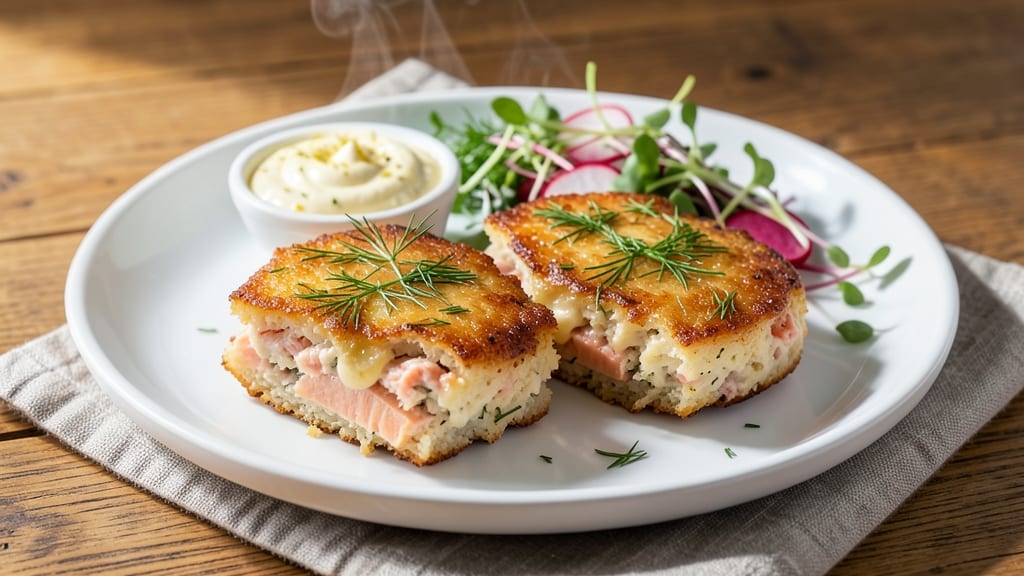
This salmon crab cakes recipe delivers the perfect balance of crispy crusts and flaky fish inside—every bite combines the delicate sweetness of salmon with the briny richness of crab.
The secret lies in gently poaching the salmon first, then mixing it with a light binder and fresh herbs to create a texture that’s both tender and sturdy enough to hold its shape during cooking.
What sets these crab cakes apart is the technique: a thin layer of panko breadcrumbs creates that coveted golden crust, while a touch of Dijon mustard adds depth without overpowering the natural flavors.
Pan-frying them in butter until perfectly browned ensures a restaurant-quality finish, with a crisp exterior that gives way to flaky, moist centers. The result is a dish that’s elegant enough for dinner parties but simple enough for weeknight meals.
Serve these crab cakes with a bright lemon-dill sauce or classic tartar to cut through their richness, and pair them with a crisp arugula salad for a complete, well-balanced plate.
The recipe scales easily—whether you’re feeding a crowd or treating yourself to a special dinner, these crab cakes will impress without requiring advanced skills. Let’s get started on a dish that’s as satisfying to make as it is to eat.
For best results, use a mix of fresh crab and poached salmon to balance texture and flavor, and don’t skip the resting time before frying—it’s what guarantees that perfect crispy crust every time.
The key to success is patience and precision, but the reward is a dish that tastes like it belongs on a high-end menu.
Ingredients for salmon crab cakes
Crispy crusts meet flaky salmon and briny crab—here’s what you’ll need to make these showstopper crab cakes.
| Ingredient | Amount | Notes |
|---|---|---|
| Fresh Salmon Fillet 🐟 | 1 lb | Skinless, boneless, poached |
| Lump Crab Meat 🦀 | ½ lb | Fresh or pasteurized, picked over |
| Panko Breadcrumbs 🍞 | ½ cup | Light, for crispy crust |
| Dijon Mustard 🍯 | 1 tbsp | For depth of flavor |
| Mayonnaise 🥫 | 2 tbsp | Light, for binding |
| Fresh Dill 🌿 | ¼ cup | Chopped, for freshness |
| Fresh Chives 🌱 | 2 tbsp | Finely chopped, for brightness |
| Egg 🥚 | 1 whole | Lightly beaten, for binding |
| Unsalted Butter 🧈 | ¼ cup | Cold, for frying |
| Lemon Juice 🍋 | 1 tbsp | Freshly squeezed, for acidity |
| Salt 🧂 | ½ tsp | Kosher or sea salt |
| Black Pepper 🌶️ | ¼ tsp | Freshly ground, for heat |
| Vegetable Oil 🫒 | ¼ cup | For preheating pan |
| All-Purpose Flour 🌾 | 2 tbsp | For dredging, optional |
The salmon is the star, so pick a fresh, high-quality fillet—ask your fishmonger for the freshest cut. Trader Joe’s or Whole Foods usually have great options, or grab it from the seafood counter at Costco if you’re doing a big batch. For the crab, lump meat is non-negotiable—it holds its shape better than imitation. If you can’t find fresh, pasteurized crab meat in a can works in a pinch, but pick it over to remove any shells or cartilage. The panko is key for that perfect crispy crust—Japanese-style panko like Suzuki is your best bet, but any light, dry breadcrumb will do.
No fresh dill? Dried dill at half the amount works, but it won’t have the same brightness. Short on mayonnaise? Greek yogurt adds tanginess and cuts the richness. The Dijon mustard is essential for that subtle depth—skip the sweet varieties, go for the classic. If you’re feeling fancy, add a pinch of Old Bay seasoning to the mix for a Chesapeake Bay twist. The butter for frying should be cold but not rock-hard—softened just enough to coat the pan evenly. And if you’re worried about the crab cakes falling apart, add an extra tablespoon of mayonnaise to the mix as a binder.
These crab cakes are best made fresh, but you can prep the mixture ahead and refrigerate it for up to 4 hours before frying. For leftovers, store them in an airtight container for 2 days—they reheat beautifully in a skillet with a little butter. Freeze any extras for up to 1 month, but be gentle when reheating to avoid breaking them apart. The secret to serving them perfectly is to keep them warm in a 200°F oven while you finish cooking the rest of the batch.
Why You'll Love This Recipe
- No-Fuss Mix-In: I swear by the 5-minute prep trick: just toss flaked salmon, lump crab, mayo, and Dijon in a bowl—no food processor, no fuss. The panko gives that perfect crunch without requiring perfect patties, and honestly? They hold together like magic.
- Creamy Crunch Magic: That crispy panko shell with the tender, buttery crab-salmon center? It’s the kind of contrast that makes you close your eyes mid-bite. The Dijon mustard adds just enough tang to cut through the richness—trust me, it’s the secret weapon here.
- Weeknight to Dinner Party: Make a double batch on Sunday, freeze half, and you’ve got a ready-to-cook solution for busy nights. Or dress them up with lemon-dill sauce for a brunch spread that’ll impress guests—same recipe, totally different vibe.
- Budget Luxury: Lump crab might sound fancy, but mixing it with salmon stretches it further without sacrificing flavor. I’ll be real: these taste like a seafood restaurant dish, but my wallet stays happy. Plus, leftovers reheat beautifully in a skillet—no sad, dry crab cakes here.
Step-by-step instructions for salmon crab cakes
Here's how to create golden, crispy crab cakes with tender salmon and flaky crab meat inside.
Poach and Flake the Salmon
In a medium saucepan, combine 1 lb fresh salmon fillet, 1 cup water, and 1 tbsp lemon juice. Bring to a gentle simmer over medium-low heat for 4-5 minutes until the salmon is just cooked through and flakes easily. The water should remain barely simmering—never boiling—to prevent the salmon from becoming rubbery.
Remove the salmon from the pan and let it cool slightly. Using two forks, gently flake the salmon into ¼-inch pieces. You want the texture to be delicate and even, breaking it down completely so it integrates perfectly with the crab mixture. This step is crucial for achieving that melt-in-your-mouth texture promised in every bite.
Mix the Crab Cake Batter
In a large mixing bowl, combine the flaked salmon with 0.5 lb lump crab meat, 0.5 cup panko breadcrumbs, 2 tbsp mayonnaise, 1 tbsp Dijon mustard, 0.25 cup fresh dill, and 2 tbsp fresh chives. Using your hands or a rubber spatula, gently fold everything together until just combined. Avoid overmixing—the crab cakes will be dense if you work the mixture too much.
In a small bowl, lightly beat 1 whole egg and then stir it into the mixture along with 0.5 tsp salt and 0.25 tsp black pepper. The batter should hold together when pressed but still feel moist. If it feels too dry, add 1 tsp mayonnaise to help bind it. This is where the magic happens—each ingredient contributes to that perfect balance of crispy exterior and flaky interior.
Chill and Shape the Crab Cakes
Cover the bowl and refrigerate the mixture for 30 minutes. Chilling firms up the mixture, making it easier to handle and ensuring the crab cakes hold their shape when frying. This step also allows the flavors to meld together, giving you that cohesive taste in every bite.
After chilling, divide the mixture into 4 equal portions (about 4 ounces each) and gently shape each into a ½-inch thick patty. Use your hands to press firmly but avoid compacting the mixture too much. Place the shaped crab cakes on a plate and cover them loosely with plastic wrap. The goal is to create a uniform thickness—this ensures even cooking and that perfect golden-brown crust we're after.
Fry to Golden Perfection
In a large skillet, melt 0.25 cup unsalted butter with 0.25 cup vegetable oil over medium heat until the butter has fully melted and the mixture reaches 350°F. You'll know it's ready when a small piece of bread dropped into the oil sizzles immediately. The right temperature is critical—too low and the crab cakes will be greasy, too high and they'll burn before cooking through.
Carefully place the crab cakes in the skillet, leaving 1 inch of space between each. Cook for 3-4 minutes per side until they develop a deep golden-brown crust. Don't press them down with a spatula—this will squeeze out the juices and make them dense. Instead, let them cook undisturbed until you see that beautiful golden color and hear a satisfying sizzle.
Serve Immediately with Lemon Zest
Transfer the cooked crab cakes to a paper towel-lined plate to drain any excess oil. Serve them immediately while still warm and crispy. The contrast between the crispy exterior and flaky interior is what makes these crab cakes truly special.
For an extra touch, sprinkle each crab cake with a pinch of freshly grated lemon zest and a drizzle of lemon juice. The acidity brightens the flavors and cuts through the richness of the butter and mayonnaise. Serve with a side of lemon wedges for squeezing over the top—this simple addition elevates the dish to restaurant-quality.
Pro Tips For Making Salmon Crab Cakes
- Freeze the Salmon First: Pat the fillet dry, then wrap it tightly in plastic and freeze for 30 minutes before dicing. This firmness makes it easier to chop finely—no more mushy bits in your crab cakes, and the texture stays consistent when cooking.
- Drain the Crab Meat: After mixing the crab with mayo and mustard, let the batter sit in a colander for 10 minutes before adding panko. The excess liquid drains out, so your cakes won’t turn into soggy pancakes when fried.
- Don’t Overmix the Batter: Stir the crab, salmon, and mayo just until combined—no need to get fancy. Overworking it breaks down the crab meat and makes the cakes dense. Think "gentle folds," not "whipped to perfection."
- Use Two Frying Stages: Pan-fry the cakes over medium heat for 2 minutes per side to set the edges, then finish in a 375°F oven for 5–7 minutes. This keeps the inside juicy while the crust stays crisp—no more raw centers or burnt outsides.
Best sauces and condiments for this salmon crab cakes
Lemon-Dill Sauce
This bright, tangy sauce is my go-to for cutting through the richness of salmon crab cakes.
Whisk together ½ cup mayonnaise, 2 tbsp sour cream, 1 tbsp fresh lemon juice, 1 tbsp finely chopped fresh dill, 1 tsp lemon zest, ½ tsp Dijon mustard, ¼ tsp salt, and ⅛ tsp black pepper.
For extra flair, add 1 tsp capers or 1 tbsp finely chopped cornichons for a briny kick. Serve immediately or chill for 30 minutes to let flavors meld. 💛
Classic Tartar Sauce
A creamy, slightly sweet sauce that pairs beautifully with these crab cakes.
Mix ½ cup mayonnaise, 1 tbsp sweet pickle relish, 1 tbsp finely chopped cornichons, 1 tbsp fresh parsley, 1 tsp lemon juice, ½ tsp Worcestershire sauce, ¼ tsp garlic powder, and a pinch of paprika.
For a richer version, add 1 tbsp sour cream. This sauce can be made 2 days ahead and stored in the fridge.
Spicy Remoulade
For those who love heat, this sauce adds a bold kick.
Blend ½ cup mayonnaise, 2 tbsp ketchup, 1 tbsp hot sauce (like Tabasco), 1 tbsp finely chopped red onion, 1 tsp capers, 1 tsp Dijon mustard, ½ tsp smoked paprika, and ¼ tsp cayenne pepper. Thin with 1 tsp water if needed.
Serve immediately for the freshest flavor. This sauce works wonders with the briny crab and rich salmon. 🌶️
Garlic Aioli
For a bold, garlicky twist, whip ½ cup mayonnaise, 1 roasted garlic clove, 1 tbsp lemon juice, ½ tsp salt, and ¼ tsp black pepper until smooth. For extra depth, add 1 tsp minced shallot or ½ tsp Old Bay seasoning.
This sauce is rich and flavorful, perfect for dipping or drizzling over the crab cakes. Store in an airtight container for up to 3 days.
Creamy Horseradish
Add a sharp, peppery bite with this sauce. Mix ½ cup sour cream, 2 tbsp prepared horseradish, 1 tbsp fresh lemon juice, 1 tsp honey, ½ tsp salt, and ¼ tsp black pepper.
Thin with 1 tsp water if needed. This sauce is best served fresh but can be refrigerated for 2 days. It’s a fantastic way to balance the richness of the crab cakes. ✨
Mango-Habanero Glaze
For a sweet and spicy contrast, blend ½ cup mango chutney, 1 tbsp habanero hot sauce, 1 tbsp lime juice, and 1 tsp honey. Simmer for 5 minutes until slightly thickened.
Drizzle over the crab cakes just before serving. This glaze adds a tropical twist that pairs surprisingly well with the salmon and crab. Use within 2 days for best flavor.
Nutrition facts
Frequently asked questions
Can I make these salmon crab cakes without fresh crab?
Use pasteurized lump crab meat from a can as a substitute—just pick over the meat to remove any shells or cartilage. For a budget-friendly option, mix in ½ cup finely chopped imitation crab (like Surimi) with ¼ cup extra flaked salmon to maintain moisture and texture. The flavor won't be identical, but the result will still be delicious and hold together well.
Why does my salmon crab cake mixture feel too wet?
If your batter feels too loose, it’s likely from over-flaked salmon or excess moisture from ingredients. Add 1-2 tbsp extra panko breadcrumbs or 1 tbsp mayonnaise to bind it together. For extra insurance, chill the mixture for 30-45 minutes before shaping—this helps the ingredients firm up. If it’s still too wet, add 1 tsp cornstarch to absorb excess liquid.
How do I keep the crab cakes from falling apart when frying?
Undercooked mixture is the #1 culprit! Ensure your salmon is fully poached and flaked, and let the batter chill for at least 30 minutes before shaping. Use cold butter and oil for frying (but not rock-hard)—this creates a better seal. Also, avoid pressing the crab cakes down while cooking; let them set naturally for 3-4 minutes per side over medium heat. A lightly beaten egg in the mix adds extra binding power.
Can I bake these instead of pan-frying?
Yes, but the texture will differ slightly. Preheat your oven to 400°F and line a baking sheet with parchment paper. Place shaped crab cakes on the sheet and bake for 12-15 minutes, flipping halfway, until golden and internal temp reaches 145°F. For extra crispiness, broil for 1-2 minutes at the end. Baking requires 1 tbsp extra panko per crab cake to compensate for lost crispness.
What’s the best way to reheat leftover salmon crab cakes?
Reheat in a skillet over medium-low heat with 1 tbsp butter for 2-3 minutes per side until warmed through. For oven reheating, cover with foil and bake at 350°F for 8-10 minutes. Microwaving isn’t recommended—it makes them soggy. Keep reheated crab cakes warm in a 200°F oven while you finish cooking the rest of the batch.