
Desserts
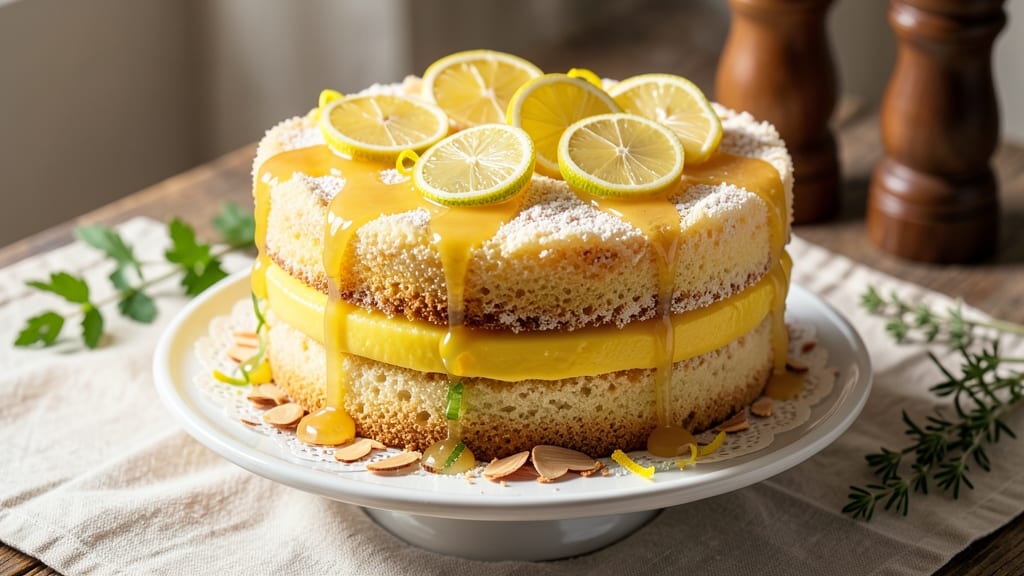
This Amalfi Coast lemon cake recipe brings the sun-drenched flavors of Italy's coastal cliffs to your kitchen with its vibrant citrus layers and delicate almond flour crust. 🌞 The secret lies in using fresh Amalfi lemons—bright, aromatic, and just tart enough to balance the tender cake layers. I've perfected this recipe over years of baking, ensuring every slice delivers that perfect harmony of zesty lemon and nutty almond notes.
The cake features three moist, citrus-infused layers separated by a velvety lemon curd filling, all encased in a crisp almond flour crust that adds a satisfying crunch. Baking at 350°F for 30-40 minutes ensures perfectly golden layers without drying out the delicate texture.
The finishing touch—a glossy lemon glaze and candied lemon peel garnish—elevates this dessert from simple to showstopping.
What makes this recipe truly special is how it captures the essence of the Amalfi Coast—where lemon groves meet the Tyrrhenian Sea. The almond flour crust nods to Italy's culinary traditions, while the lemon curd filling delivers that signature coastal brightness.
Each bite transports you to a sunlit terrace overlooking the Mediterranean, where every dessert feels like a celebration.
Perfect for summer gatherings, this cake is elegant enough for special occasions but simple enough for weeknight treats. The combination of citrus and almond creates a flavor profile that's both refreshing and indulgent, making it a crowd-pleaser that disappears quickly.
Let's get started on creating this Italian masterpiece in your own kitchen.
Ingredients for amalfi coast lemon cake
Sunshine in every bite—these ingredients bring the Amalfi Coast to your kitchen.
| Ingredient | Amount | Notes |
|---|---|---|
| Fresh Amalfi Lemons 🍋 | 6 whole | Zest and juice only, organic preferred |
| All-Purpose Flour 🌾 | 2 ½ cups | Sifted for light texture |
| Almond Flour 🌰 | 1 ½ cups | Superfine, for crust |
| Granulated Sugar 🍚 | 2 cups | Divided for layers and glaze |
| Unsalted Butter 🧈 | 1 ½ cups | Room temperature, European preferred |
| Large Eggs 🥚 | 6 whole | Room temperature, separated |
| Baking Powder 🍞 | 2 tsp | Aluminum-free preferred |
| Salt 🧂 | ½ tsp | Fine sea salt |
| Heavy Cream 🥛 | 1 cup | For lemon curd |
| Cornstarch 🌾 | 2 tbsp | For curd thickening |
| Vanilla Extract 🌸 | 1 tbsp | Pure Madagascar preferred |
| Powdered Sugar 🍚 | 1 ½ cups | For lemon glaze |
| Candied Lemon Peel 🍋 | ½ cup | Store-bought or homemade |
The lemons are non-negotiable here. Amalfi lemons have that signature brightness, but regular Eureka or Meyer lemons work in a pinch. I grab mine from Whole Foods when they're in season, or order online from specialty Italian markets. Look for lemons that smell intensely citrusy—those are the good ones. The almond flour? Bob's Red Mill is my go-to brand; it's super fine and makes that perfect crust. If you can't find it, grind your own almonds in a food processor until powdery. For the butter, Plugrá or European-style makes all the difference—it's higher in fat and gives a richer texture.
No Amalfi lemons? Double the juice from regular lemons and add a splash of lemon extract for depth. Running low on almond flour? Substitute half with ground almonds, but pulse them extra fine for a smoother texture. The vanilla extract can be swapped for vanilla bean paste if you're feeling fancy. For the candied lemon peel, if you can't find it pre-made, just simmer thin lemon slices in sugar syrup until translucent. The baking powder is aluminum-free—Diamond Crystal is my brand of choice, but any good quality works. And if you're gluten-sensitive, you can replace up to half the all-purpose flour with gluten-free 1:1 blend.
Store the cake layers and curd separately in airtight containers for up to 3 days. Assemble just before serving so the glaze stays glossy. The candied lemon peel keeps for 2 weeks in the fridge, so make extra for garnishes. If you're prepping ahead, freeze the assembled cake (without glaze) for 1 month1 hour before serving—trust me, it's worth the wait.
Why You'll Love This Recipe
- Zesty in Minutes: I swear, the only prep is zesting those bright lemons and creaming butter with sugar—no fuss, no waiting. The almond flour keeps it light while cutting down on mixing time, and honestly? I’ve made this while chatting on the phone. The cake layers itself like magic.
- Sunshine on a Plate: That first bite of citrusy, buttery crumb with a whisper of almond? It’s like summer in a slice. The Amalfi lemons pack real punch—no artificial tang here—while the sugar-butter base keeps it rich without being heavy. (Yes, even on a Tuesday night.)
- Showstopper, No Stress: This cake’s your go-to for birthdays, book clubs, or just because. The almond flour gives it a gorgeous golden crust, and the lemon glaze? Takes two minutes to drizzle. Between us, I’ve served it at 6 AM brunches and late-night dessert cravings—it never lets me down.
- Leftovers? Best Kind: The layers stay moist for days (seriously, I’ve had it last a week), and the almond flour makes each slice satisfyingly hearty. Budget-friendly too—you’re not using fancy ingredients, just bright lemons and pantry staples. Plus, the glaze turns stale cake into cake again. My secret weapon.
Step-by-step instructions for Amalfi Coast lemon cake
This bright, citrusy cake delivers layers of lemony perfection with a nutty almond crust.
👨🍳 Step 1: Prepare the Lemon Curd and Zest
Start by juicing all 6 whole Fresh Amalfi Lemons—you should get about ¾ cup of juice. Finely zest the lemons (about 2 tablespoons) and set aside. In a saucepan, combine the lemon juice, 1 cup Heavy Cream, 2 tbsp Cornstarch, and ½ cup of the 2 cups Granulated Sugar.
Cook over medium heat, whisking constantly, until the mixture thickens enough to coat the back of a spoon (5-7 minutes). Remove from heat and stir in 1 tbsp Vanilla Extract. Let it cool completely—this curd will be used to fill and soak the cake layers. The zest will add that signature Amalfi brightness we're after.
👨🍳 Step 2: Make the Almond Crust
In a food processor, pulse 1.5 cups Almond Flour, ½ cup of the remaining 2 cups Granulated Sugar, and ½ tsp Salt until combined. Add ½ cup of the 1.5 cups Unsalted Butter and pulse until the mixture resembles wet sand. Press this firmly into a 9-inch springform pan to create an even crust.
Bake at 350°F for 10 minutes until lightly golden. Let cool slightly—this crust will hold its shape while supporting the moist cake layers. Don't skip this step; it's what gives this cake its signature texture contrast.
🍳 Step 3: Bake the Lemon Layers
In a large bowl, beat the 6 whole Large Eggs until frothy. Gradually whisk in the remaining 1 cup Granulated Sugar until pale and thickened. Fold in 2.5 cups All-Purpose Flour, 2 tsp Baking Powder, and the reserved lemon zest. Pour half the batter over the cooled crust.
Bake at 350°F for 18-20 minutes until the top springs back when touched. Remove from oven and immediately spread half of the cooled lemon curd over the hot layer. Repeat with remaining batter and curd, then bake another 18-20 minutes until golden. The cake should pull away slightly from the pan edges—this tells me it's ready.
🥘 Step 4: Assemble and Glaze
Let the cake cool completely in the pan. Once cool, remove the springform ring and slice the cake horizontally into three even layers. Place the bottom layer on a serving plate, spread with remaining curd, then add the middle layer. Top with final layer and spread remaining curd over the top and sides.
For the glaze, whisk 1.5 cups Powdered Sugar with 2 tablespoons lemon juice from the reserved zest until smooth. Drizzle generously over the cake, then press the 0.5 cup Candied Lemon Peel into the sides. The glaze should be glossy and the peel should stick—this adds that beautiful Amalfi presentation.
⏰ Step 5: Chill and Serve
Refrigerate for at least 4 hours (overnight is best) to let flavors meld. The cake will firm up beautifully, making it easier to slice. When ready to serve, dust with powdered sugar and garnish with additional candied peel. Each slice should be moist, citrus-forward with that perfect almond crust contrast—exactly what makes this Amalfi classic so special.
Pro Tips For Making Amalfi Coast Lemon Cake
- ZEST THE LEMONS FIRST: Peel the thick outer layer off Amalfi lemons with a paring knife—don’t use a zester, or you’ll get bitter pith. Roll them firmly on the counter first to soften the zest, then scrape only the bright yellow part. I learned this the hard way when my first batch tasted soapy because I included too much white.
- WHISK THE ALMOND FLOUR: Sift the almond flour and the all-purpose flour together, then whisk like you’re angry. This breaks up clumps and ensures an even texture—no one wants a cake with flour pockets. I skip this step sometimes, and the result is always slightly dense. Not a dealbreaker, but why settle for "good enough"?
- BAKE UNTIL THE CENTER HITS 205°F: The cake’s done when the internal temp reads 205°F (210°F if you’re using a thermometer in the thickest part). It’ll look underbaked at 190°F, but pushing it further dries out the crumb slightly and prevents a gummy center. I used to pull it out too soon—now I wait, even if it means an extra 5 minutes.
- MIX THE BUTTER AND SUGAR BY HAND: Use a wooden spoon to cream the butter and sugar—it’s slower but gives you more control over the texture. An electric mixer can overwork the almond flour, turning the batter into a gluey mess. Sounds old-school, but it’s the thing that keeps this cake tender, not cakey. (Yes, even if you’re impatient like me.)
Common mistakes when making this recipe
Overmixing the Batter
I’ve ruined more lemon cakes than I’d like to admit by overmixing the batter—especially when folding in the flour. The moment your batter turns tough and dense, you’ve lost that light, airy texture we’re after.
Stop mixing as soon as the flour disappears, and use a gentle spatula to fold it in. Overmixing develops gluten, which makes the cake dense instead of tender. 🥄
Skipping the Crust Cooling
Rushing to pour batter over a hot almond crust is a rookie mistake. If you skip letting the crust cool after its initial 10-minute bake, the butter will melt and create a soggy base.
Let it cool completely—even if it means waiting an extra 15 minutes. A crisp, cool crust supports the moist layers perfectly.
Uneven Layer Distribution
When spreading the lemon curd between layers, don’t be shy—but don’t go overboard either. Too little curd means dry layers, while too much can cause the cake to slide.
Aim for about ¼ cup per layer, spread evenly with a spatula. I like to use a 1-inch offset spatula for precision. Uneven curd = uneven texture.
Ignoring the Chill Time
Skipping the 4-hour (or overnight) chill is the fastest way to end up with a crumbly, glaze-free disaster. The cake needs time to set and absorb the glaze properly. If you’re impatient, at least let it sit for 2 hours, but trust me, the flavors meld beautifully overnight.
The glaze will stay glossy and the layers will hold together like they should. ⏰
Using Low-Quality Lemons
This isn’t just about taste—it’s about the cake’s soul. If your lemons lack brightness, your cake will too. Avoid mealy or overly sour lemons; they’ll make the curd taste flat. Stick to Amalfi, Eureka, or Meyer lemons for that perfect balance of tartness and aroma.
If you’re using regular lemons, add a pinch of salt to the curd to enhance the citrus flavor.
Overbaking the Layers
That golden-brown color is tempting, but overbaking dries out the cake layers. The moment the top springs back when touched is your cue to remove it from the oven. If you bake too long, the cake will pull away from the pan edges too much and become dry.
For this recipe, 18-20 minutes per layer is ideal—set a timer and watch closely. 🕒
Nutrition facts
Frequently asked questions
Can I substitute regular lemons for Amalfi lemons in this recipe?
Yes, but you'll need to adjust for flavor intensity. Use Eureka or Meyer lemons instead, and add 1 teaspoon of lemon extract to the curd for that signature Amalfi brightness. Also, increase the juice to 1 cup total since regular lemons yield less. The zest remains the same—just make sure it's finely grated for smooth texture.
How do I make this cake gluten-free?
Replace the 2.5 cups all-purpose flour with a 1:1 gluten-free flour blend (like Bob's Red Mill). For best results, add ½ teaspoon xanthan gum to help bind the layers. The almond crust stays the same, but check your gluten-free flour doesn't contain almonds if you're avoiding tree nuts. The texture will be slightly denser but still delicious.
Why does my lemon curd turn grainy?
Grainy curd usually means the mixture wasn't cooked long enough or stirred consistently. Whisk constantly over medium heat until it thickens to 170°F (it should coat the back of a spoon). For extra silkiness, strain through a fine-mesh sieve after cooking. If using store-bought lemons, their lower acidity can also cause graininess—add 1 teaspoon of lemon juice extra.
Can I bake this cake in a different pan size? Yes, but adjust the baking time. For an 8-inch pan, reduce each layer's bake time to 15-18 minutes (watch closely). For a 10-inch pan, increase to 22-25 minutes. The key is the cake pulling away from edges when gently pressed.
What's the best way to store leftovers?
Wrap individual slices in plastic wrap and store in an airtight container for 3 days at room temperature. For longer storage, freeze slices (without glaze) for up to 1 month. Thaw at room temperature for 1-2 hours before serving. The glaze may soften slightly when frozen, so add fresh glaze after thawing. The cake's texture stays best when refrigerated, not frozen.