
Desserts
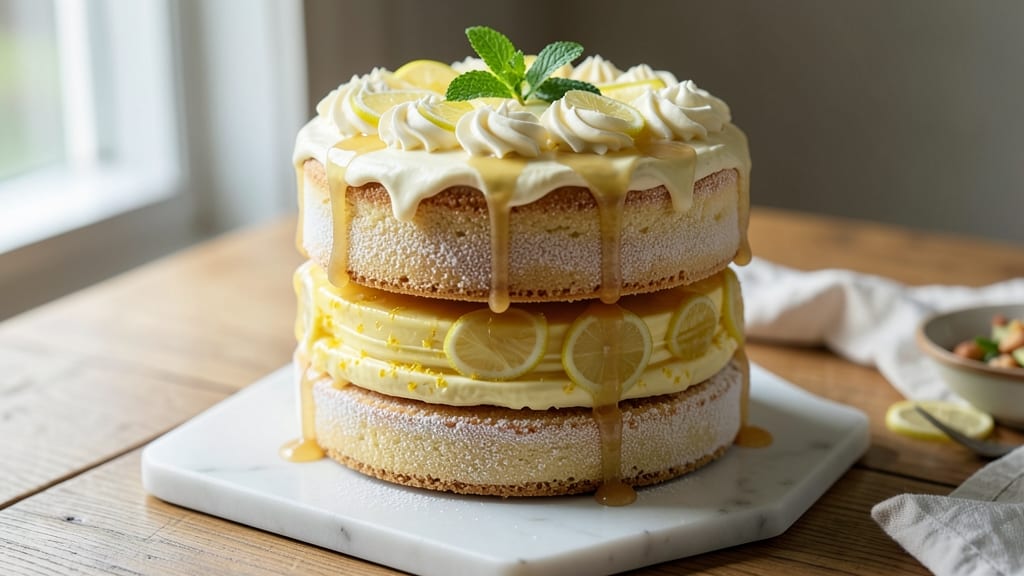
This anytime lemon cake recipe delivers bright citrus zest and moist layers that taste like sunshine in every bite. 💛 Perfect for breakfast, brunch, or dessert, it requires just 15 minutes of prep and one bowl—no fuss, no layers to fuss with. The secret?
A simple batter with fresh lemon juice and zest that infuses every slice with that signature tangy-sweet flavor. What makes this cake truly special is its foolproof technique: a single bowl mix, no complicated layering, and a baking time that guarantees a tender crumb.
The cake stays moist for days, making it ideal for meal prep or spontaneous treats. Whether you're hosting a brunch or craving something light, this recipe delivers restaurant-quality results with minimal effort.
By the time it emerges from the oven, you'll have a golden-domed cake with a delicate crumb and just the right balance of sweetness and zesty lemon. The aroma alone will have everyone asking for seconds.
Serve it plain with a dusting of powdered sugar, or elevate it with a simple lemon glaze for extra shine. This versatile dessert works for any occasion—breakfast, afternoon pick-me-up, or a light dessert. Here's everything you need to make it happen!
Ingredients for anytime lemon cake
Bright citrus flavor meets tender crumb in this one-bowl lemon cake.
| Ingredient | Amount | Notes |
|---|---|---|
| All-Purpose Flour 🌾 | 2 cups | Sifted for light texture |
| Granulated Sugar 🍚 | 1 ½ cups | White or light brown |
| Unsalted Butter 🧈 | 1 cup | Room temperature, full-fat |
| Large Eggs 🥚 | 2 whole | Room temperature, beaten |
| Fresh Lemon Juice 🍋 | ½ cup | From 2-3 lemons, freshly squeezed |
| Lemon Zest 🍋 | 1 tbsp | Fine, from 2 lemons |
| Baking Powder 🧂 | 2 tsp | Aluminum-free preferred |
| Salt 🧂 | ½ tsp | Fine sea salt |
| Vanilla Extract 🌸 | 1 tsp | Pure vanilla preferred |
| Milk 🥛 | ½ cup | Whole or 2% for richness |
| Powdered Sugar 🍚 | ½ cup | For dusting or glaze |
The lemon juice and zest are non-negotiable—fresh is a must. Grab organic lemons from Trader Joe's if you can, but regular grocery store lemons work too. Roll them under your palm first to loosen the juice, then strain out the pulp for smooth batter. The butter should be soft but not melted—microwave 40 seconds if it's too firm. For the flour, I always sift it right into the bowl to avoid lumps. The King Arthur brand is my go-to for reliable baking results.
No fresh lemons? Bottled lemon juice works in a pinch, but add a pinch of salt to mimic the natural balance. Short on milk? Almond milk or buttermilk both work, though whole milk gives the best texture. The vanilla extract can be imitation, but real vanilla has that depth that makes the cake taste extra special. Need to skip the glaze? A sprinkle of powdered sugar right after baking adds that same sweet shine. The baking powder is crucial—check the expiration date—old powder loses its lift.
This cake stays moist for 4-5 days in an airtight container, but it's best the first day. Wrap it loosely in plastic wrap to keep it fresh longer. For meal prep, slice it before storing—microwave 15-20 seconds per slice to revive. The glaze sets fast, so have everything ready before dusting. Leftovers? Freeze slices for up to 3 months—just thaw at room temp before serving.
Why You'll Love This Recipe
- No Mixer Needed: I swear by this recipe because it’s one-bowl, no fuss. Just cream butter and sugar until light—no electric mixer required—and fold in the eggs and lemon juice like you’re whisking together old memories. Honestly, the only tool you’ll need is a sturdy spoon and a steady hand.
- Tangy Magic: That bright, zesty lemon juice cuts through the richness of the butter and sugar like a summer breeze. The cake stays moist without being heavy, and the crust? Crisp enough to hold your coffee cup steady. Between us, it’s the kind of flavor that makes you reach for a second slice before you even finish the first.
- Leftovers That Last: Slice it fresh or save half for tomorrow—this cake keeps beautifully. I’ve wrapped portions in parchment and stashed them in the fridge for up to five days, and it’s still just as tender. Even better? It reheats in seconds, so you’re never stuck with dry cake. (Yes, even on a Tuesday night.)
- Budget-Friendly Brightness: Flour, sugar, butter, eggs, and lemons? That’s it. No fancy add-ins, no specialty ingredients—just pantry staples that won’t break the bank. I’ve made this for birthday cakes, potlucks, and lazy afternoons, and it’s always the hit. The best part? The lemons? You can use store-bought juice if fresh isn’t an option. No excuses.
Step-by-step instructions for anytime lemon cake
Here's how to bake a bright, moist lemon cake that's perfect anytime.
👨🍳 Step 1: Cream Butter and Sugar Together
In a large mixing bowl, beat the 1 cup unsalted butter (room temperature) and 1.5 cups granulated sugar with an electric mixer on medium-high speed for 3-5 minutes. You'll know it's ready when the mixture is light, fluffy, and nearly doubles in volume. This step is crucial for creating that tender, moist crumb we're after.
Scrape down the sides of the bowl with a spatula to make sure everything's evenly combined. If your butter isn't quite soft enough, let it sit at room temperature for another 10 minutes—it should leave a slight indentation when pressed. The goal is to incorporate air into the butter-sugar mixture, which will make your cake light and airy.
👨🍳 Step 2: Add Eggs and Lemon Flavors
Add the 2 whole eggs (room temperature) one at a time, mixing well after each addition. Then stir in the 0.5 cup fresh lemon juice and 1 tbsp lemon zest. I like to use a rubber spatula for this step to make sure everything gets fully incorporated. The mixture should be smooth and slightly thickened from the lemon juice.
Here's the thing—don't skip the zest. It's what gives this cake that bright, citrusy flavor that makes it special. If your lemons are particularly tart, you might want to add a tiny pinch more sugar, but I've found this amount works perfectly with most fresh lemons. The mixture will smell amazing at this point—like a sunny day in a lemon grove.
👨🍳 Step 3: Combine Dry Ingredients
In a separate bowl, whisk together the 2 cups all-purpose flour (sifted), 2 tsp baking powder, 0.5 tsp salt, and 1 tsp vanilla extract. The vanilla might seem odd in a lemon cake, but it rounds out the sharp citrus flavor beautifully. Sifting the flour helps prevent dense pockets in your cake.
With the mixer on low speed, gradually add the dry ingredients to the wet mixture, alternating with the 0.5 cup milk. Start and end with the flour mixture. Mix just until combined—you should still see some flour streaks. Overmixing develops gluten, which can make your cake tough. The batter should be smooth but slightly thick, like a well-made pancake batter.
🔥 Step 4: Bake Until Golden and Springy
Preheat your oven to 350°F and grease an 8-inch round cake pan or line it with parchment paper. Pour the batter into the prepared pan and smooth the top with a spatula. Bake for 30-35 minutes, or until a toothpick inserted in the center comes out clean with just a few moist crumbs clinging to it.
The cake is done when the edges are pulling away slightly from the pan and the top is golden brown. I know it seems like too long, but trust me—this ensures a moist, fully cooked cake that won't be gummy in the center. If your oven runs hot, start checking at the 25-minute mark. The cake will continue cooking for a few minutes after you remove it from the oven.
⏰ Step 5: Cool and Dust with Powdered Sugar
Let the cake cool in the pan for 10 minutes before transferring it to a wire rack to cool completely. This gradual cooling prevents cracking. While it cools, make a simple powdered sugar glaze by whisking together the 0.5 cup powdered sugar with 1-2 tablespoons lemon juice until smooth.
Once the cake is completely cool, drizzle or dust the top with the powdered sugar glaze. The cake should be moist but not soggy, with a bright lemon flavor in every bite. For extra lemony goodness, you can also serve it with a dollop of whipped cream or a scoop of lemon ice cream. This cake keeps well at room temperature for 3 days or can be refrigerated for up to 5 days.
Pro Tips For Making Anytime Lemon Cake
- MEASURE BUTTER COLD: Grab that butter straight from the fridge—no softening needed. I learned this the hard way after three greasy, dense cakes. Cold butter creates pockets for steam, giving you that tender crumb instead of a brick. Cut it into cubes just before mixing, and don’t skip the pulse in the food processor if you’re using one.
- ZEST THE LEMON FIRST: Fresh lemon juice is non-negotiable, but the zest? That’s where the magic hides. Use a fine grater and get 1-2 teaspoons of zest from the outer layer—not the bitter white pith. Toss it into the dry ingredients early; it blooms flavor while you mix, and the color? Instantly brighter.
- WHISK EGGS ROOM TEMP: Cold eggs? They’ll curdle faster than you can say “sour cake.” Let them sit in warm water for 5 minutes before whisking—just enough to take the chill off. Overbeat them? No, just until they’re smooth and pale yellow. I used to worry about overmixing, but this recipe forgives a little extra time.
- BAKE UNTIL 205°F: Your oven runs hot. Skip the “until golden” guesswork—insert a thermometer into the center. Pull it out at 205°F (96°C), not when the top looks done. The residual heat finishes the job while keeping the crumb moist. I burned two cakes checking for color; the thermometer saved me.
Essential equipment for great anytime lemon cake
One-Bowl Mixer
This recipe comes together in a single bowl, so you only need a large mixing bowl (at least 5-quart capacity). I use my KitchenAid 5-quart stand mixer bowl for perfect aeration, but a hand mixer works just as well.
The bowl should have high sides to prevent spills when mixing, especially during the butter-sugar whipping stage. If you don’t own a mixer, a wooden spoon will work for combining ingredients, though it’ll take more elbow grease. 💛
Reliable Oven Thermometer
Oven temperatures can vary wildly—sometimes by 25°F or more—so a digital oven thermometer is non-negotiable. I swear by the Thermoworks Oven Thermometer because it’s precise and affordable. Place it in your oven while preheating to confirm the actual temperature.
If your oven runs hot, reduce the bake time by 2-3 minutes to avoid overbrowning. A properly calibrated oven ensures your cake bakes evenly with a tender crumb.
8-Inch Round Pan
An 8-inch round cake pan is the perfect size for this recipe, yielding a single, elegant layer.
I recommend a non-stick pan (like Wilton’s Perfect Results) to prevent sticking, but if you only have a standard pan, grease it thoroughly with butter and flour or line it with parchment paper for easy release. Avoid dark-colored pans—they can cause uneven browning.
For extra insurance, I often use both greasing and parchment in my pan.
Fine-Mesh Sifter
A fine-mesh sifter is essential for sifting the 2 cups all-purpose flour and 2 tsp baking powder to prevent lumps. My go-to is the OXO Good Grips Sifter—it’s durable and easy to clean.
If you don’t have one, a fine-mesh strainer or even a cheesecloth in a pinch works, though it’s messier. Sifting ensures a light, airy texture by breaking up any clumps in the flour, which can lead to dense pockets in your cake.
Skipping this step is a common mistake that ruins the tender crumb.
Rubber Spatula
You’ll need a heat-resistant rubber spatula (like OXO Good Grips) to scrape down the sides of the bowl during mixing and to smooth the batter in the pan.
The flexible edge helps ensure no batter clings to the sides, and it’s also useful for folding in the lemon zest and juice. A silicone spatula works too, but avoid metal—it can scratch your mixing bowl or react with the butter.
This tool is your secret weapon for achieving a perfectly even cake top.
Toothpick for Doneness
No fancy gadgets here—a simple toothpick is all you need to test for doneness. Insert it into the center of the cake after 30 minutes of baking. If it comes out clean or with just a few moist crumbs (no wet batter), your cake is ready.
A toothpick with wet batter means it needs 5-10 more minutes. This is the foolproof way to avoid underbaking, which can leave your cake gummy. Trust this test—it’s your best friend for perfect results every time. 🔥
Nutrition facts
Frequently asked questions
Can I make this lemon cake without fresh lemons?
You can use bottled lemon juice instead of fresh, but the flavor won't be as vibrant. For every 0.5 cup fresh lemon juice needed, use 0.5 cup bottled lemon juice plus a pinch of salt to mimic the natural balance. The zest is harder to substitute—try 1 tsp lemon extract if you're missing it, but it's not as effective.
Why does my lemon cake turn out dense?
Overmixing the batter or skipping the sifting step are common culprits. Mix the dry ingredients just until combined—stop when you still see flour streaks. Also, ensure your butter is room temperature (not melted) and your oven is properly calibrated. A digital oven thermometer helps prevent overbaking, which can dry out the cake.
How do I store leftovers to keep them moist?
Wrap the cake tightly in plastic wrap or store it in an airtight container at room temperature for up to 3 days. For longer storage, refrigerate for 5 days or freeze slices for 3 months. To revive, microwave a slice for 15-20 seconds. The powdered sugar glaze helps preserve freshness—don't skip it!
Can I make this cake in a different-sized pan?
Yes, but adjust the baking time. For a 9-inch pan, bake 25-30 minutes (the cake will be thinner). For a 6-inch pan, bake 35-40 minutes (the cake will be taller). Always check with a toothpick. Line the pan with parchment paper for easy removal, regardless of size.
What's the best way to serve this lemon cake?
Dust with powdered sugar for a simple finish, or drizzle with the lemon glaze. For extra flair, add fresh berries or a dollop of whipped cream. It's perfect for breakfast with coffee, a light dessert, or even a brunch centerpiece. The bright flavor pairs well with vanilla ice cream or yogurt too!